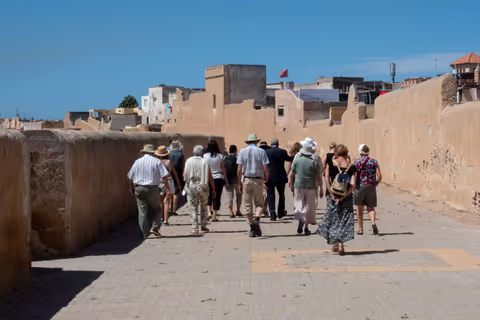
In the oldest tellings, the journey is never the pause between the beginning and the end of the story. It is the story. Morocco understands this truth profoundly, where vast desert stretches, high mountain passes, and sweeping economic corridors separate its most iconic regions, turning a simple highway drive into an immersive narrative of trade, geography, and changing landscapes.
Covering the 550 kilometers (340 miles) from Marrakech across the High Atlas to the Sahara dunes of Merzouga demands roughly nine hours behind the wheel. That relentless distance, far more than any winding medina alley, ancient architecture, or busy market square, is the exact moment travelers start questioning how best to navigate the country. Navigating long regional transfers means balancing travel hours against real value:
- Marrakech to Merzouga (Sahara Dunes): 9 hours by private vehicle versus nearly 15 hours on indirect public transit through Meknès. A 3-day private desert trip runs from $840 per group (up to 7 passengers) or $99 per person for budget arrangements.
- Marrakech to Fes (Cultural Hub): Direct ONCF trains cover the route in roughly 6.5 hours, costing between $18 and $45 (MAD 180 to MAD 420).
- Marrakech to Ouarzazate (Atlas Gateway): A 10-hour round trip across mountain passes costs around $150 per group (up to 15 passengers) for transport.
- Marrakech to Casablanca Airport (Direct Run): A streamlined 2.5-hour highway connection starts from $160 per group for up to 7 passengers.
- Marrakech to Essaouira (Coastal Escape): A 10-hour full-day coastal run starts around $160 per group for up to 7 passengers.
Long-distance transit across Morocco requires distinguishing between basic transport drivers, licensed driver-guides, and local city escorts. High-speed rail corridors serve northern urban centers well, but southern mountain passes and remote desert dunes demand dedicated vehicles. Comparing private car tours allows group travelers to evaluate vehicle comfort, daily schedules, and luggage capacity for long regional legs before deciding on a vehicle.
Because physical mileage rarely tells the full story on Moroccan roads, analyzing distance in actual travel hours reveals why mountain topography and highway infrastructure dictate how long these legs truly take.
The Map in Hours, Not Kilometers: Marrakech to the Sahara, the Atlas, and the Coast
Distance in Morocco frequently misleads. Maps show flat line measurements, but reality delivers single-lane climbs behind loaded commercial trucks, slow agricultural traffic, and seasonal snow closures across high elevations. Planning a seamless journey requires measuring transit in actual travel hours rather than odometer counts.
Evaluating the core travel corridors across the country highlights stark timing differences:
- Marrakech to Merzouga (Sahara Dunes): Covering 550 kilometers (340 miles) takes roughly 9 hours by car. No direct public bus connects these points; indirect bus travel routes through Meknès stretch the journey past 15 hours.
- Marrakech to Fes (Cultural Heart): Direct ONCF trains connect both cities in 6.5 hours, running steadily through the main rail corridor via Casablanca.
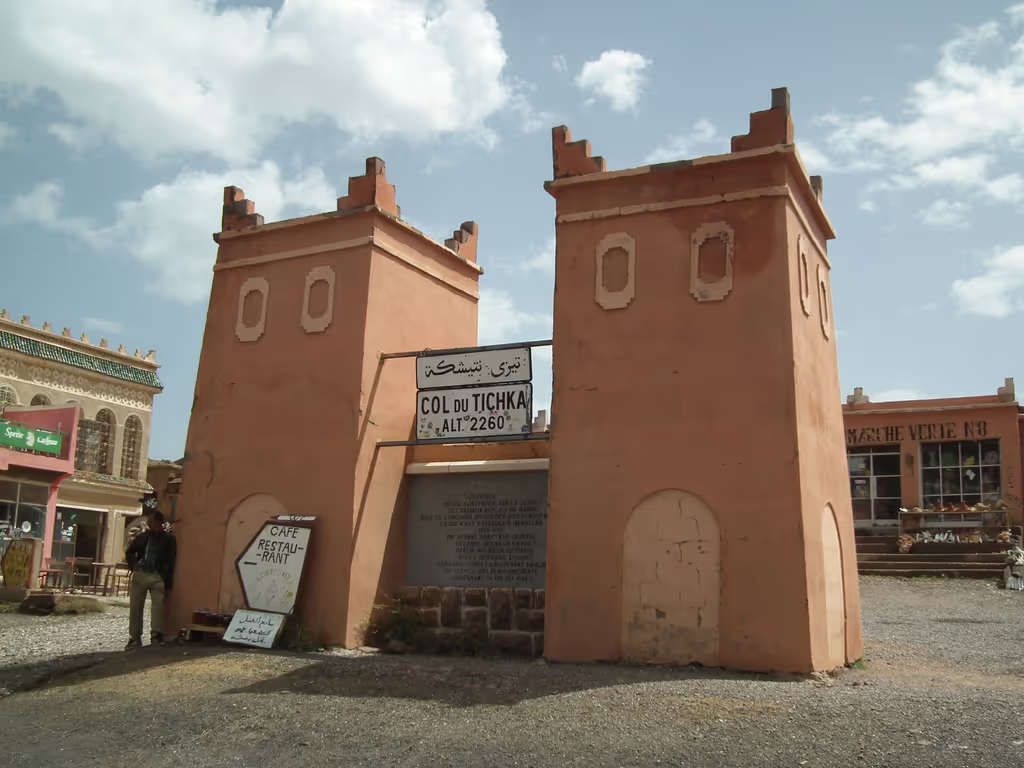
- Marrakech to Ouarzazate (High Atlas Pass): Nearly 200 kilometers (124 miles) of dramatic mountain driving crossing the Tizi n'Tichka pass at an altitude of 2,260 meters (7,415 feet), averaging 3.5 to 4 hours one way.
- Marrakech to Essaouira (Atlantic Coast): A straightforward 180-kilometer (112-mile) drive taking about 2.5 hours each way, making for a balanced 10-hour day trip with coastal exploration and a seafood lunch.
- Marrakech to Casablanca Airport (International Transfer): A smooth 240-kilometer (149-mile) highway stretch requiring approximately 2.5 hours of dedicated transit.
Major regional legs demand between 2.5 and 9 hours behind the wheel, with remote southern stretches completely lacking reliable public transport. Consulting a verified local guide provides direct clarity on mountain pass weather conditions, realistic daily drive times, and scenic stop pacing before structuring a multi-region itinerary.
Understanding how terrain dictates the daily clock establishes a clear foundation for examining how those hours translate into direct financial costs across each transit option.
Train, Bus, Shared Van, or Car: What One Long Leg Costs Per Person and Per Group
Evaluating long-distance transport costs requires analyzing how individual ticket fees compare against flat vehicle pricing across different group sizes. Moroccan transit rates fluctuate seasonally, establishing clear benchmarks across each transit mode:
- Marrakech to Fes Train: $18 to $45 (MAD 180 to MAD 420) per seat, depending on second or first-class selection.
- Marrakech to Merzouga Shared Van: $93 per person for a single seat in an 8-hour shared vehicle.
- Marrakech to Merzouga Public Transit: $40 per seat via Supratours or regional connections stretching over 12 to 15 hours.
- Marrakech to Errachidia Flight & Regional Bus: $120 to $180 total per traveler, combining regional flights with a 2-hour road connection.
- Private 3-Day Sahara Excursion: $840 per group for up to 7 passengers (averaging $119 per person for a group of 7), or $99 per person for budget arrangements.
- Private High Atlas Day Trip: $150 per group for up to 15 passengers, covering dedicated transport and driver services for a 10-hour day.
Financial calculations show two clear tipping points. Flat vehicle pricing makes private transport financially competitive with shared minivans once a group reaches three or four travelers. Conversely, direct rail routes offer unbeatable value along urban corridors, whereas remote desert stretches demand private transport for realistic timing. Checking customized tour itineraries allows travelers to compare private route pricing against individual public transit costs before committing to a daily schedule.
Because driving conditions across high mountain passes demand constant navigation, evaluating the realities of self-driving reveals whether rental vehicles offer real savings or added highway friction.
The Rental-Car Case: Tizi n'Tichka Switchbacks, Checkpoints, and Cash Fines
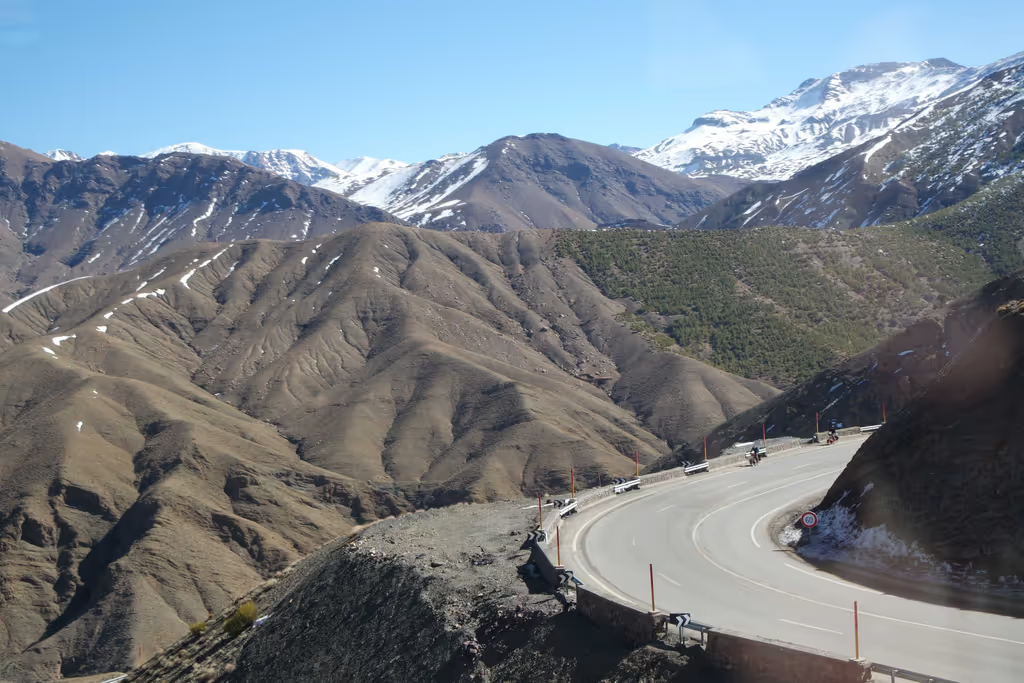
Renting a vehicle resolves rigid public transport schedules, but it introduces distinct operational challenges across mountain corridors. High Atlas transit and rural driving follow specific structural rules:
- Mountain Passes & Infrastructure: National routes like the Tizi n'Tichka (N9) and Tizi n'Test are fully paved two-lane highways accessible by standard 2WD vehicles, though remote unpaved tracks require higher-clearance 4WD vehicles.
- Traffic Hazards: Long queues frequently accumulate behind overloaded commercial trucks, agricultural vehicles, and livestock on narrow mountain ascents.
- Winter Pass Closures: High-altitude snowstorms can close mountain passes for one to three days between December and March, requiring daily weather verification before driving.
- Highway Checkpoints: Police checkpoints appear regularly at regional entry points, enforcing strict speed limits (40 km/h in urban areas, 100 km/h on open roads, 120 km/h on highways). Infractions carry mandatory cash fines ranging from $15 to $70 (MAD 150 to MAD 700) payable directly on-site.
- Night Driving Risks: Rural roads lack street lighting, making night driving hazardous due to unlit agricultural transport, pedestrians, and sudden road hazards.
Balancing rental fees against local navigation stress determines whether driving yourself adds value to your journey. Reviewing customized private car tours gives travelers a clear way to compare vehicle sizes, dedicated drivers, and route management without taking on the burden of mountain driving or checkpoint interactions.
Relieving navigation pressure across long mountain stretches leads directly to evaluating whether a private driver is necessary for every leg of a Moroccan itinerary.
Can You Do Morocco Without a Driver or Guide? (Honest Answer)
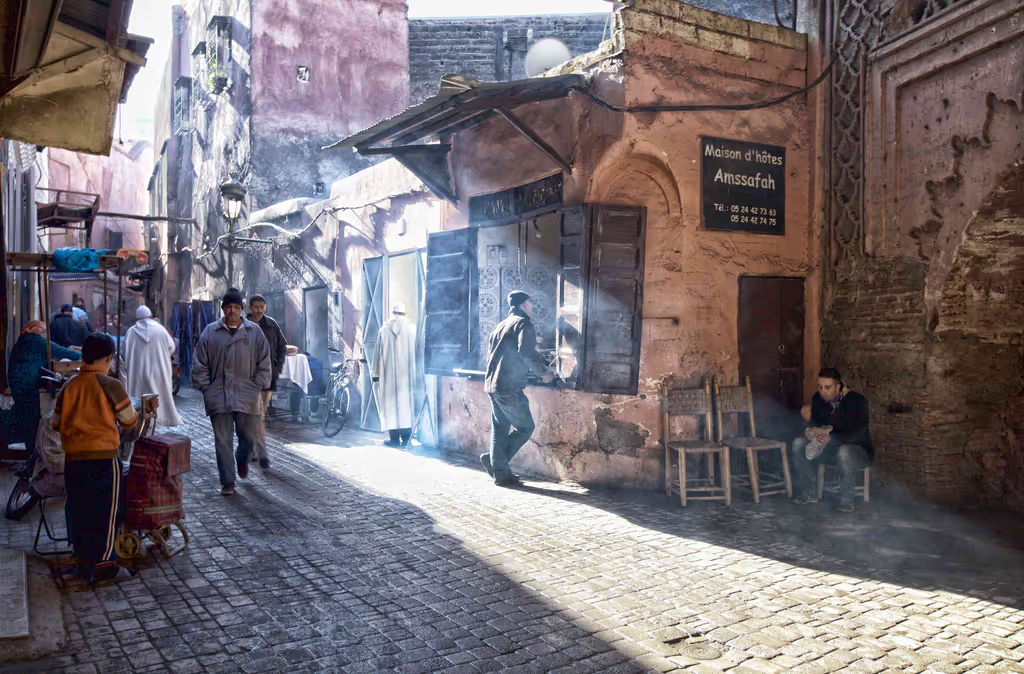
Exploring Morocco independently works remarkably well across major urban centers. Electric rail corridors efficiently link Casablanca, Rabat, Tangier, Marrakech, and Fes, while petit taxis handle urban connections, and ancient medinas remain strictly pedestrian zones best explored on foot. Navigating major historic districts independently offers spontaneous discovery, detailed in this breakdown of hiring a guide in Morocco.
However, independent transit encounters severe logistical friction across specific regions:
- Sahara Desert Transit: Reaching Merzouga via public transport requires fragmented regional connections through Meknès exceeding 15 hours, whereas private transit drops travel time down to 9 direct hours.
- High Atlas & Ouarzazate: Historic kasbahs, remote valleys, and film studios sit completely off the national rail grid, accessed only via high mountain passes susceptible to seasonal weather delays.
- Group Travel Mechanics: Reserving a dedicated private vehicle delivers lower per-person costs and superior luggage capacity compared to purchasing four separate seats on a shared commuter van.
- Airport Arrival Timing: Pre-arranged highway pickups eliminate price negotiations, terminal queueing, and late-night haggling after long international flights.
- Medina Access Barriers: Vehicle access ends at historical medina gates, requiring a 5-to-10-minute walk through pedestrian lanes to reach historic riads, meaning vehicle service assists with arrival drop-offs rather than direct doorstep access.
Hiring a private vehicle yields high practical returns on long intercity connections rather than short urban hops. Connecting with verified local guides allows travelers to verify drop-off locations near car-free medina zones and coordinate luggage handoffs before finalizing long regional legs.
Visualizing how these travel hours unfold across real mountain passes and desert highways highlights the hour-by-hour pace of a multi-day Sahara journey.
Three Days to the Dunes: The Marrakech-to-Merzouga Run, Hour by Hour
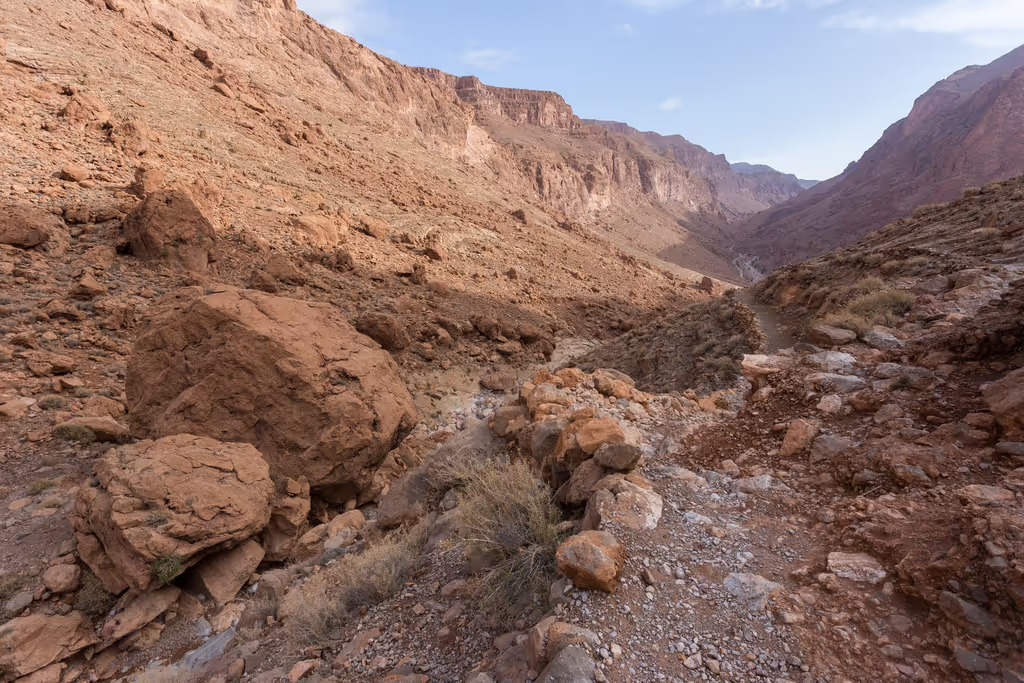
Cross-country transit through southern Morocco demands realistic daily pacing to manage steep elevation changes and winding roads. A structured three-day Sahara route follows a proven timetable:
- Day One: Crossing the High Atlas to the Valleys
- 7:00 AM – 9:00 AM: Hotel pickup in Marrakech and departure toward the High Atlas range.
- Late Morning: Summiting the Tizi n'Tichka pass (2,260 meters / 7,415 feet) for panoramic mountain photo stops.
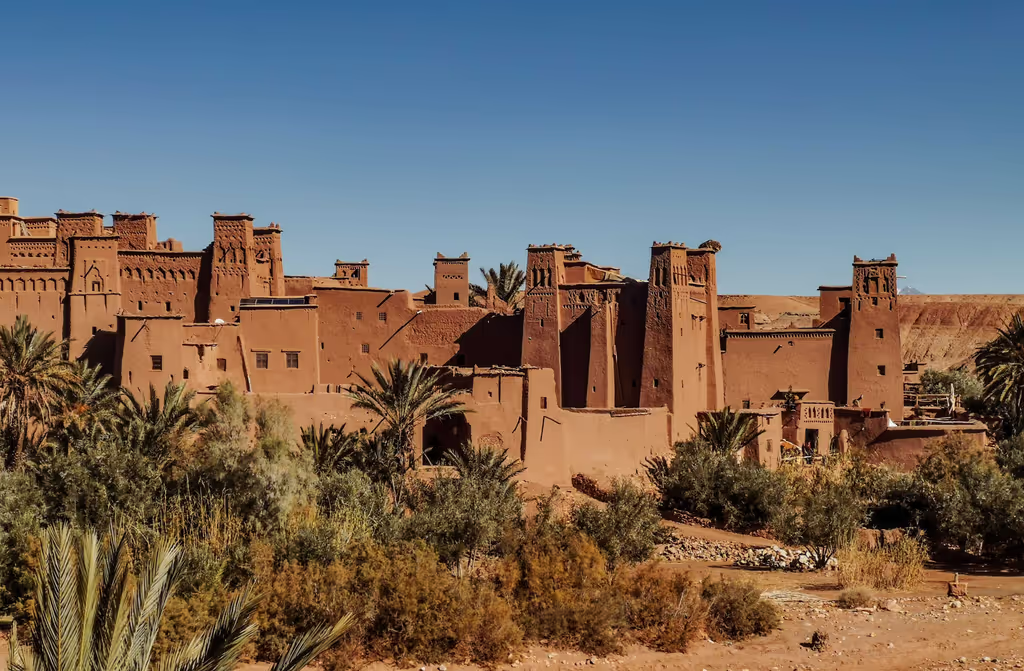
- Midday: Exploring the UNESCO-listed mud-brick fortress at Aït Benhaddou, followed by lunch overlooking the Ounila Valley.
- Afternoon: Continuing through the lush Skoura palm groves into the Dadès or Rose Valley for an overnight hotel stay and dinner.
- Day Two: Canyon Gorges to the Sahara Erg
- Morning: A peaceful walking stretch between the towering 300-meter limestone cliffs of the Todra Gorge.
- Midday: Regional roadside lunch while passing through the oasis towns of Erfoud and Rissani.
- 4:30 PM: Arriving at the Erg Chebbi dune line in Merzouga for a camel trek into the deep sand drifts before sunset.
- Evening: Traditional dinner, Berber music, and an overnight stay at a permanent desert camp beneath the stars.
- Day Three: The High-Desert Return Leg
- Early Morning: Watching the sunrise over the golden dunes before breakfast at camp.
- 9:00 AM: Departure on the intensive 9-hour direct return drive across the desert plains.
- Afternoon: Roadside lunch stop and brief stretch breaks along the southern highway corridor.
- 8:00 PM: Evening arrival back at your Marrakech hotel or riad perimeter.
Protecting this route requires avoiding late-night international flight bookings on day three due to potential mountain traffic delays. Confirming bundled line items, ensuring dinners and desert accommodations are included alongside driver services, prevents surprises on the road. Exploring private tour options allows travelers to adjust daily driving times, customize valley overnight stops, and choose desert camp comfort levels to match their group's ideal pacing.
Understanding the hour-by-hour timeline leads naturally into analyzing how pricing structures are calculated per person versus per group.
Evaluating Transport Pricing: Calculating Group Rates Versus Individual Traveler Fees
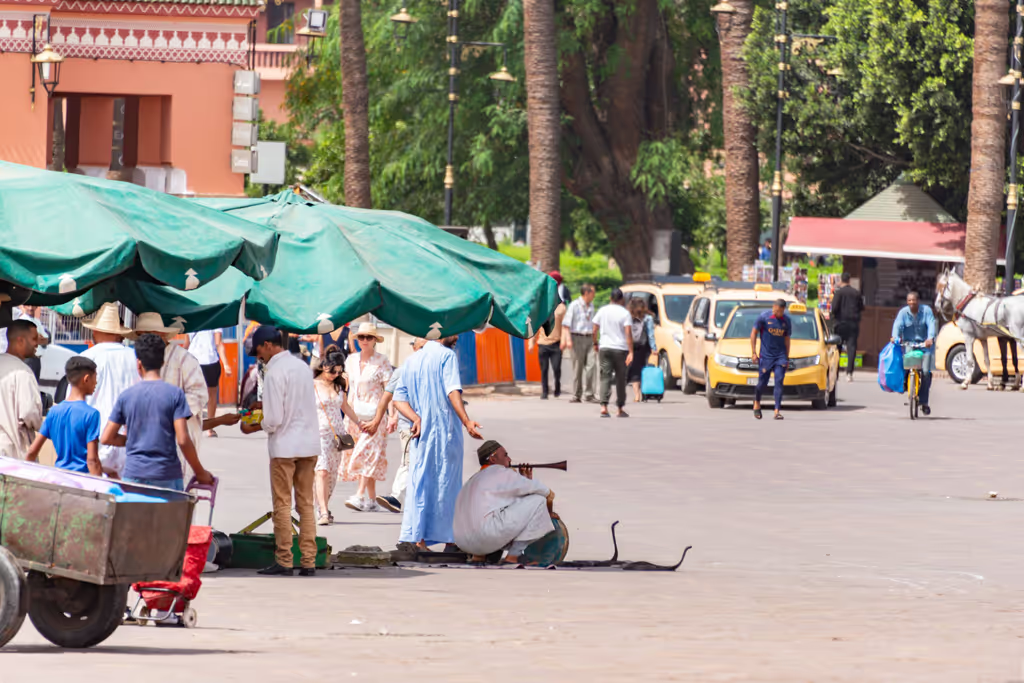
Evaluating vehicle quotes requires distinguishing between fixed flat-rate vehicle costs and individual per-person pricing models. A clear comparison reveals how group size alters total expenditure across major routes:
- Budget 3-Day Sahara Trip: $99 per person ($198 total for two travelers), covering transport, basic overnight accommodations, and desert camp access.
- Private 3-Day Sahara Excursion: $840 per group for up to 7 passengers, providing dedicated vehicle transport, private desert camp arrangements, and tailored stops.
- High Atlas Day Trip (Ouarzazate): $150 per group for up to 15 passengers, covering dedicated driver and vehicle transport for a 10-hour day trip.
- Essaouira Coastal Day Trip or Casablanca Airport Transfer: From $160 per group for up to 7 passengers, providing private minivan transport.
Evaluating overall value across these options relies on three financial verification steps:
- Calculate the Group Break-Even Point: Per-person rates favor solo travelers or couples. Fixed vehicle rates favor larger parties; an $840 group total breaks down to roughly $120 per person for a group of seven.
- Verify Bundled Inclusions: Multi-day private packages typically cover accommodations, breakfasts, dinners, and camel treks. Lunches, beverages, monument entry fees, and driver gratuities remain separate expenses.
- Distinguish Transport Drivers from Licensed Guides: Transport-only hires cover driving, fuel, and highway tolls. Local walking guides for historic kasbahs or monuments can be arranged separately on-site for roughly $44 (MAD 433).
Comparing flat-rate private transit against shared commuter minivans demonstrates that private transport wins on route flexibility, luggage handling, and group value, whereas shared minivans serve solo travelers needing single one-way seats. Reaching out through custom tour inquiries lets travelers submit their party size, travel dates, and exact route priorities to receive detailed group cost comparisons before committing to a booking.
Examining these cost mechanics leads directly into evaluating curated private vehicle options across Morocco's key travel corridors.
Happy Transfers' Marrakech-to-Casablanca Airport Run: Two and a Half Hours, From $160, a Minivan for Seven
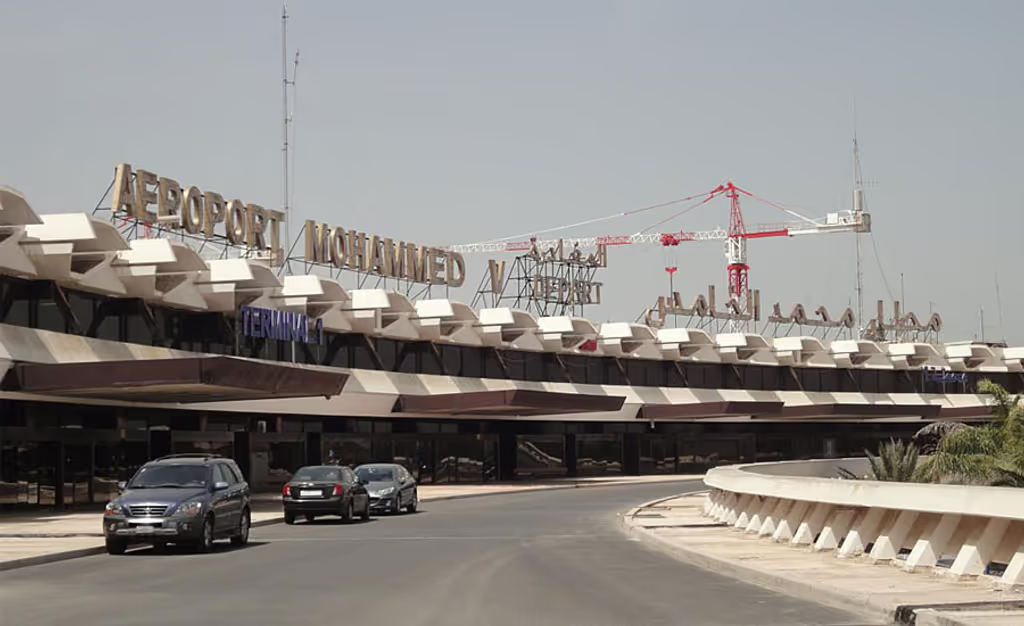
Managing early departures or heavy luggage across regional boundaries makes direct transfer services a practical logistical choice. Dedicated minivan transfers bridge the 240-kilometer (149-mile) highway stretch between Marrakech accommodations and Casablanca’s Mohammed V International Airport (CMN):
- Duration & Capacity: 2 hours 30 minutes of direct highway driving, accommodating up to 7 passengers with luggage.
- Pricing & Format: From $160 per group, operating as a private transport-only service.
- Route Inclusions: One-way hotel-to-terminal pickup in an air-conditioned vehicle, bottled water, and all highway toll fees. Food, beverages, and gratuities remain separate.
- Operational Logistics: Pickup times remain fully customizable based on flight schedules, with drivers recommending hotel departures at least three hours prior to international check-in windows.
- Medina Drop-off Realities: Vehicle pick-ups require walking 5 to 10 minutes to main medina gates or taxi hubs, as car access ends outside historic city walls.
Reserving dedicated vehicles eliminates terminal queueing, vehicle negotiations, and timing uncertainty when connecting to international flights. Reviewing airport transfer services allows families and small groups to secure fixed vehicle pricing, coordinate pickup meeting points near medina perimeters, and lock in reliable airport arrival times before departure day.
Transitioning from direct highway routes to full-day mountain excursions leads across the High Atlas toward iconic desert film settings.
Fun Transfers' Ouarzazate Day: Ten Hours, $150, a Driver Only for Up to Fifteen
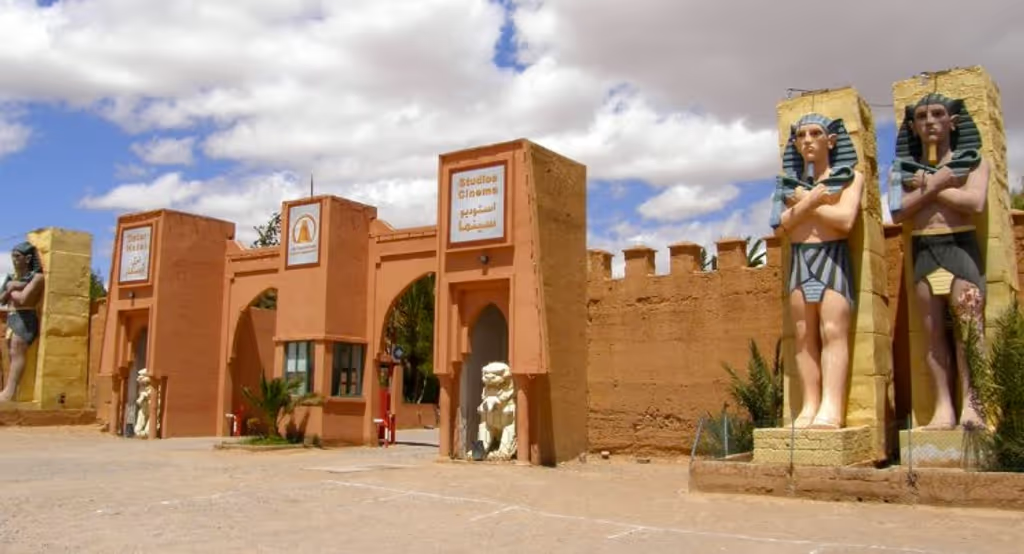
Crossing the High Atlas range to explore Morocco's ancient trade fortresses requires navigating steep mountain passes and long distances. A dedicated 10-hour day excursion covers the 200-kilometer (124-mile) stretch from Marrakech to the gateways of the Sahara:
- Duration & Capacity: 10 hours total round-trip transit, accommodating groups of up to 15 passengers.
- Pricing & Format: $150 per group, operating as a dedicated driver-only transport service.
- Key Destinations: The UNESCO World Heritage kasbah at Aït Benhaddou, Taourirt Kasbah, and the Atlas Film Studios in Ouarzazate.
- Route Inclusions: Round-trip hotel pickup and drop-off in an air-conditioned vehicle. Entry fees, meals, beverages, and licensed local walking guides remain separate.
- Daily Schedule: Departs Marrakech at 9:00 AM, reaches Aït Benhaddou by 11:30 AM for exploration, pauses for lunch in Ouarzazate near 1:00 PM, and returns across the Tizi n'Tichka pass by 7:00 PM.
This driver-only arrangement provides raw transport flexibility for larger groups who prefer exploring historic sites independently, with optional local walking guides available on-site for roughly $44 (MAD 433). Exploring private day trips to Ouarzazate enables families and larger parties to lock in flat-rate vehicle transport across the High Atlas without taking on the stress of mountain driving.
Moving from high-altitude desert passes toward the Atlantic coastline trades winding mountain roads for ocean breezes and coastal seafood.
Mohamed M.'s Essaouira Day: Ten Hours, From $160, a Driver and Guide for Up to Seven
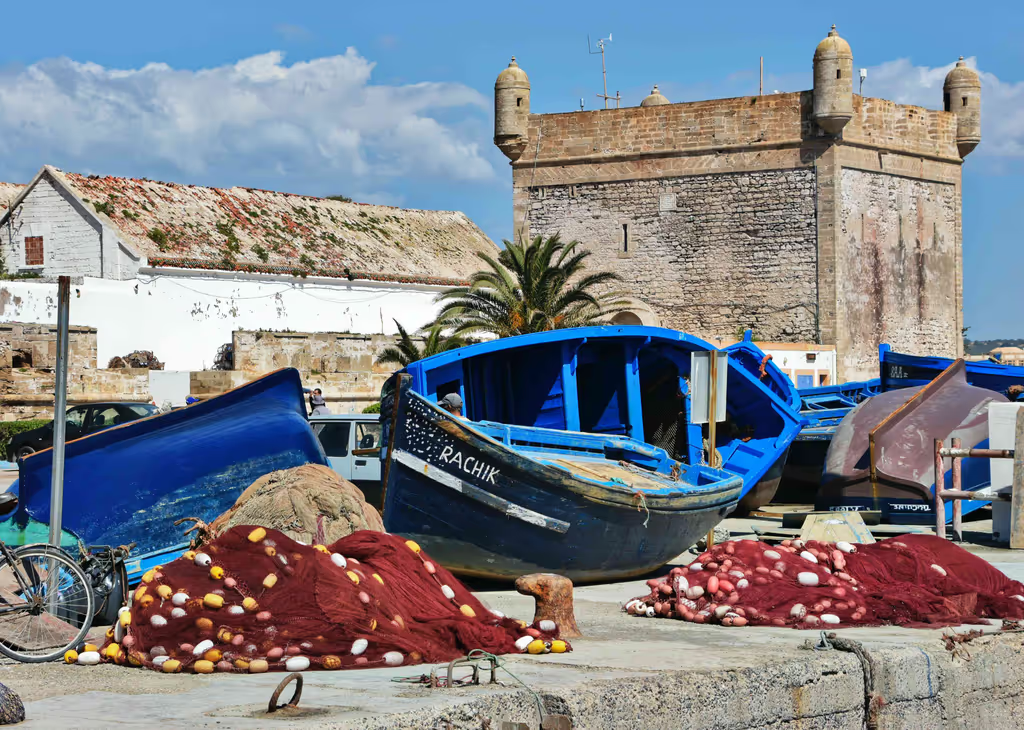
Escaping the interior heat of Marrakech for the breezy Atlantic oceanfront involves a straightforward 180-kilometer (112-mile) drive to the historic port city of Essaouira. A full 10-hour coastal excursion combines scenic transit with local cultural stops:
- Duration & Capacity: 10 hours total duration, accommodating private groups of up to 7 passengers.
- Pricing & Format: From $160 per group, featuring an English-speaking licensed driver-guide.
- Key Stops & Experience: A visit to a local women's argan oil cooperative, the historic Portuguese Skala ramparts, the vibrant fishing harbor, the artisan-filled medina, and Diabat beach.
- Route Inclusions: Private air-conditioned vehicle transport, Marrakech hotel pickup and drop-off, guided local commentary, and a coastal beach camel ride. Beverages remain a separate expense.
- Daily Flow: Morning departure from Marrakech at 8:30 AM, stopping mid-morning at an argan cooperative before arriving in Essaouira around 12:00 PM. Guests select fresh seafood directly at the port fish market to be grilled on the spot, followed by free time in the pedestrian medina, a beach camel ride at Diabat, and a 5:00 PM return drive.
Having a dedicated driver-guide streamlines regional navigation, offering rich local commentary during the drive while giving families and small groups total freedom over their seaside pace. Comparing Essaouira coastal day tours allows travelers to confirm departure times, review group vehicle layouts, and secure custom coastal itineraries before leaving Marrakech.
Shifting focus from single-day coastal runs to multi-day deep-desert expeditions reveals how full Sahara journeys combine mountain transport, valley stays, and dune camps into one complete route.
Mohamed M.'s Three-Day Erg Chebbi Trip: From $840, Dades, Todra, and the Dunes for Up to Seven
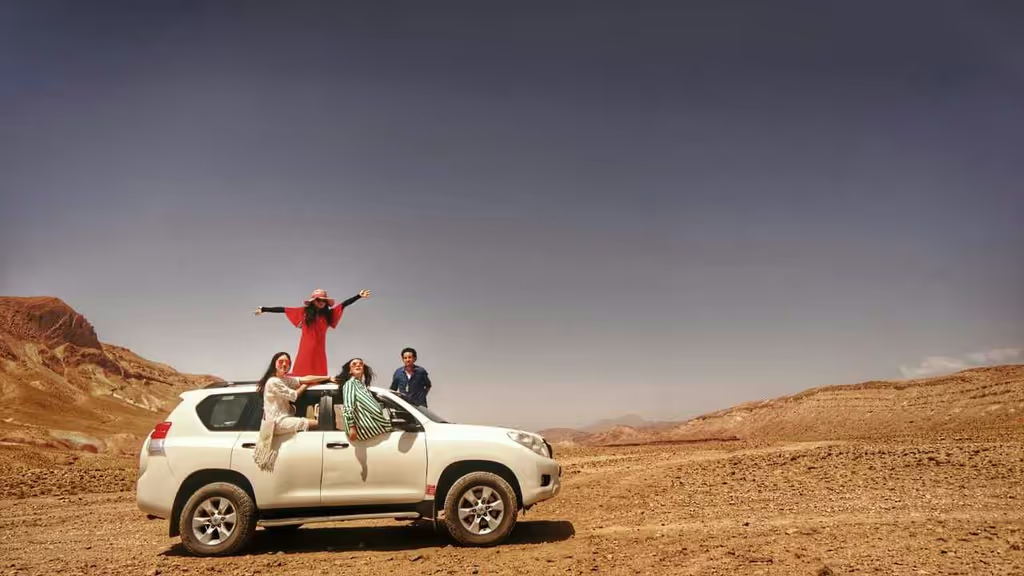
Reaching the high sand dunes of Erg Chebbi demands an extensive multi-day commitment across the High Atlas, lush river valleys, and remote desert roads. A private three-day circuit packages long-distance transport, mountain passes, and desert accommodations into a unified itinerary:
- Duration & Capacity: 3 full days, accommodating private groups of up to 7 passengers.
- Pricing & Format: From $840 per group, led by a dedicated English-speaking driver-guide.
- Key Destinations: The Tizi n'Tichka mountain pass, Aït Benhaddou kasbah, the Rose Valley, Dadès Valley, Todra Gorge, and the Erg Chebbi dune field at Merzouga.
- Route Inclusions: Marrakech hotel pickup and drop-off, private air-conditioned transport, two nights of accommodation (one hotel night in the valley, one night in a desert camp), breakfasts, dinners, and a dune camel trek. Lunches, drinks, monument entrance fees, and tips remain separate.
- Route Flexibility: Departs Marrakech at 9:00 AM on Day One, sleeping in the Rose Valley before heading into the dunes on Day Two. Day Three involves a direct 9-hour return drive arriving around 8:00 PM, with options to customize the final drop-off location in Fes or other Moroccan hubs upon request.
Bundling accommodation, vehicle hire, half-board meals, and mountain navigation into a single group rate gives families and small groups fixed budget transparency while leaving route adjustments flexible. Checking private multi-day Sahara tour options lets travelers customize end-point drop-offs, verify camp amenities, and review dates before starting the journey south.
Comparing this complete private package against streamlined budget options reveals how vehicle configurations and accommodation tiers alter total trip expenditures for smaller parties.
Abdelmounim B.'s Three-Day Merzouga Trip: $99 Each, a Van and a Guide for Up to Six
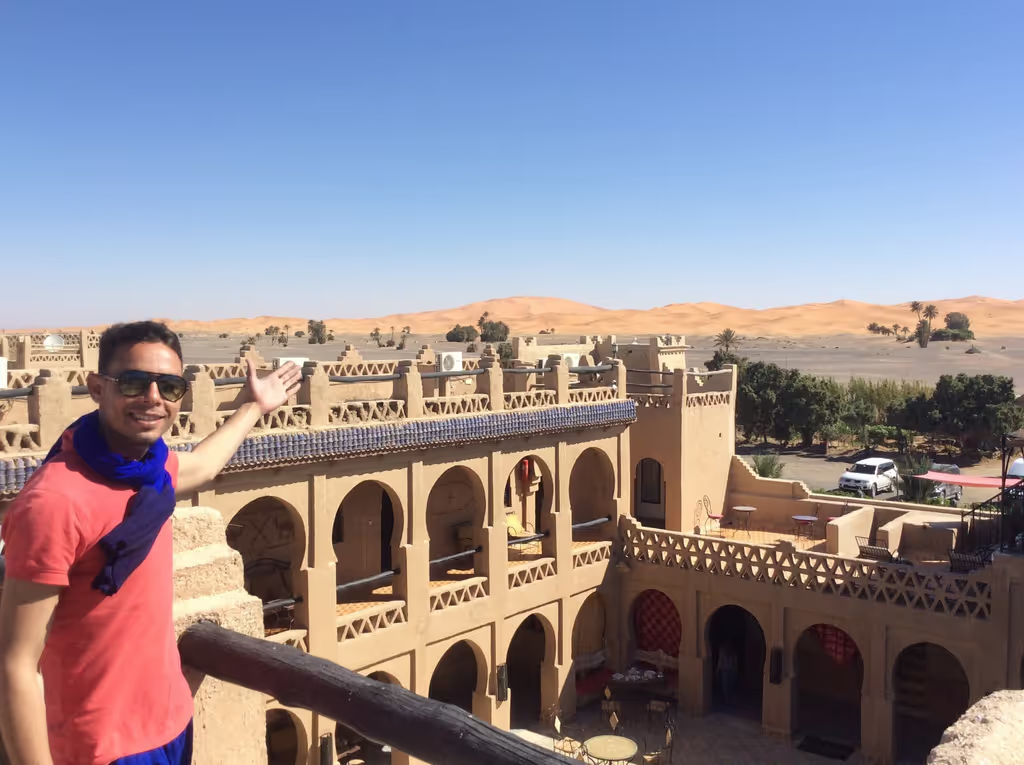
Travelers seeking to reach the dunes on a lower individual budget can utilize a per-person shared vehicle structure along the primary southern corridor. This 3-day budget route covers the full distance to Erg Chebbi while maintaining essential inclusions:
- Duration & Capacity: 3 full days, accommodating shared or small groups of up to 6 passengers.
- Pricing & Format: $99 per person ($198 total for two travelers), providing dedicated driver and guide services.
- Key Stops & Route: The Tizi n'Tichka pass, Aït Benhaddou, Skoura palm groves, Dadès Valley, Todra Gorge, Erfoud, Rissani, and Erg Chebbi.
- Route Inclusions: Minivan transport with fuel, highway tolls, and parking fees; one night of hotel accommodation in the Dadès Valley on half board (breakfast and dinner); one night in a Sahara desert camp on half board; and a dune camel ride. Lunches and personal expenses remain separate.
- Daily Schedule: Departs early at 7:00 AM from Marrakech accommodations on Day One, crossing the High Atlas toward the Dadès Valley for night one, continuing into the Merzouga sand dunes on Day Two, and returning through the southern oasis towns on Day Three.
Per-person pricing structures provide couples and solo travelers an economical entryway into the desert without paying for an entire private vehicle. Comparing budget desert tour options allows cost-conscious travelers to confirm van availability, verify camp details, and review inclusion lists before committing to a multi-day route.
Weighing individual seat rates against full private vehicle options leads into synthesizing the broader decision between rail corridors, self-driving, and dedicated drivers.
Choosing Your Path: Rail Corridors for Speed, Dedicated Vehicles for the Desert
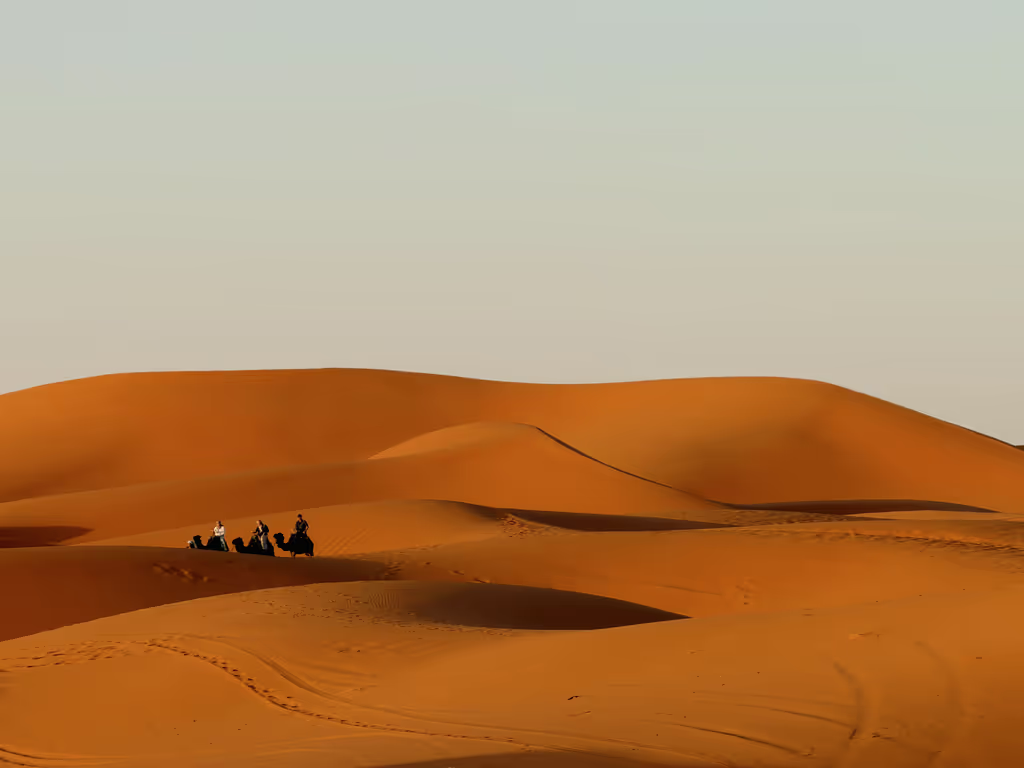
Returning to the road that forms an entire chapter of its own, how do you balance long-distance travel across Morocco by rail, bus, or private vehicle? Between major urban centers served by modern tracks, electric trains offer unmatched economic efficiency. But where mountain topography rises, and desert sands expand, private vehicles solve long-distance transit hurdles, transforming complex 15-hour multi-leg public routes into smooth, 9-hour direct journeys. Morocco rewards travelers who measure physical distance in actual hours rather than kilometers.
Managing journey friction comes down to key operational choices: navigating high-altitude passes during winter snow, clearing highway police checkpoints, or managing shared seating when traveling with a full party. Resolving those transit elements leaves room to appreciate mint tea breaks, sunset dune vistas, and late-night dinners in historic valleys.
Keep these core principles in mind when selecting private transport across Morocco:
- Calculate Distance in Clock Hours: Terrain and single-lane mountain ascents dictate real travel time far more than map distance.
- Audit Price Units and Package Bundles: Verify whether quotes reflect per-person or flat group rates, and confirm whether overnight accommodations, half-board meals, and local drivers are fully included.
- Confirm Itinerary Details in Advance: Lock in clear hotel departure times and Medina drop-off points in writing prior to departure day.
- Customize Around Your Group Pace: Private drivers provide total itinerary flexibility, allowing schedules to adjust based on weather conditions, mountain pass conditions, or spontaneous roadside stops.
If fixed-route packages do not align with your specific travel plans, connecting with local Moroccan guides allows you to tailor a completely custom multi-day itinerary. Sharing your travel dates, exact route preferences, and party size lets verified local professionals shape a personalized route around your timing, vehicle preferences, and group comfort level. Morocco has always told its richest stories to travelers willing to take the long road to find them.
Whether you are summiting the High Atlas passes, watching the sunset over the golden dunes of Merzouga, or unwinding by the Atlantic coast, the open road remains your gateway to Morocco's most breathtaking natural wonder.
Essential Morocco Private Driver & Transit FAQs
How much does a private driver cost in Morocco?
Private vehicle transport ranges from $150 per group for a 10-hour day trip up to $840 for a 3-day desert journey. Meals, entry tickets, and gratuities remain separate expenses.
How long does the drive take from Marrakech to Merzouga?
Direct driving takes roughly 9 hours, covering 550 kilometers across mountain corridors. Public transit connections require upwards of 15 hours due to indirect routing through Meknès.
Is there a direct train from Marrakech to Fes?
Yes, direct ONCF trains run daily between both cities, taking approximately 6.5 hours. Standard ticket fares cost between $18 and $45 (MAD 180 to MAD 420) per seat.
Is self-driving difficult for tourists in Morocco?
High mountain switchbacks, slow commercial truck queues, and frequent police checkpoints with cash fines create real navigation stress. Winter snow closures and unlit rural roads make private drivers a practical choice.
Does a private driver also serve as a local guide?
Transport-only drivers handle vehicle navigation, fuel, and highway tolls without offering site commentary. Licensed local walking guides for historic monuments can be arranged separately for roughly $44 (MAD 433).
Can private vehicles drop off directly at medina riads?
No, historical medinas remain strictly pedestrian zones where car access ends at the outer gates. Expect a 5 to 10-minute walk with luggage to reach inner riad entrances.