
Looking at a winter rail map of Europe with two weeks of December leave and dozens of glowing holiday squares to choose from brings up a familiar travel puzzle: which cities actually deserve a spot on your route, and how do you connect them without spending your whole trip on trains? Every major destination promises twinkling lights and wooden chalets, yet their opening calendars, crowd levels, and nightly hotel prices vary dramatically from one border to the next.
Putting together an unforgettable European market itinerary means aligning three practical factors before you book a single flight:
- How your group likes to travel.
- Which squares remain open on your exact dates.
- How far your daily budget needs to stretch.
Missing just one of those details can mean landing on 25 December to find shuttered stalls in Germany or paying peak weekend rates in an overcrowded plaza.
For the best Christmas markets in Europe in 2026, choose London’s dazzling light displays, Strasbourg and Paris for classic Western European gateways, Vienna and Nuremberg for grand imperial squares and craft heritage, and Budapest, Madrid, and Lisbon for standout value and mild winter weather. Most markets in Germany, France, and Austria open between mid- and late November and close on or before 24 December 2026, whereas Paris's Tuileries Garden, London, Madrid, Lisbon, Prague, Tallinn, and Budapest stay open into early January 2027.
Comparing how Europe's top market hubs differ in crowd density, closing dates, and everyday costs makes building that shortlist much simpler.
Which Christmas Market Is Right for Your Trip?
While hot spiced wine, roasted chestnuts, and carved wooden ornaments appear across the continent, each European market city delivers a distinct mix of local cuisine, architecture, and crowd energy. Treating every plaza as identical quickly leads to sightseeing burnout, whereas pairing one grand historic capital such as Paris with an intimate regional stop keeps your trip varied.
Pair your group's travel priorities with the destinations built for them:
- First-time visitors: Pick Nuremberg for its dedicated children's market and nostalgic carousel, Vienna for outdoor ice-skating trails and museum warm-up breaks, or mild-weather Portugal using our practical tips on Lisbon with Kids: Attractions, Hills & Itinerary Tips to keep cobblestone walking manageable.
- Couples: Seek out canal-side evening walks and candlelit lanes in Colmar, Strasbourg, or Salzburg, timing your visits for weekday late afternoons before dinner.
- Families with children: Pick Nuremberg for its dedicated children's market and nostalgic carousel, or Vienna for outdoor ice-skating trails, rides, and easy museum warm-up stops.
- Food-focused travelers: Combine Budapest (chimney cakes, goulash in bread bowls, and Hungarian wines) with Dresden (authentic Christstollen fruit bread) and Strasbourg (Alsatian flammekueche and bredele biscuits).
- Budget-conscious travelers: Look east toward Budapest, Kraków, Wrocław, or Riga, where mulled wine, street food, and December hotels often run 30 to 50 percent less than in Germany or Austria.
- Repeat visitors and crowd-avoiders: Skip Saturday evenings in marquee squares and plan around Tallinn, Dresden, or Graz, where local residents outnumber tour groups.
Matching your travel style to two or three complementary cities prevents wasted travel days. If your winter route connects through major western gateways, connect with a local guide in London to pair festive light walks with iconic landmarks before heading onward by rail.
Matching your group's pace to a focused shortlist clarifies where to go, and reviewing each city's standout strengths shows what sets these destinations apart.
The Best Christmas Markets in Europe by Travel Style
Eleven European cities stand out in 2026 for distinct regional strengths, spanning classic Western European gateways, centuries-old German craft capitals, and imperial Austrian plazas. Grouping them by travel style makes it easy to pick two or three stops that match your group's pace:
Classic First-Timer & Western Gateway Hubs
These four destinations work best for travelers connecting transatlantic flights with high-speed rail corridors and iconic city light displays:
- Strasbourg, France: Known as the "Capital of Christmas," Strasbourg hosts France's oldest Christmas market (Christkindelsmärik, dating to 1570), spreading more than 300 wooden chalets across Place Broglie and Place de la Cathédrale beneath Strasbourg Cathedral.
- Paris, France: Pairs grand boulevard light displays with chalet villages at the Tuileries Garden (La Magie de Noël), La Défense, and Montmartre, while sitting just 1 hour 45 minutes from Strasbourg by TGV train, as detailed in our guide to Christmas in Paris: Best Things to Do.
- London, United Kingdom: Anchored by Hyde Park Winter Wonderland, the Southbank Centre Winter Market along the Thames, and Covent Garden's giant mistletoe chandeliers, with direct Eurostar trains reaching Paris in 2 hours 15 minutes.
- Colmar, France: Thirty minutes south of Strasbourg by regional train, Colmar strings six intimate markets along canal-side half-timbered lanes in Little Venice, offering fairytale water reflections and smaller dusk crowds for couples.
Historic German Craft & Festive Tradition Capitals
If authentic wooden ornaments, regional baking, and centuries-old Advent customs sit at the top of your list, focus on these four German hubs:
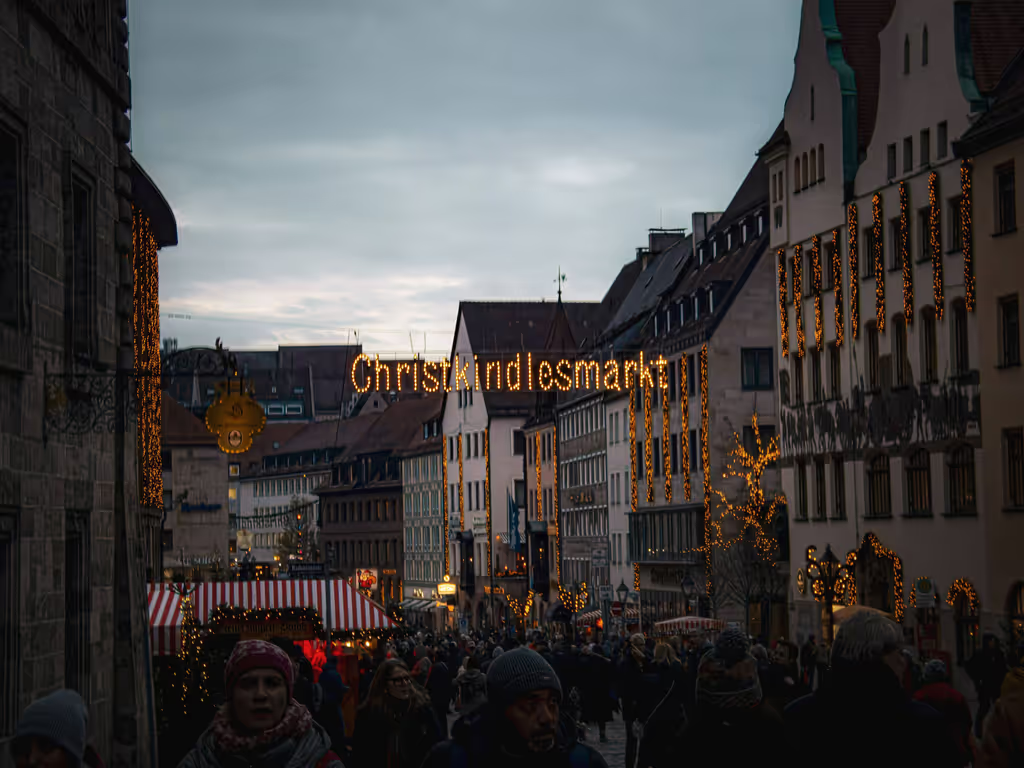
- Nuremberg, Germany: First recorded in 1628, Nuremberg's Christkindlesmarkt on Hauptmarkt bans mass-produced plastic goods in favor of handmade wooden nutcrackers, Zwetschgenmännle prune figures, authentic Lebkuchen gingerbread, and the adjacent Kinderweihnacht children's market.
- Dresden, Germany: Documented since 1434, Germany's oldest confirmed market (Striezelmarkt) showcases a 14.62-meter Erzgebirge Christmas pyramid and celebrates the city's famous powdered-sugar Christstollen fruit loaf.
- Cologne, Germany: Clusters several walkable themed markets led by the Markt der Herzen beneath the twin Gothic spires of Cologne Cathedral and Heinzels Wintermärchen in the Old Town.
- Munich, Germany: Centers on Marienplatz in front of the Neo-Gothic New Town Hall, complemented by the Medieval Market at Wittelsbacherplatz and the Tollwood Winter Festival at Theresienwiese for organic food and live performances.
Imperial Architecture & Musical Alpine Squares
Travelers drawn to grand palace courtyards, classical music traditions, and snowy mountain backdrops will find their ideal match in these three Austrian cities:
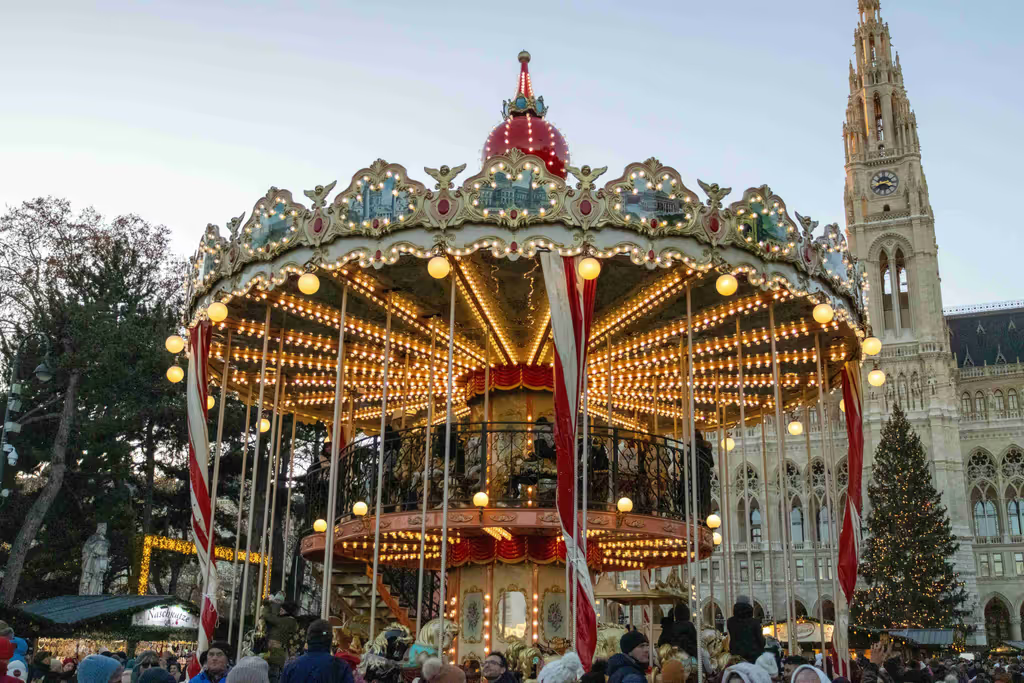
- Vienna, Austria: Hosts more than twenty separate markets across imperial plazas, led by the Viennese Dream Christmas Market on Rathausplatz with its ice-skating path and light installations, alongside calmer artisan stalls at Schönbrunn Palace, Belvedere Palace, and Spittelberg.
- Salzburg, Austria: Framed by snow-dusted Alpine peaks and Hohensalzburg Fortress, Salzburg's Christkindlmarkt on Domplatz and Residenzplatz reflects its Mozart and "Silent Night" heritage, pairing easily with Hellbrunn Palace's courtyard market.
- Graz, Austria: Austria's second-largest city offers over a dozen walkable Advent markets led by Hauptplatz and the artistic Färberplatz craft market, giving repeat visitors relaxed local hospitality with fewer tour buses.
Grouping these eleven cities by travel style makes it much easier to balance grand European capitals with intimate regional towns. If you are extending your December itinerary into Spain, browse private tours in Madrid to combine festive evening strolls with local culinary tastings.
For travelers seeking that same festive atmosphere at 30 to 50 percent lower daily costs, several Central, Eastern, and Southern European hubs deliver memorable markets without peak Western European prices.
Value Markets: Prague, Budapest, Tallinn, Riga, Kraków, Wrocław, Madrid and Lisbon
You do not need a luxury budget to enjoy authentic European Christmas markets. Several Central, Eastern, and Southern European cities offer full-scale wooden stalls, historic squares, and hearty seasonal food at 30 to 50 percent lower daily costs than Germany, Austria, or France. These eight destinations deliver a strong festive atmosphere while keeping accommodation, dining, and market prices noticeably lower:
- Madrid, Spain: For travelers who want lively holiday squares without sub-zero temperatures, Madrid's historic Plaza Mayor Christmas market runs through 31 December 2026, followed by Three Kings (Reyes Magos) parades and sweet roscón de Reyes pastries through 6 January 2027, paired with affordable tapas and mid-range winter hotels.
- Lisbon, Portugal: Lisbon combines mild Atlantic winter weather with budget-friendly December lodging, hosting Wonderland Lisboa in Parque Eduardo VII and traditional wooden stalls on Rossio Square right into early January 2027, complete with roasted chestnuts, bolo-rei fruit cake, and illuminated historic trams.
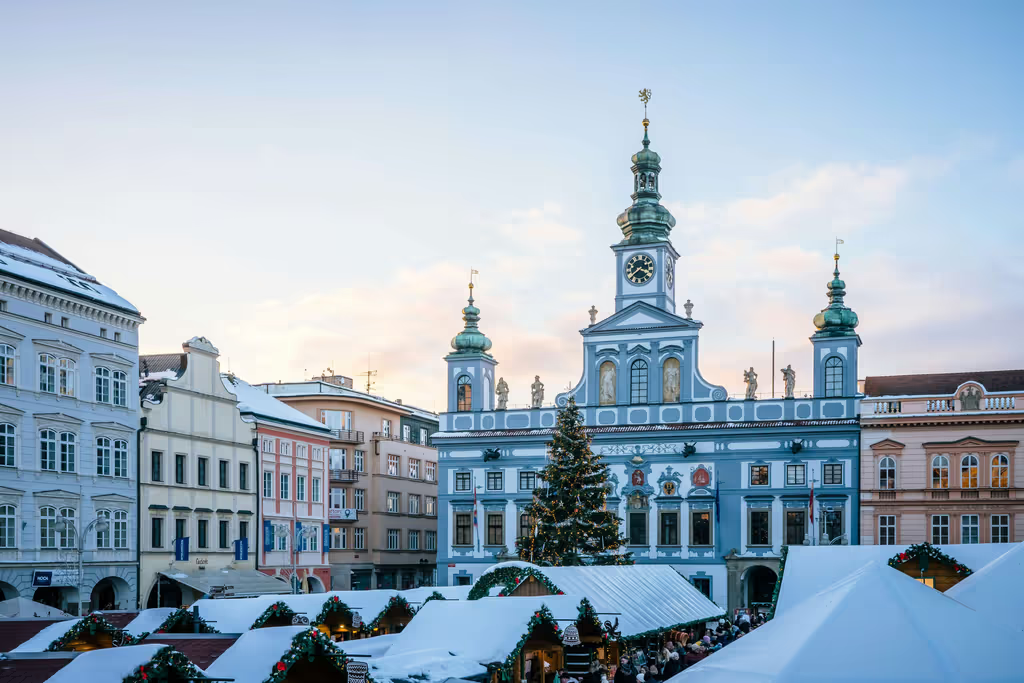
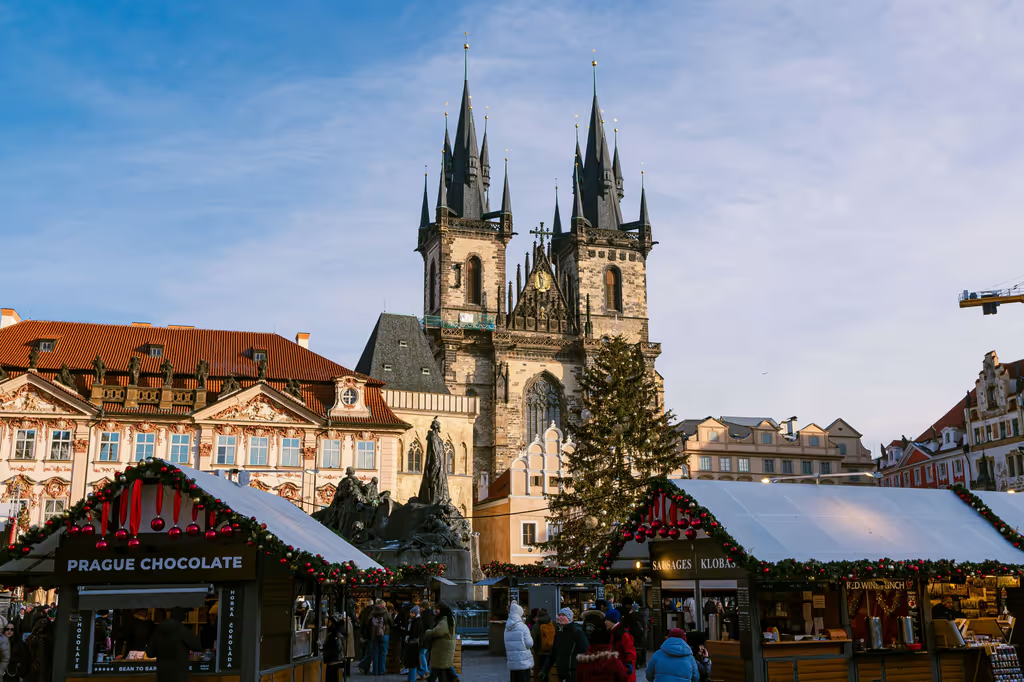
- Prague, Czechia: Combines dramatic Gothic spires on Old Town Square and Wenceslas Square with hourly tree light shows and an extended run through 6 January 2027, while Prague Castle hosts a quieter seasonal stroll rather than a full market in 2026, as outlined in our Prague Christmas market 2026 guide.
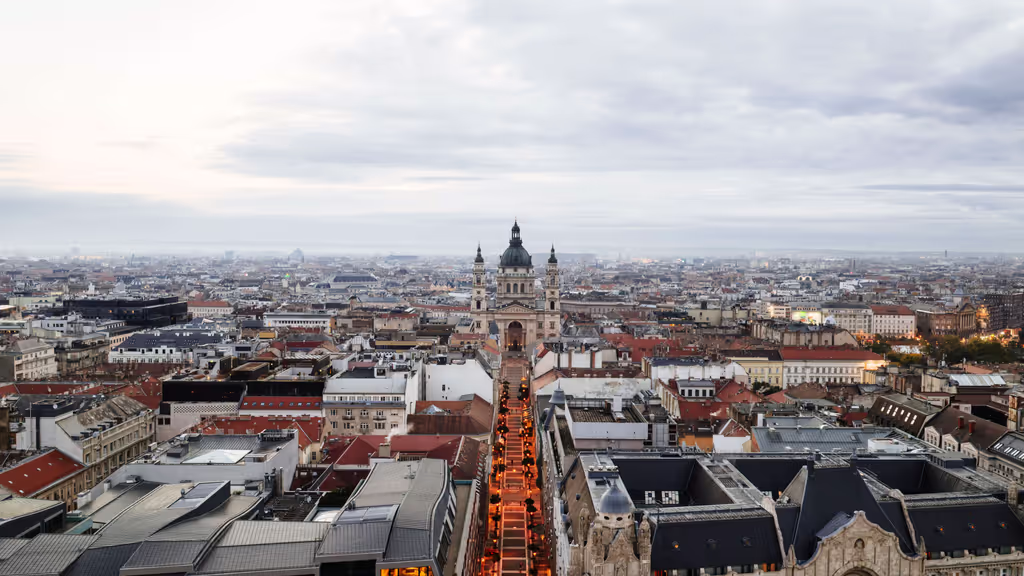
- Budapest, Hungary: Ranked among Europe's top value winter destinations, Budapest pairs free entry to Advent Bazilika and Vörösmarty Square with nightly 3D basilica light projections, warming Hungarian goulash, and affordable thermal bath sessions.
- Tallinn, Estonia: Tallinn's medieval Town Hall Square (Raekoja plats) market delivers intimate Baltic atmosphere, shorter queues, and a continuous run through 6 January 2027, making it ideal for post-Christmas trips.
- Riga, Latvia: Highlighted in 2026 budget rankings as a standout Baltic value pick, Riga's Dome Square (Doma laukums) market blends Art Nouveau facades, hot Latvian black balsam drinks, and low winter hotel rates.
- Kraków and Wrocław, Poland: Kraków's vast Rynek Główny beneath the Cloth Hall and Wrocław's fairytale market square serve pierogi, grilled oscypek smoked cheese with cranberry, and mulled wine at prices roughly 30 to 50 percent below neighboring Germany or Austria.
Choosing one or two of these value hubs keeps your total winter spend manageable without cutting back on festive food or central hotels. To discover neighborhood holiday traditions and local winter dishes, explore private tours in Lisbon with a resident host.
Choosing between marquee capitals and value hubs sets your destination list, while checking 2026 opening and closing dates ensures you do not arrive after the wooden huts have packed away.
Christmas Market Dates for 2026: What Opens, What Closes & When
European Christmas markets follow staggered regional calendars: openings run from mid-November through 28 November 2026, while most German, French, and Austrian markets close on 23 or 24 December 2026. By contrast, major festive hubs in Prague, Tallinn, Budapest, London, Paris, Madrid, and Lisbon stay open past Christmas Day into early January 2027. Always check official city tourism sites for final daily hours before locking in late-December flights or holiday meals.
Review the expected 2026 operating windows across our featured cities:
- Late November through 24 December 2026: Most classic German, French, and Austrian markets open in late November (including Nuremberg's Christkindlesmarkt from 27 November) and close on Christmas Eve, typically shutting down by early afternoon around 14:00 on 24 December (select Salzburg palace and fortress markets follow weekend timetables).
- Mid-November through 23–26 December 2026: Cologne's cathedral and Old Town squares run from mid-November through 23 December 2026, while Vienna's flagship Rathausplatz market operates from mid-November through 26 December 2026 (other Vienna markets such as Schönbrunn Palace continue into early January 2027).
- Late November through late December 2026: Colmar's six canal-side markets typically run from late November through around 29 December 2026, matching the late-December closing window of Paris's La Défense market.
- Mid-November 2026 through early January 2027: Paris's Tuileries Garden (La Magie de Noël), London's Hyde Park Winter Wonderland and Southbank Centre, Copenhagen's Tivoli Gardens, and Budapest's main squares all run into early January 2027. Note that Tivoli closes on 24 December, London markets close on 25 December, and Hyde Park requires advance timed-entry tickets.
- Late November 2026 through early January 2027: Prague's Old Town and Wenceslas Square and Tallinn's Town Hall Square both run through 6 January 2027, alongside Lisbon's Wonderland Lisboa and Rossio Square stalls. In Spain, Madrid's Plaza Mayor market runs through 31 December 2026 before Three Kings (Reyes Magos) festivities continue through 6 January 2027, making it easy to message a private guide in Madrid to pair New Year's week squares with local tapas walks.
Confirming which markets stay open past Christmas Eve with a local guide keeps late-December travel free of unpleasant surprises, especially when pairing Central European squares with Southern or Western capitals that celebrate into January. To secure a local host during peak holiday weeks, reach out to private tour guides in Lisbon as soon as your flight dates are set.
With your target market squares matched to your flight window, mapping realistic train legs keeps you from losing half your trip inside railway stations.
Getting Between the Markets: Routes, Trains and Times
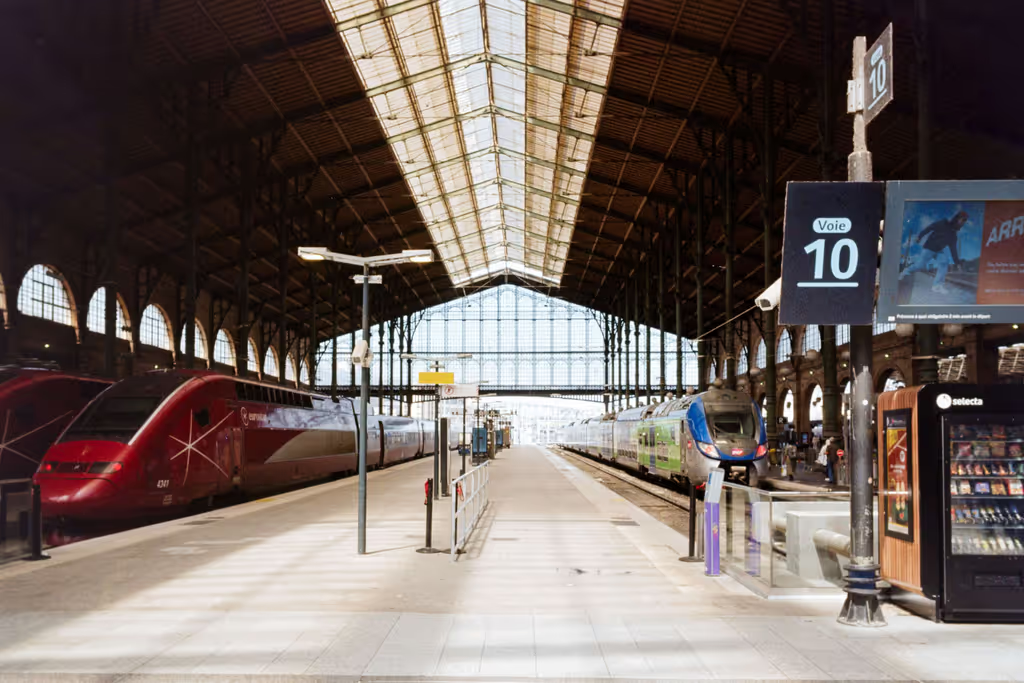
Europe's high-speed and regional rail corridors make multi-city market trips straightforward when you link neighboring hubs on 1- to 4-hour train rides rather than crisscrossing the continent. Many first-time planners underestimate winter transfer times and try to squeeze four countries into five days, leaving little daylight for actual sightseeing.
Keep these realistic point-to-point rail times in mind when sequencing your stops:
- Strasbourg to Colmar: Approximately 30 minutes by frequent TER regional train, making Colmar easy as a half-day or evening excursion.
- Munich to Nuremberg: Approximately 1 hour 10 minutes by direct ICE high-speed train, ideal for a day trip or overnight stop in Bavaria.
- London to Paris & Strasbourg: Approximately 2 hours 15 minutes by Eurostar from London to Paris, plus 1 hour 45 minutes by direct TGV from Paris Gare de l'Est to Strasbourg.
- Dresden to Prague: Approximately 2 hours 15 minutes to 2 hours 30 minutes by direct EuroCity rail through the Elbe River valley.
- Vienna to Budapest: Approximately 2 hours 40 minutes by direct Railjet or EuroCity train along the Danube corridor.
- Prague to Vienna: Approximately 4 hours by direct Railjet train.
Following a natural geographic corridor, such as linking London and Paris to Strasbourg before continuing through Munich, Nuremberg, Vienna, and Prague, avoids exhausting six-hour winter travel days. When arriving at major hubs with bulky winter coats and suitcases before boarding high-speed trains, arrange private transfers to move seamlessly from your terminal to the station or hotel.
Factoring train tickets, winter hotel rates, and daily market snacks into one clear estimate gives you full control over your trip budget.
Crowds, Weather and the Best Time to Go
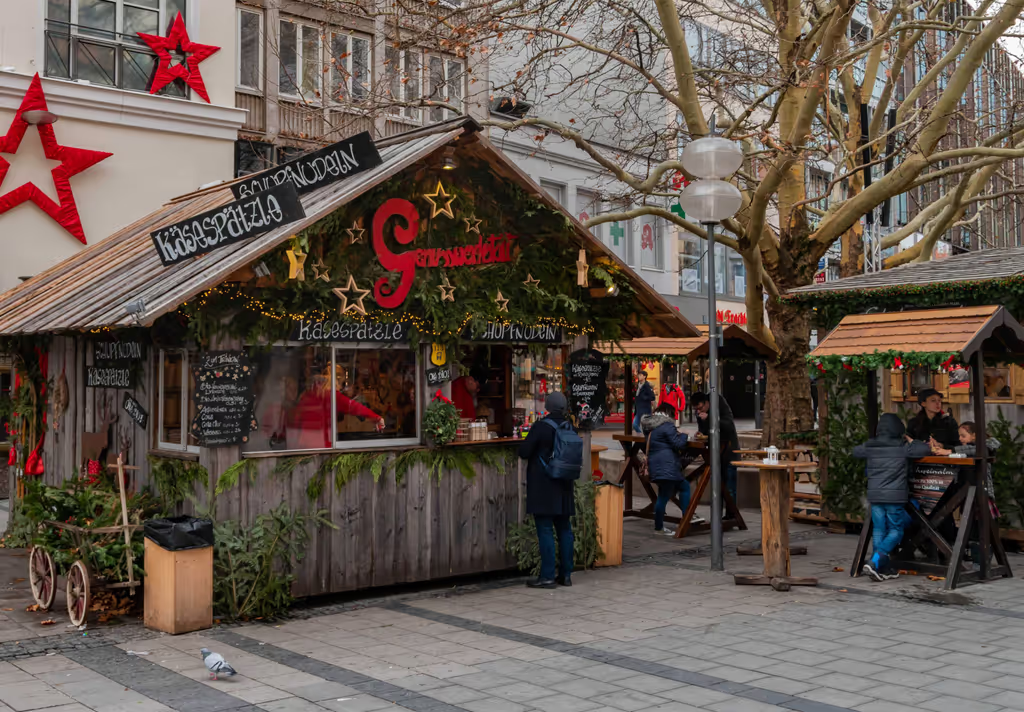
December across Europe brings crisp, damp cold, early sunsets between 15:30 and 16:30, and predictable weekend crowd surges, alongside practical details like cash-only stalls, ceramic mug deposits, and early Christmas Eve closures. Planning around daily crowd waves and packing for slick winter streets keeps your trip running smoothly.
Keep these seven practical habits in mind before heading out to the squares:
- Beat Peak Weekend Crowds: Flagship plazas in Strasbourg, Vienna, and Nuremberg become shoulder-to-shoulder between 16:00 and 20:30 on Fridays and Saturdays. Visit headline squares on weekday mornings (10:00 to 12:00) for relaxed browsing, or return after 20:00 for peaceful photos under the lights.
- Target Early December or Post-Christmas: The first two weeks of December deliver full decorations with noticeably lighter crowds and lower hotel rates than mid-December weekends. If you travel after 26 December, focus on Prague, Tallinn, Budapest, Madrid, Lisbon, or Vienna's Schönbrunn market.
- Dress for Damp Cobblestones: December temperatures hover between -2°C and 5°C (28°F to 41°F) across Central and Northern Europe, where chilly rain or sleet is just as common as snow. Wear thermal base layers, wool socks, and insulated, lug-soled waterproof boots rather than relying on thin-soled fashion footwear.
- Schedule Warm Indoor Breaks: Plan a café, church concert, museum, or thermal bath stop every 60 to 90 minutes so children and older travelers stay warm and rested.
- Carry Small Cash Alongside Cards: While major squares in Prague, Tallinn, London, Paris, and Copenhagen accept contactless cards widely, many food and drink huts in Southern Germany and Austria remain cash-only. Carry €10 and €20 notes to cover mulled wine, restrooms, and refundable €2 to €5 ceramic mug deposits (Pfand).
- Double-Check Christmas Eve & Christmas Day Hours: Most German, French, and Austrian markets close on 23 or 24 December (often shutting down between 14:00 and 16:00 on Christmas Eve). Book 25 December restaurant meals weeks ahead, as only select hubs stay open on Christmas Day.
- Watch Weight-Based Food Pricing: In Prague and Central Europe, spit-roasted ham and carved meat signs often quote prices per 100 grams rather than per sandwich, so specify your portion size before ordering.
Taking care of timing, warm footwear, and small cash ahead of time prevents common holiday snags. When chilly winter rain or heavy weekend crowds make long walks difficult for your family, arrange a private car tour in Paris to see illuminated avenues and landmarks from a heated vehicle.
Managing weather, crowds, and practical safeguards keeps winter energy high, leaving one major planning choice: whether to book an escorted package, hire private local guides, or travel independently.
Private, Group, and DIY Christmas Market Tours in Europe
Independent DIY rail travel usually costs less for couples comfortable booking their own trains, whereas multi-day group tours handle intercity luggage transfers and half-day private tours deliver local folklore and food curation without locking your entire week into a fixed bus timetable. Comparing the three main ways to structure your trip helps you spend your budget where it adds the most value.
Review how the three tour formats compare across cost, flexibility, and inclusions:
- Private Local Walking & Day Tours (Best Balance of Insight and Flexibility): Booking a half-day private guide in key cities gives you historical storytelling, crowd-dodging routes, and curated food stops while leaving your evenings free to explore at your own pace. Many private hosts in hubs such as Paris, London, Madrid, Lisbon, and Prague also offer heated vehicle options for families or travelers who prefer shorter walking distances in winter weather.
- Multi-Day Group Tours: Bundled multi-city coach or rail itineraries handle central hotels, intercity transfers, and a tour director from start to finish, though you follow a set group schedule with less spontaneous free time.
- Independent DIY Rail Trips: Reserving your own point-to-point train tickets and central hotels gives you total control over wake-up times and dinner plans, provided you book December weekend rooms and popular rail seats well in advance.
Before committing to any tour format, check four practical details: whether hotels sit within walking distance of the main square, how much free evening time is built into the schedule, whether winter transfers handle luggage door-to-door, and what happens if a market closes early on your dates. Send your preferred dates and group size to a private tour guide in London early to compare custom winter routes before peak December slots fill up.
Seeing how independent rail legs and private local guides fit together makes it easy to organize a balanced seven- to ten-day route.
5 Sample Routes to Explore Christmas Markets in Europe
Clustering neighboring cities on 1- to 4-hour rail legs lets you experience three or four distinct market traditions in a single week without exhausting winter transit days. Each seven- to ten-day route below balances marquee plazas with quieter stops and built-in afternoon rest windows:
- The Classic Franco-German-Austrian Arc (8 to 10 Days): Travel Strasbourg (2–3 nights) to Nuremberg (2 nights), Munich (2 nights), and Vienna (2–3 nights) between 28 November and 22 December 2026. This route links France's oldest market, Germany's traditional wooden-toy capital, Bavarian squares, and Vienna's imperial plazas, with an easy 30-minute train side trip to Colmar and a 70-minute high-speed hop between Munich and Nuremberg.
- The Alpine Snow-Globe Loop (7 to 8 Days): Connect Munich (2 nights) to Innsbruck (2 nights), Salzburg (2 nights), and Vienna (2 nights) between 25 November and 23 December 2026. Short mountain rail legs link snowy Alpine backdrops, Swarovski crystal trees in Innsbruck, Salzburg's fortress and Hellbrunn Palace markets, and Vienna's grand squares.
- The Imperial & Value Danube Route (7 to 9 Days): Pair Vienna (3 nights) with Budapest (2–3 nights) and Prague (2–3 nights) anytime from 1 December 2026 to 4 January 2027. Because Prague, Budapest, and Vienna's Schönbrunn market run past Christmas Day, this is the strongest route for late-December or New Year travel, with easy add-ons like a Kutná Hora day tour from Prague.
- The Cozy Baltic & Nordic Winter Route (7 Days): Combine Riga (2 nights) with Tallinn (2–3 nights) and Helsinki or Copenhagen (2 nights) between 28 November 2026 and 3 January 2027 (note Tivoli Gardens closes on 24 December). This northern arc delivers intimate medieval squares, lower Baltic hotel and food costs, strong chances of snow, and a scenic ferry or short flight across the Baltic Sea.
- The Western Gateway & Mild-Winter Route (7 to 9 Days): Pair London (2–3 nights) with Paris (2–3 nights) and Strasbourg (2 nights) via Eurostar and high-speed TGV between 28 November and 22 December 2026, or head south to combine Madrid (3 nights) and Lisbon (3 nights) anytime from 1 December 2026 to 5 January 2027. The northern rail corridor connects major transatlantic flight hubs straight to France's oldest Christmas market, while the Iberian route delivers extended New Year festivities, lower hotel rates, and warmer daytime walking weather.
Selecting one geographic corridor keeps transfer stress low and leaves plenty of time for afternoon café breaks and evening light displays. If your multi-city itinerary starts or ends with a transatlantic flight through Western Europe, hire a private driver to keep arrival and departure days effortless.
Pairing those multi-stop itineraries with a dedicated local host brings each gateway city to life, and the private walks and driving tours below highlight top-rated options in Paris, London, Madrid, and Lisbon.
Featured Private Winter Tours for Christmas Markets in Europe
Pairing your multi-city rail route with a dedicated local guide turns busy winter avenues and market squares into an effortless cultural experience. The five top-rated private tours below highlight festive lights, historic market squares, and seasonal food tastings across Western Europe's main gateway cities.
Kyle H.: London: Christmas Lights Tour
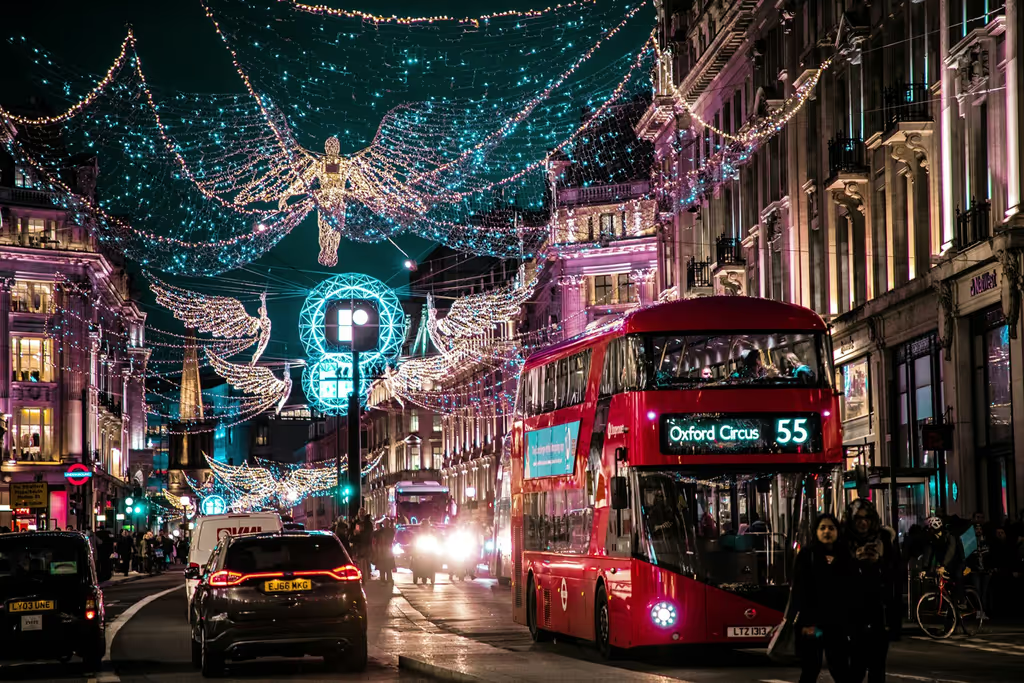
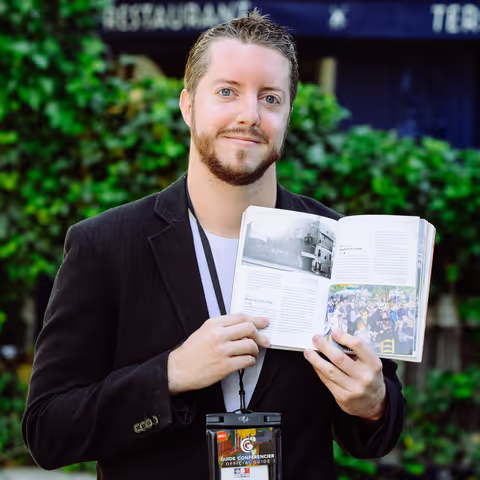
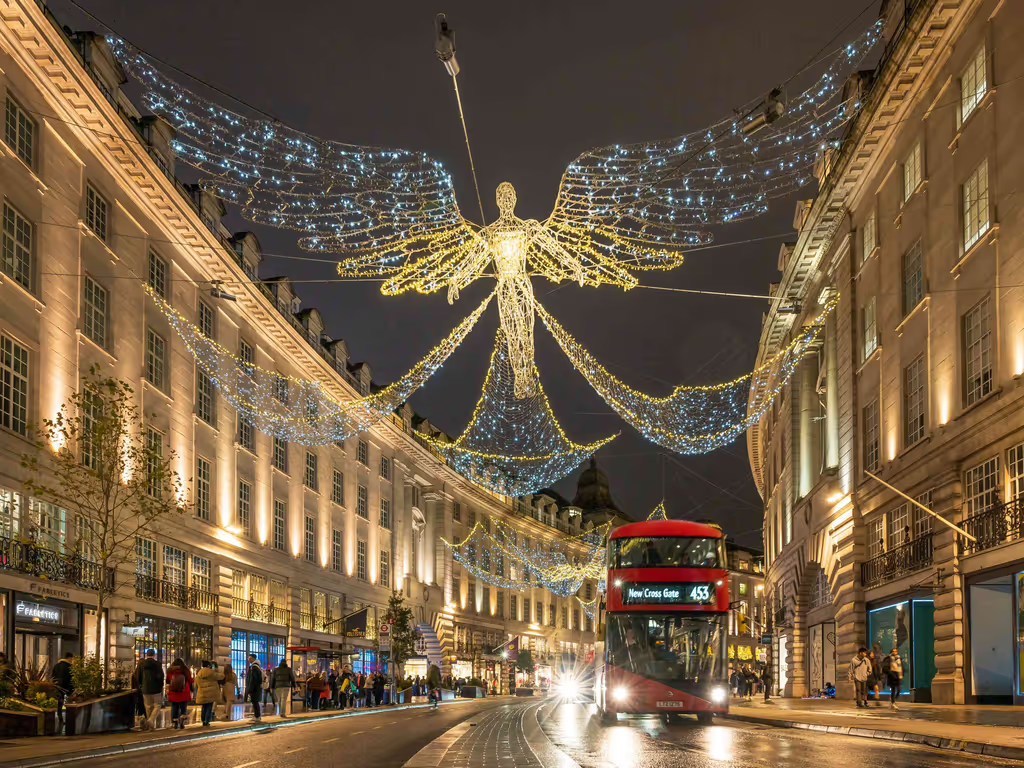
Best suited for couples, friends, and families arriving in London between mid-November and the first week of January, this 2-hour private evening walk is led by top-rated native Londoner Kyle H. Timed for after dark when London's holiday displays switch on from 16:00 onward, the route connects Oxford Street, Regent Street, and Covent Garden's seasonal market decorations with local tips on where to warm up afterward.
- Tour Format: Private evening Christmas lights walking tour hosted in English and French.
- Group Size & Setup: Private walking tour for up to 10 people.
- Duration & Price: 2 hours, priced from $150 per group.
- Key Landmarks: Oxford Street, Regent Street, Covent Garden holiday displays, and central London festive squares.
Step beneath London's glowing winter canopies with a native host on the London: Christmas Lights Tour this holiday season.
Travelers continuing across the Channel by Eurostar who want to admire illuminated boulevards without tiring out on long winter walks can opt for a private open-air electric ride in the French capital.
Rafael D.: 2-Hour Tour of Paris Monuments in an Electric TukTuk with Driver/Guide
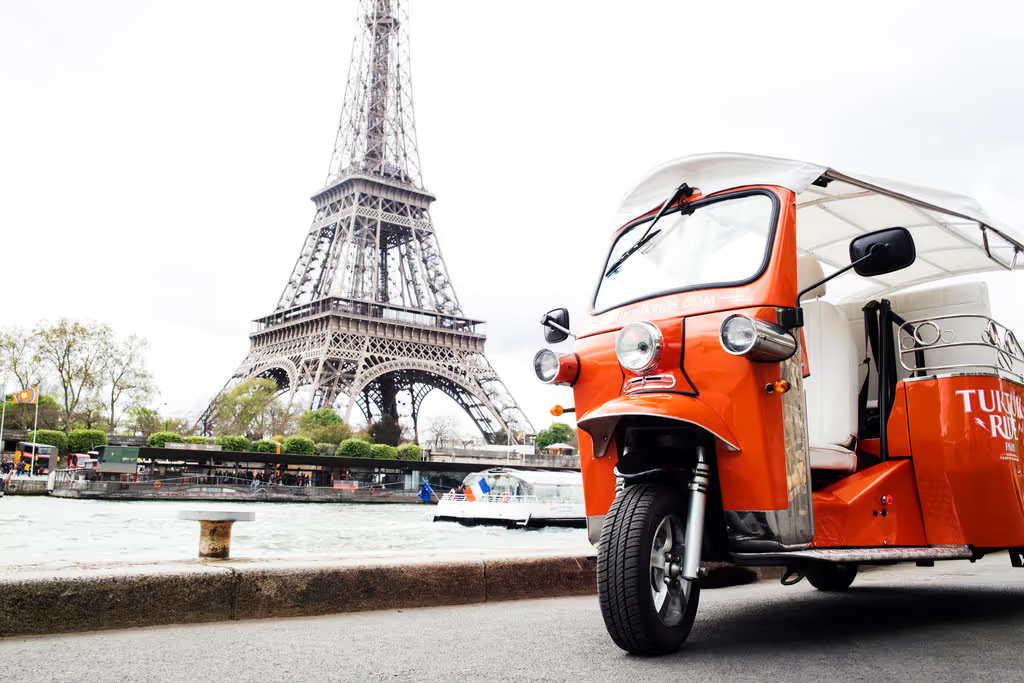
Ideal for families and couples wanting to see Paris's illuminated monuments in crisp December weather without long walks, this 2-hour private tour is led by top-rated host Rafael D. Riding a private electric tuktuk, you stop at headline landmarks and festive displays for stories and photos.
- Tour Format: Private driver-guide electric tuktuk tour hosted in English or French.
- Group Size & Setup: Private electric tuktuk tour for up to 6 people.
- Duration & Price: 2 hours, priced from $300 per group.
- Key Landmarks: Central Paris monuments, historic riverbanks, and illuminated winter boulevards.
Take in Paris's holiday lights and iconic facades without winter foot fatigue on the 2-Hour Tour of Paris monuments in an electric tuk-tuk.
If your winter itinerary heads south to Spain for milder weather and Plaza Mayor's traditional nativity stalls, a guided walk through Madrid's historic center brings the city's festive squares to life.
Victor A.: Private Madrid Historic Center – Iconic Landmarks & Hidden Gems
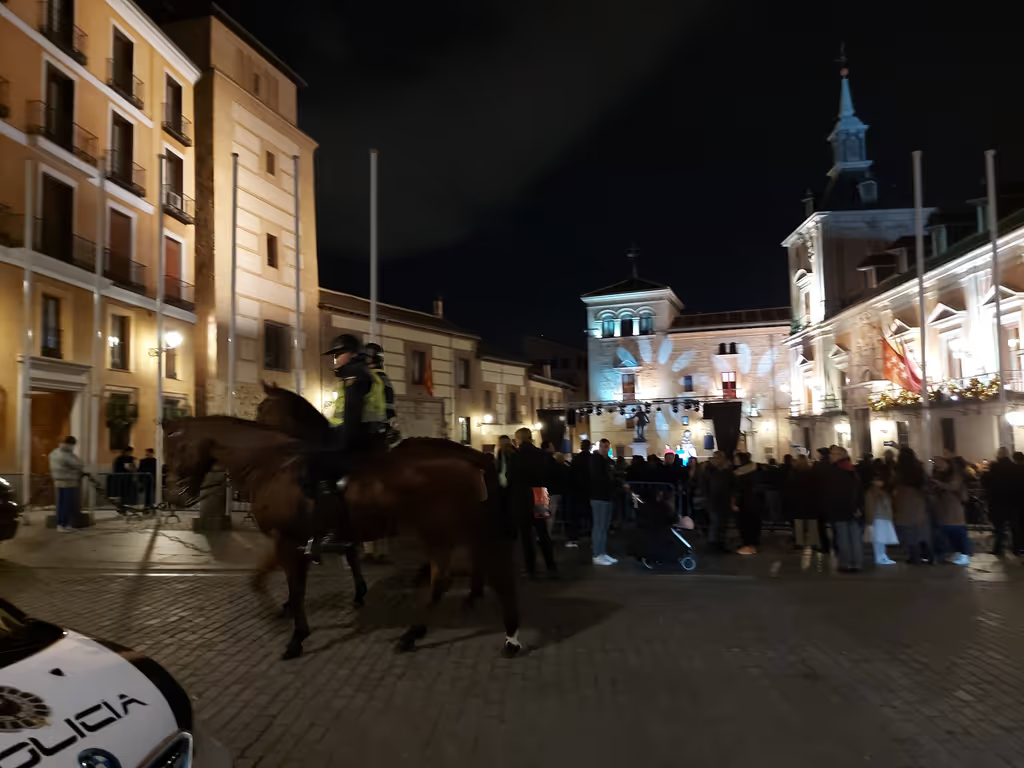
Ideal for first-time visitors pairing Madrid's main Christmas market square with historic taverns and royal landmarks, this 3-hour-and-10-minute private walk is led by local guide Victor A. Strolling through Habsburg Madrid, the route connects Plaza Mayor, lively festive squares, and traditional winter tapas bodegas.
- Tour Format: Private historic center walking tour hosted in English or Spanish.
- Group Size & Setup: Private walking tour for up to 6 people.
- Duration & Price: 3 hours 10 minutes, priced from $230 per group.
- Key Landmarks: Plaza Mayor, Madrid Historic Center, royal palaces, cathedrals, and traditional bodegas.
Explore Madrid's festive Plaza Mayor and historic taverns with a local specialist on the Private Madrid Historic Center Tour.
Continuing southwest across the Iberian Peninsula for mild winter sunshine and downtown holiday stalls, our next walk focuses on Portuguese comfort food and pastries.
Ida H.: Guided Food Tour – Classic Lisbon Flavours

Ideal for food-loving travelers spending December or New Year's week in Portugal's mild winter sunshine, this 3-hour private walk is led by top-rated guide Ida H. Strolling through Lisbon's illuminated downtown near Rossio Square, you sample warm pastel de nata, bacalhau croquettes, and bifana sandwiches with local wine.
- Tour Format: Private culinary and historic center tour hosted in Danish (Native), English, French, Norwegian, and Swedish.
- Group Size & Setup: Private food tasting walk for up to 15 people.
- Duration & Price: 3 hours, priced from $80 per person.
- Key Landmarks: Lisbon historic center, downtown festive squares, traditional bakeries, and local wine taverns.
Taste Lisbon's classic pastries and winter comfort dishes on the Guided Food Tour – Classic Lisbon Flavours through the historic center.
Rounding out our selection is a historic neighborhood walk in Paris that winds through medieval squares and ends at the city's oldest covered food market.
Ewan G.: The Marais - Essential Guided Tour
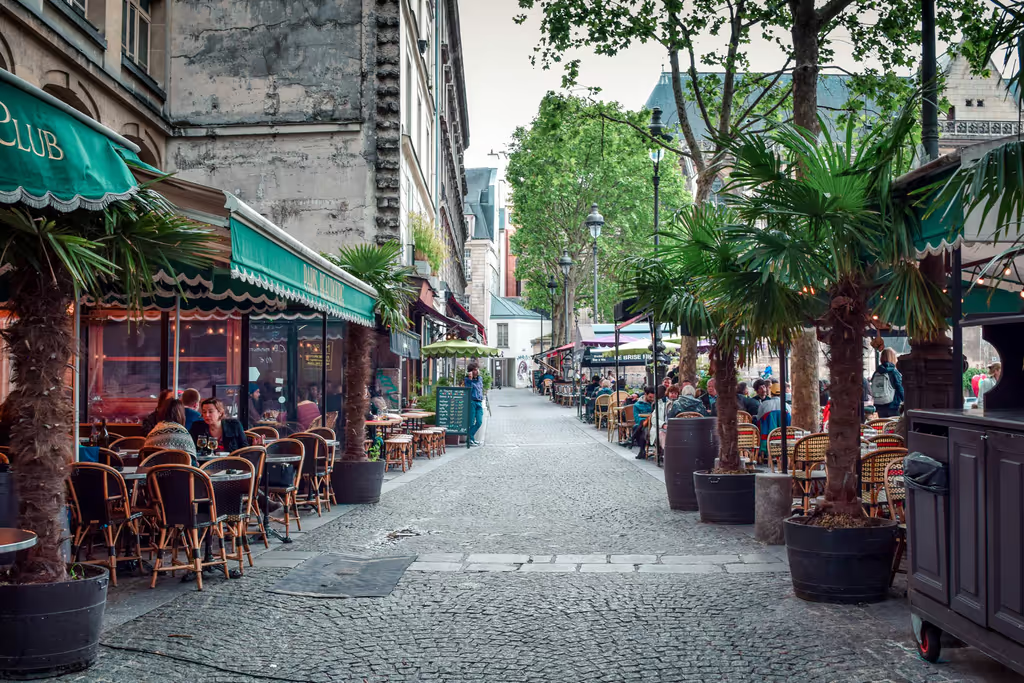
Ideal for travelers pairing winter shopping streets with historic architecture and local food halls, this 3-hour private walk with top-rated guide Ewan G. starts at Saint-Paul metro station. The route winds past Place des Vosges, Hôtel de Sully, the Jewish Quarter, and the Pompidou Centre before ending at Marché des Enfants Rouges.
- Tour Format: Private neighborhood and cultural walking tour hosted in English or French.
- Group Size & Setup: Private tour for up to 10 people meeting at Saint-Paul metro station.
- Duration & Price: 3 hours, priced from $295 per group.
- Key Landmarks: Place des Vosges, Hôtel de Sully, Victor Hugo's House, Musée Carnavalet exterior, Le Marais Jewish Quarter, Pompidou Centre, and Marché des Enfants Rouges.
Explore Le Marais's historic squares and Paris's oldest covered market with a local host on The Marais - Essential Guided Tour during your winter stay.
Bringing your rail legs, seasonal dates, and local guided walks together turns a crowded winter map into an effortless holiday plan.
Building Your 2026 European Christmas Market Plan
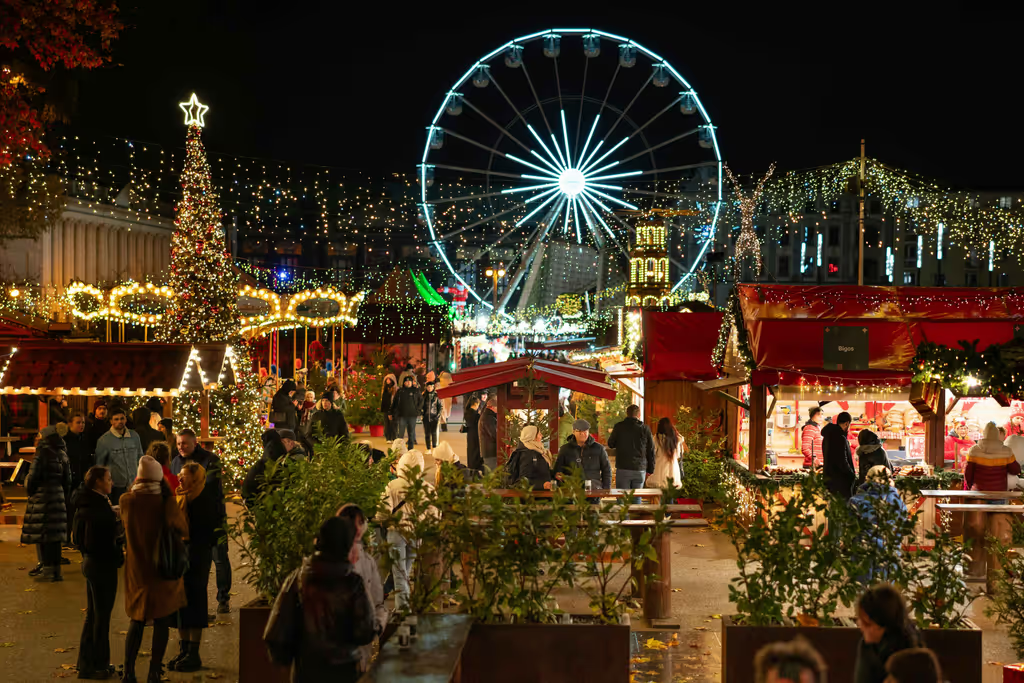
The best Christmas markets in Europe are not a single universal ranking; they are the two or three cities that match your travel pace, budget, and December dates without forcing you onto exhausting cross-continent train rides. Whether you pair London, Paris, and Strasbourg by high-speed rail, link Munich and Nuremberg for centuries-old craft heritage, or head toward Prague, Budapest, Madrid, and Lisbon for extended post-Christmas calendars and lower daily prices, matching your route to verified 2026 schedules makes every stop worthwhile.
Before booking flights or hotels, lock in four essentials:
- Align cities with holiday closures: Visit Germany, France, and Austria before 23–24 December, and save Prague, Budapest, Tallinn, Madrid, Lisbon, or Vienna's Schönbrunn market for Christmas Day through early January.
- Group destinations by rail corridor: Keep train legs between one and four hours along a single geographic line so short winter daylight goes toward exploring rather than station transfers.
- Plan around weekend crowds: Browse headline squares on weekday mornings or after 20:00, and reserve Saturday afternoons for indoor museums, concerts, or thermal baths.
- Prepare for damp cold and cash stalls: Pack lug-soled waterproof boots for slick cobblestones alongside small euro notes for German and Austrian Pfand mug deposits.
Narrow your wishlist to two or three neighboring hubs, check their official municipal hours against your flight dates, and connect with a private tour guide in Europe to tailor local walks and tastings around your schedule.
With your route, seasonal dates, and local hosts arranged in advance, you can step onto Europe's illuminated squares ready to enjoy steaming spiced wine, regional street food, and centuries-old winter traditions at your own pace.
Frequently Asked Questions
What are the best Christmas markets in Europe for 2026?
Strasbourg, Vienna, and Nuremberg are the strongest all-around choices for first-time visitors seeking classic European Christmas traditions and grand architecture. Travelers looking for fewer crowds or better value should prioritize Tallinn, Dresden, Budapest, or Kraków.
Which European Christmas markets are open on Christmas Eve and Christmas Day?
Most markets in Germany, France, and Austria close on 23 December or by early afternoon (around 14:00) on 24 December, and remain closed on Christmas Day. Prague's Old Town and Wenceslas Squares, Budapest's main markets, Tallinn's Town Hall Square, and Vienna's Schönbrunn Palace market stay open across 25 December and into early January.
How much does mulled wine cost at European Christmas markets?
According to the 2026 Eurochange Mulled Wine Index, prices range from roughly €0.93 per cup in Sibiu, Romania, to around €3.00 in Strasbourg and Budapest and €3.50 in Graz. In Germany, Austria, and Czechia, stalls usually add a refundable €2.00 to €5.00 (or CZK 50 to 100) deposit for ceramic mugs.
What is the best order to visit European Christmas markets by train?
A logical geographic rail sequence is Strasbourg, Nuremberg, Munich, Vienna, and Prague, keeping individual train legs between one and four hours. For a shorter route, pair Strasbourg with Colmar (30 minutes), Munich with Nuremberg (1 hour 10 minutes), or Vienna with Budapest (2 hours 40 minutes).
Is a Christmas market tour in Europe worth it?
A multi-day hosted tour is worthwhile if you want central hotels, winter luggage transfers, and one package that handles multi-city logistics during peak December weekends. Couples and independent travelers who are comfortable booking trains can often save by combining self-planned rail legs with half-day private local walking tours.
Are European Christmas markets cash only?
No, many stalls in cities like Prague, Tallinn, and Copenhagen accept contactless cards and mobile payments, especially at larger food huts. However, cash is still widely required across Southern Germany, Austria, and smaller neighborhood stalls, particularly for mulled wine and refundable mug deposits.