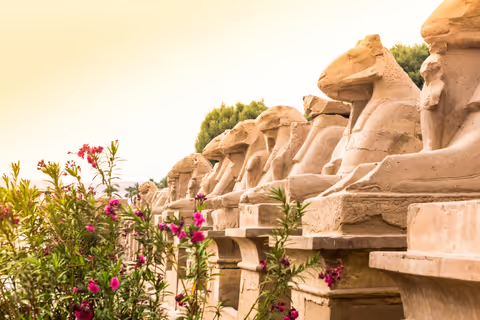
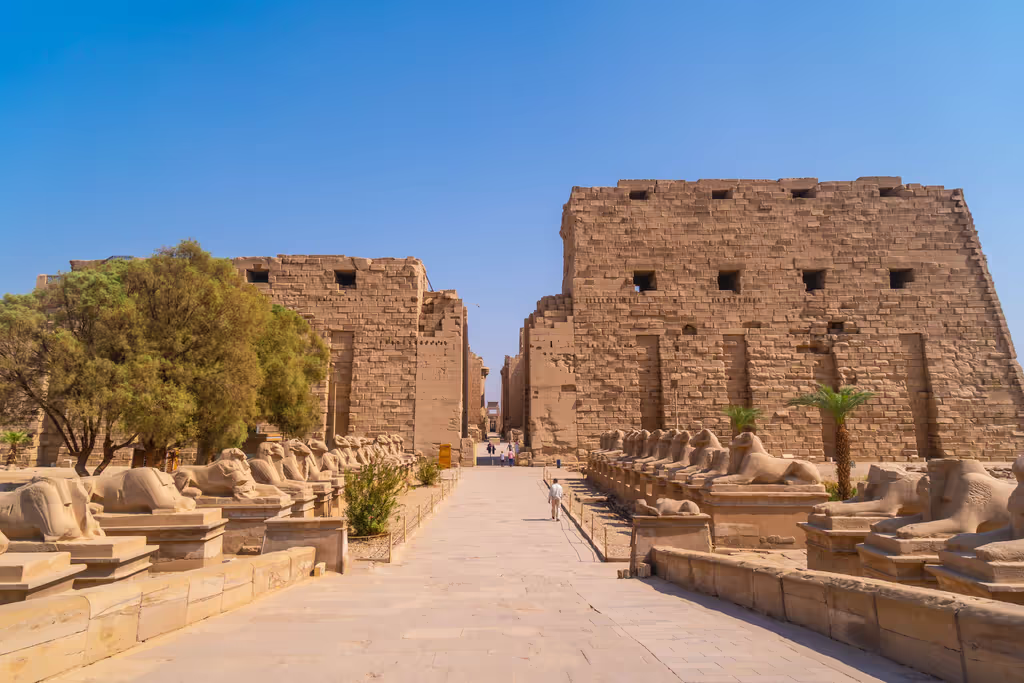
Stepping past the avenue of ram-headed sphinxes toward Karnak’s massive First Pylon, you are immediately confronted by the sheer ambition of ancient Egypt. Giant sandstone walls loom overhead, towering obelisks cut through the desert glare, and 134 colossal columns inside the Great Hypostyle Hall create a bewildering forest of stone. It is a breathtaking sight, but for anyone on a Karnak Temple tour for the first time, it also presents an immediate tactical hurdle: how do you meaningfully explore the largest religious precinct ever built without turning your morning into an exhausting, confusing walk?
Most travelers arrive at Karnak with a fundamental dilemma. Skimming through travel forums, you will find self-guided visitors who felt completely lost among unlabelled ruins, alongside group-tour passengers who were ushered past key reliefs on a hurried 45-minute walkthrough. Add in the intense East Bank heat, confusing ticket rules, and persistent souvenir sellers outside the main entrance, and it becomes clear why so many visitors leave feeling like they missed the site's deeper story.
What transforms a chaotic visit into an inspiring, effortless excursion isn't luck; it's mastering the site's operational realities before you set foot on the plaza. Knowing how the temple expanded over 1,500 years, timing your arrival to beat both the tour bus fleets and the midday heat, and navigating local ticket desk requirements allow you to craft a Karnak Temple tour that matches your exact rhythm.
Establishing these operational details in advance removes the guesswork from your day. Therefore, before diving into the complex architectural history and logistics, reviewing a clear, scannable baseline of core facts will help you map out a frictionless East Bank schedule for your time in Luxor.
Your Karnak Temple Visit at a Glance
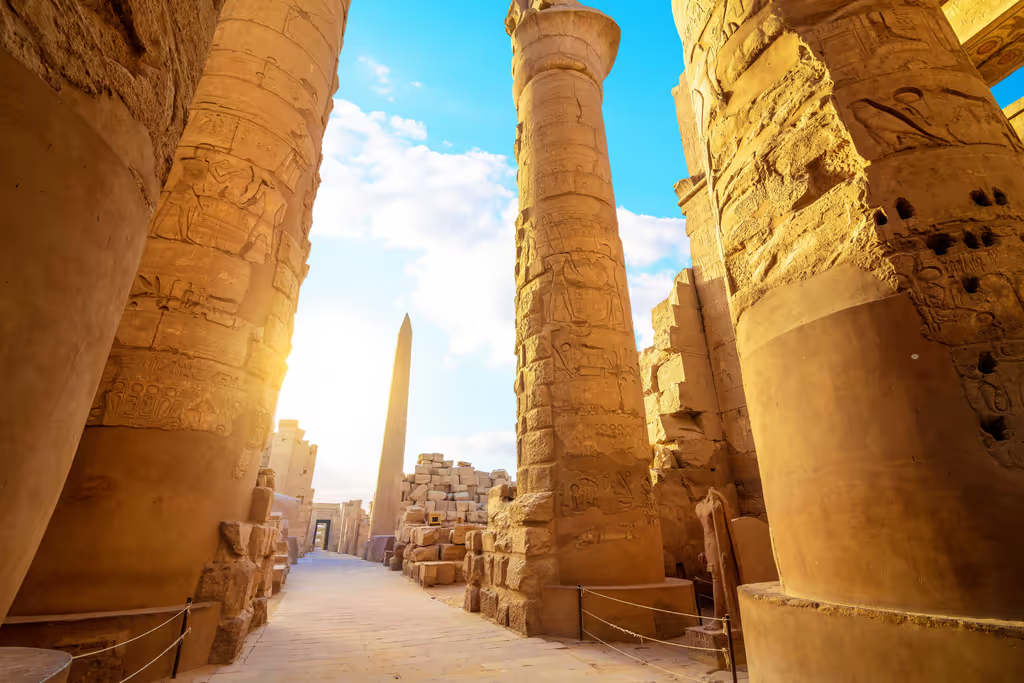
Karnak Temple is an ancient Egyptian religious precinct in Luxor, built over fifteen centuries as the official state sanctuary for the god Amun-Re. Before navigating its vast courts, reviewing these core operational parameters provides a clear baseline for your visit:
- Location & Scope: Situated on the East Bank of the Nile in Luxor, Karnak sits 3 kilometers north of Luxor Temple at the northern terminus of the Avenue of Sphinxes.
- Visit Duration: Exploring the central processional highlights requires 2 to 2.5 hours, while an exhaustive walk including auxiliary enclosures spans 4 to 5 hours.
- Optimal Timing Window: Entering right at the 06:00 AM gate opening secures quiet courts, comfortable walking temperatures, and golden morning light before tour bus fleets arrive around 09:00 AM.
- Ticketing & Access Rules: Baseline admission covers the main Amun-Re precinct; supplementary passes are needed for evening shows, and pricing requires live verification at the gate.
- Private Guide Support: A private Egyptologist decodes royal wall cartouches, establishes an efficient walking circuit, and navigates ticket desk mechanics on your behalf.
Reviewing these baseline facts establishes a solid framework for planning entry times, budgeting, and ground transport; key details a licensed Luxor private guide can align directly with your hotel or Nile cruise schedule to lock in a custom morning itinerary.
With these foundational parameters set, stepping onto the grounds with complete confidence requires unspooling the site's multi-layered pharaonic construction to make sense of its physical layout before arriving at the gates.
Why Karnak Is So Confusing (And How to Approach It)
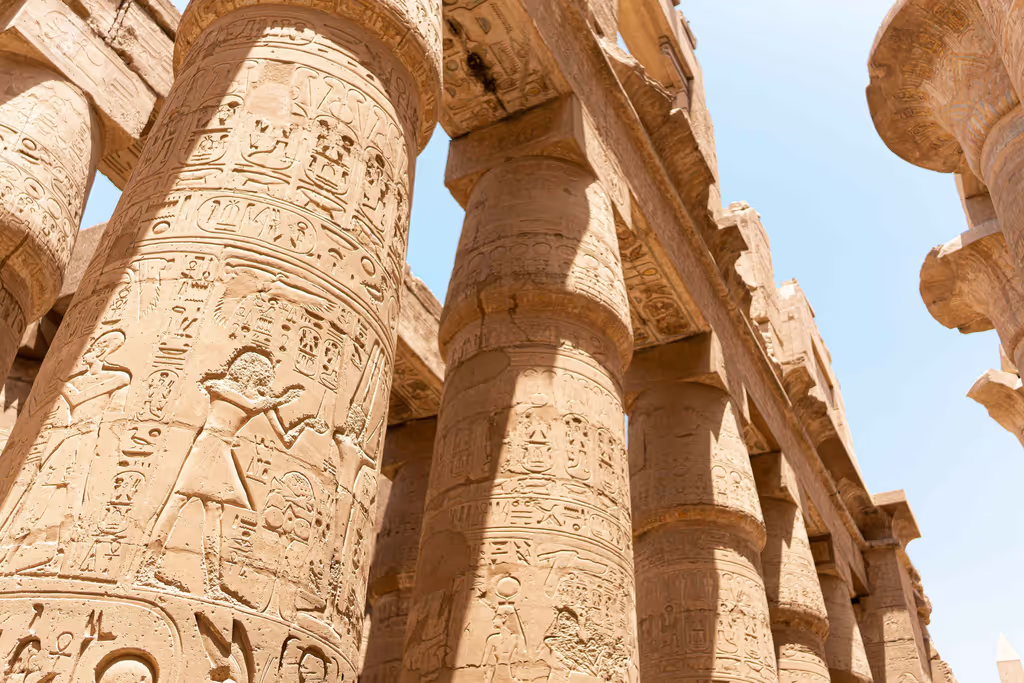
Karnak is not a single temple built by a single ruler. It is a vast precinct developed, expanded, dismantled, and re-carved by over 30 pharaohs across more than 1,500 years, spanning the Middle Kingdom through the Ptolemaic period. Successive rulers wished to leave their mark on the primary sanctuary of the state god Amun-Re, continually adding new gateway pylons in front of existing structures, enclosing earlier courts, and reusing stone blocks from predecessors.
Without understanding this layer-by-layer growth, walking through the complex feels like navigating an overwhelming jumble of stone where monuments sit out of chronological order.
To make sense of the ground layout, approach Karnak along two primary architectural axes:
- The Primary East-West Axis: This main path begins at the First Pylon, leads through the Great Forecourt into the Great Hypostyle Hall, passes towering royal obelisks, and terminates at the central sanctuary and older Middle Kingdom court.
- The Secondary North-South Axis: This branch splits southward through four additional gateway pylons, historically linking Karnak directly to the Mut Precinct and the Avenue of Sphinxes leading toward Luxor Temple.
Recognizing that the newest structures sit at the entrance while the oldest core lies deeper inside immediately organizes your mental map. Grounding your visit in this spatial framework prepares you to execute a disciplined walking route across the main Amun-Re precinct.
Classic 2-Hour Karnak Route: Core Highlights
Allocating a focused two-hour window toward the primary Amun-Re precinct requires strict geographic discipline. Because Karnak spans over 60 acres of sprawling open courts, towering pillared halls, and ruined sanctuaries, wandering without a planned directional path leads quickly to physical exhaustion and missed architectural milestones. Following a disciplined, linear spatial route ensures you experience the complex’s most historically vital structures efficiently while sidestepping unnecessary backtracking across sun-baked stone.
Navigating the site efficiently unfolds through this step-by-step sequential path across the main precinct:
- First Pylon & The Great Forecourt: Enter via the ram-headed sphinx avenue leading to the massive, unfinished First Pylon. Stepping into the Great Forecourt, the largest single court in Egypt, reveals the solitary giant column of Taharqa standing centrally, alongside the smaller shrine of Ramesses III situated on the right.
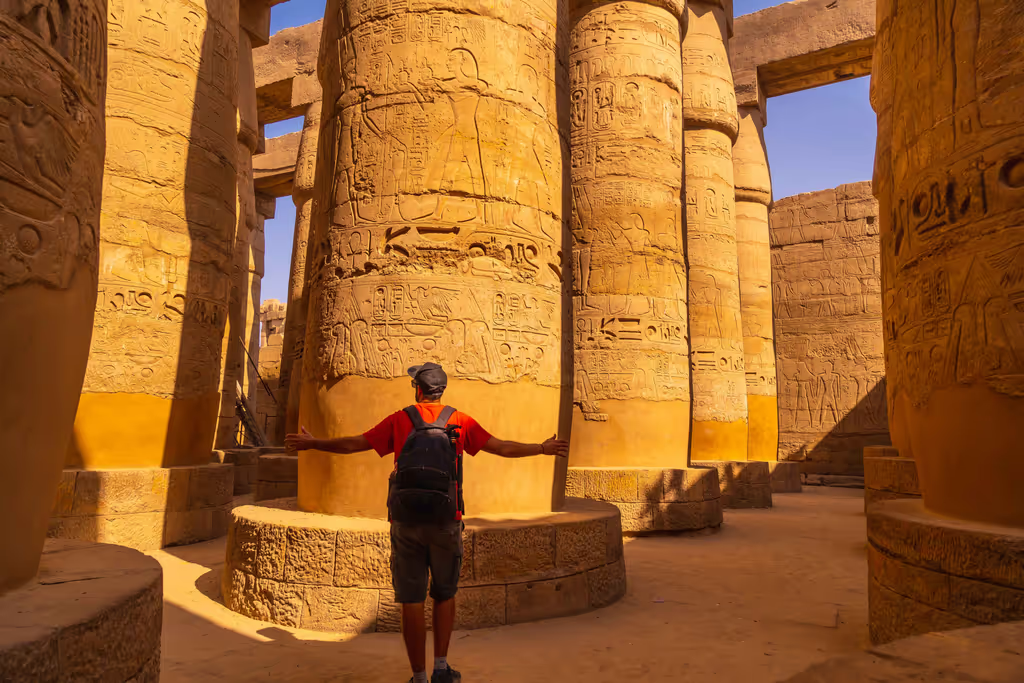
- The Great Hypostyle Hall: Passing through the Second Pylon brings visitors into Karnak’s most famous space: the Great Hypostyle Hall. Covering 5,000 square meters, this monument contains 134 massive sandstone columns arranged in 16 rows. Twelve central columns rise 21 meters high, featuring papyrus-capital tops. Close inspection of outer wall reliefs highlights the delicate, raised carving style of Seti I contrasted against deeper, sunken relief carvings created by his son, Ramesses II.
- Central Court & The Royal Obelisks: Continuing eastward leads into the central court area, dominated by towering granite monoliths. Here, visitors compare the 19.5-meter obelisk of Thutmose I with the magnificent 29.5-meter obelisk of his daughter, Queen Hatshepsut, carved from a single block of pink Aswan granite and raised over 3,400 years ago.
- The Sacred Lake & Giant Scarab Statue: Branching slightly southward brings you to the edge of the Sacred Lake, where ancient priests performed ritual washings and purifications prior to ceremonies. Beside the water sits a massive granite statue of the scarab beetle (Khepri), dedicated to Amenhotep III. Ancient tradition holds that walking around the scarab counter-clockwise brings good fortune.
- Botanical Garden (Festival Hall of Thutmose III): At the far eastern end of the main axis stands the Akh-menu (Festival Hall of Thutmose III). Deep inside this structure lies the Botanical Garden, a chamber decorated with delicate wall reliefs depicting exotic plants, birds, and animals brought back from military campaigns.
Discussing this sequential route with your guide beforehand ensures scheduling matches your group's walking capacity.
Completing this core circuit through Karnak naturally transitions into planning broader East Bank highlights.
Combined Tour of Karnak Temple, Luxor Temple & Avenue of the Sphinxes
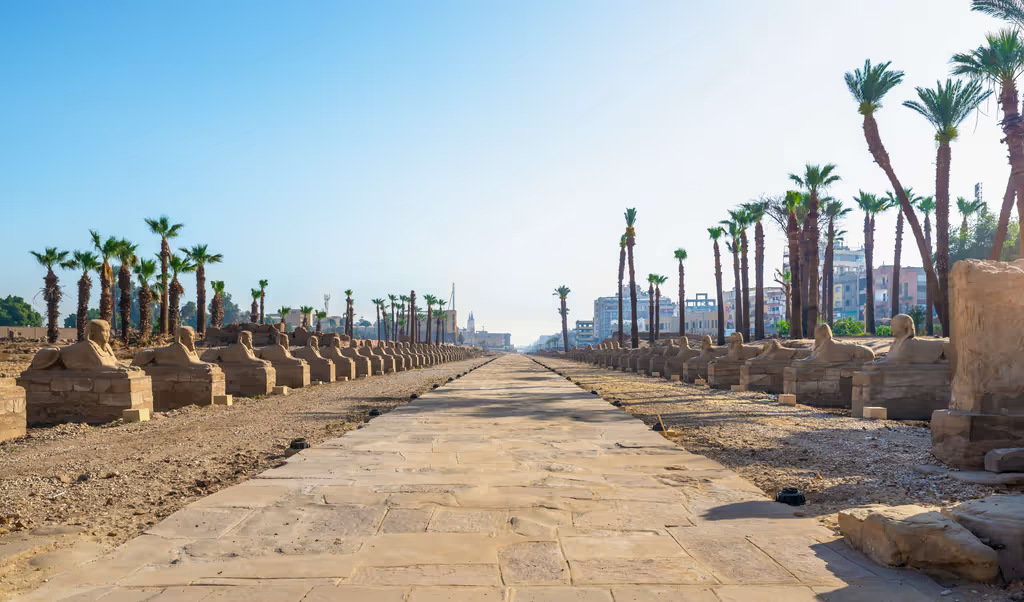
Karnak operated as the grand northern anchor of ancient Thebes, linked directly to Luxor Temple by the 3-kilometer Avenue of Sphinxes during the sacred Opet Festival. Annual celebrations witnessed statues of deities carried in ceremonial barques along this processional stone corridor, bridging the two divine houses. Replicating that ancient journey today provides a seamless half-day itinerary, uniting the massive pillared halls of Karnak with the elegant colonnades of Luxor Temple into a cohesive East Bank exploration.
How to Structure a Half-Day Luxor East Bank Itinerary
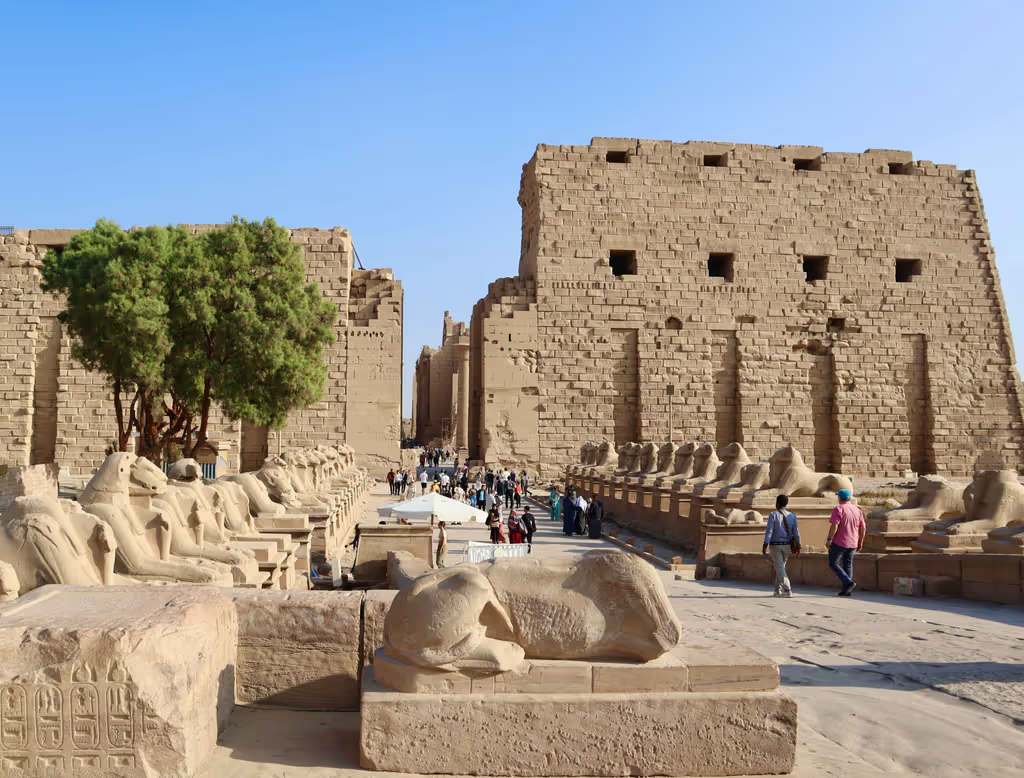
Combining Karnak Temple and Luxor Temple into a single half-day tour requires four to five hours total, balancing early morning cool temperatures at open-air ruins with air-conditioned transport along the three-kilometer Avenue of Sphinxes.
- 07:00 AM – Departure: Begin with hotel or cruise pickup via private vehicle to reach the site gates right as temperatures stay mild.
- 07:15 AM – Karnak Temple Exploration: Spend two hours touring the Great Hypostyle Hall, royal obelisks, and the Sacred Lake before crowded tour buses arrive.
- 09:30 AM – Avenue of Sphinxes Transfer: Take a brief five-minute air-conditioned transfer connecting the northern precinct directly to southern Luxor Temple.
- 10:00 AM – Luxor Temple Guided Walk: Walk through the monumental colonnades, royal courtyards, and massive seated statues built by Amenhotep III and Ramesses II.
- 11:30 AM – Tour Conclusion: Return directly to your hotel or Nile cruise ship before intense midday desert heat peaks.
Following this structured half-day sequence allows you to experience the full narrative arc connecting ancient Thebes’ two greatest sanctuaries. Booking a dedicated tour option with a licensed Egyptologist seamlessly bridges both monuments while managing midday timing efficiently.
Select your preferred pickup window and reserve your dedicated East Bank guide today to ensure a smooth, air-conditioned transfer between sites.
For travelers staying in Luxor past sunset, extending your archaeological exploration into the evening offers a completely different architectural perspective.
Evening Spectacle: The Sound and Light Show at Karnak
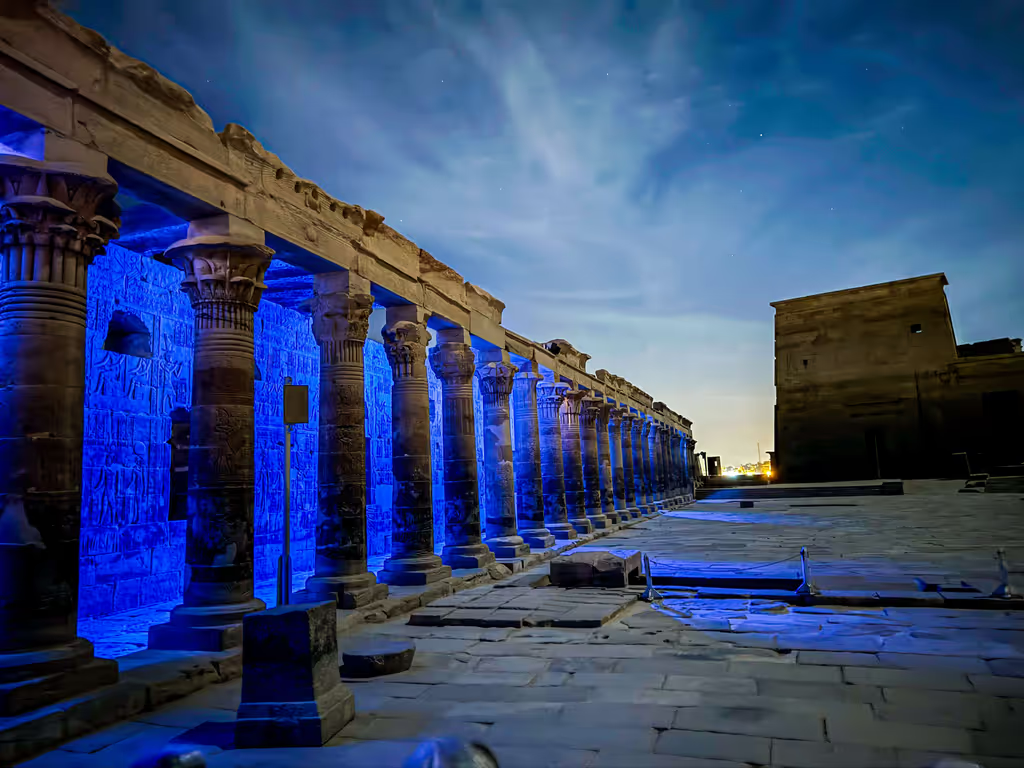
When dusk falls across the Nile's East Bank, Karnak transforms into an illuminated outdoor theater for its long-running Sound and Light Show. Unlike traditional sit-down theater performances, this 75-minute audio-visual experience is largely a walking presentation. Dramatic colored floodlights illuminate giant obelisks, gateway pylons, and the soaring papyrus columns of the Great Hypostyle Hall while recorded orchestral music and historical narration echo through the dark courts.
Evaluating whether this evening spectacle fits your schedule depends on distinct visitor profiles:
- Suited Travelers: Families with children, first-time visitors seeking theatrical storytelling, and travelers spending multiple nights in Luxor with open evening hours.
- Travelers to Skip: Visitors managing tight time limits, travelers seeking extensive academic Egyptology, or those preferring quiet evenings.
The show unfolds across two distinct phases to guide audience movement naturally through the complex:
- Walking Narrative Phase: Audience members follow an illuminated processional path through the First Pylon, Great Forecourt, and Hypostyle Hall, walking directly beneath floodlit pharaonic monuments as narration tells the story of ancient Thebes.
- Seated Finale Phase: The walkthrough portion concludes at a dedicated outdoor grandstand overlooking the Sacred Lake. Here, visitors sit to watch the illuminated reflection of the sanctuary walls across the water during the dramatic final historical acts.
Attending the evening show requires a separate ticket from standard daytime admission. Performance schedules vary throughout the week depending on language allocations (with English shows typically scheduled early in the evening), so verifying specific showtimes with your guide or hotel concierge beforehand ensures a seamless night out.
Grasping this structural layout makes navigating the physical sites straightforward, but putting that spatial plan into practice starts with sorting out your morning transit and timing across Luxor's East Bank.
Karnak Temple Transport, Timing & Heat Strategy

Karnak is situated on the East Bank of Luxor, meaning travelers staying at East Bank hotels or docked on Nile cruise ships do not need to cross the river. Located just 3 kilometers north of central Luxor and 10 kilometers west of Luxor International Airport (LXR), the complex sits along the primary Nile-side road. While the physical transfer is relatively short, choosing the right ground transport and departure window dictates whether your visit starts comfortably or becomes a battle against heat and street negotiations.
To evaluate how to travel between your hotel or ship and the temple entrance, review these primary transport options:
- Private Driver & Guide: Arranging private driver and vehicle options in Luxor ensures a dedicated vehicle collects you directly from your hotel lobby, cruise ship gangway, or airport arrival terminal. Your driver drops you at the visitor center entrance and waits in climate-controlled comfort until you finish, eliminating vehicle quality uncertainties, removing street haggling, and ensuring air-conditioned transit immediately after walking the open plazas.
- Local Taxis & Careem App: Hailing a street taxi or using ride-hailing apps like Careem from central Luxor hotels to Karnak is straightforward for the outward trip (typically a 5-to-10-minute drive). However, sourcing a return vehicle from the congested outer parking plaza can present hurdles: drivers frequently demand inflated fixed fares, and ride-hailing driver availability fluctuates significantly during peak afternoon hours.
- Walking or Biking: Connected to central Luxor via the Nile Corniche and the restored Avenue of Sphinxes, the 3-kilometer (1.8-mile) walk is physically direct. However, the route offers virtually zero shade. Walking or cycling is casually recommended during crisp winter mornings (December to February) for active travelers; attempting it in late spring or summer exposes you to intense sun before even entering the main gates.
The Karnak precinct covers more than 100 hectares of exposed sandstone and sun-baked dirt plazas. The massive stone walls act as a thermal battery, absorbing solar heat throughout the day and radiating it back onto visitors long after midday.
An early morning arrival between 06:00 AM and 08:30 AM offers the lowest ambient temperatures, soft angled sunlight for photographing the Great Hypostyle Hall, and minimal crowd volume. Between 09:00 AM and 01:00 PM, large tour buses arriving from Red Sea resorts fill the main courts, coinciding with peak desert temperatures. A late afternoon visit from 03:30 PM until sunset provides cooling air and deep golden light across the reliefs as morning tour fleets head back to their resorts.
Coordinate pickup times and driver details directly with a local guide to keep your arrival synchronized with these optimal early-morning temperature windows.
Locking down morning transport and thermal timing clears the preliminary logistics, pivoting the planning process toward a crucial choice of deciding between independent exploration or booking a professional Egyptologist.
Self-Guided vs. Private Guide: Is a Karnak Tour Worth It?
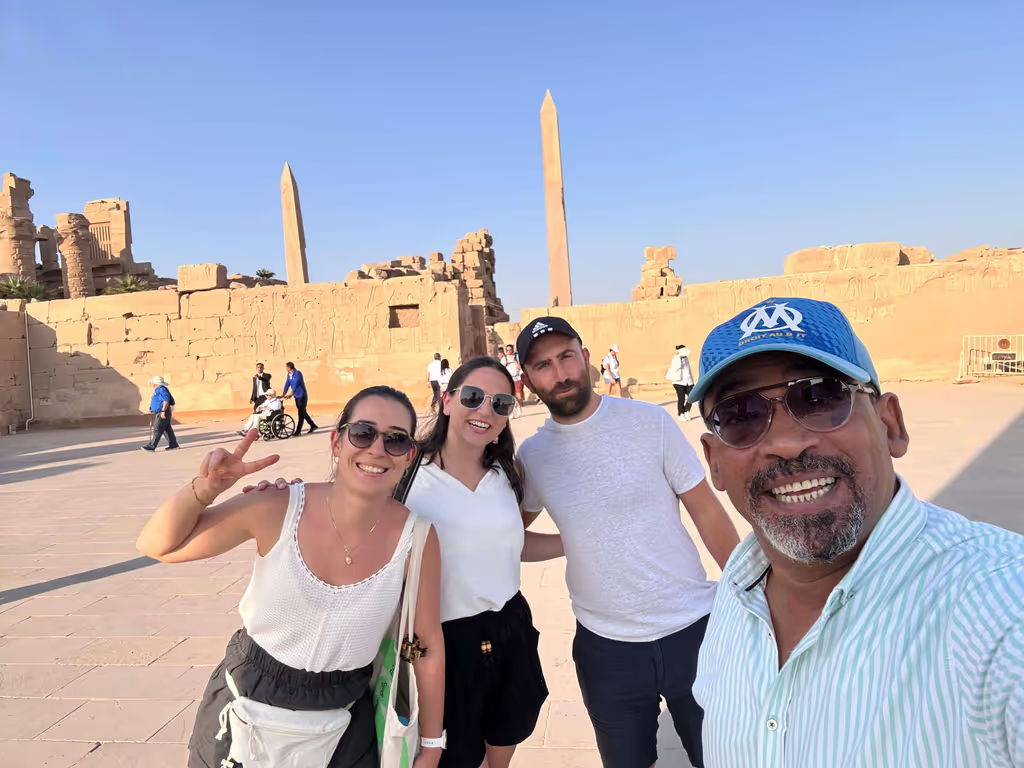
Navigating the vast expanse of Karnak brings up a fundamental touring dilemma: balancing the autonomy of a self-guided walkthrough against the narrative depth of a private Egyptologist. Because the complex lacks comprehensive modern interpretive signage across its sprawling 100-hectare footprint, independent explorers rely heavily on detailed guidebooks or mobile applications to decipher the stone. Understanding how each approach functions on the ground helps clarify which format best matches your travel style.
When a Self-Guided Visit Works
Exploring on your own can work well if:
- You are traveling on a strict budget.
- Are comfortable navigating large open sites with a detailed guidebook.
- Simply want to wander and photograph the stone columns without following a structured narrative.
Independent travelers who do not mind handling street taxi negotiations and ticket desk counters can enjoy a peaceful walk at their own pace.
Where a Private Guide Changes the Experience
For most first-time visitors, an expert Egyptologist transforms the Karnak Temple from an overwhelming maze of stone into a vivid historical narrative. To understand how professional guidance alters the visit, consider these key advantages on the ground:
- Decoding Complex Reliefs: Rather than pointing at generic carvings, a licensed guide translates royal cartouches, explains ritual scenes on wall faces, and highlights hidden details like ancient paint pigments high on column capitals.
- Chronological Context: A guide puts the physical structures into chronological order, explaining why Ramesses II completed the Hypostyle Hall that Seti I began, or how Hatshepsut erected her obelisks deep inside the complex.
- On-Site Logistics & Shielding: Your guide handles ticket desk transactions, knows where to find shade and seating along the route, re-sequences court visits if a large group enters, and provides a polite buffer against aggressive souvenir sellers near the gate.
Aligning the day's pace with your group's physical stamina and interests involves weighing these touring approaches. To avoid missing out on the benefits of a privately guided tour, explore private tours of the Karnak Temple in Luxor ahead of schedule to secure a tailored itinerary.
This pivots the planning process towards evaluating curated private Karnak Temple excursions tailored to your exact pacing, budget, and group preferences.
Private Karnak & Luxor Temples Tour with Ali S.
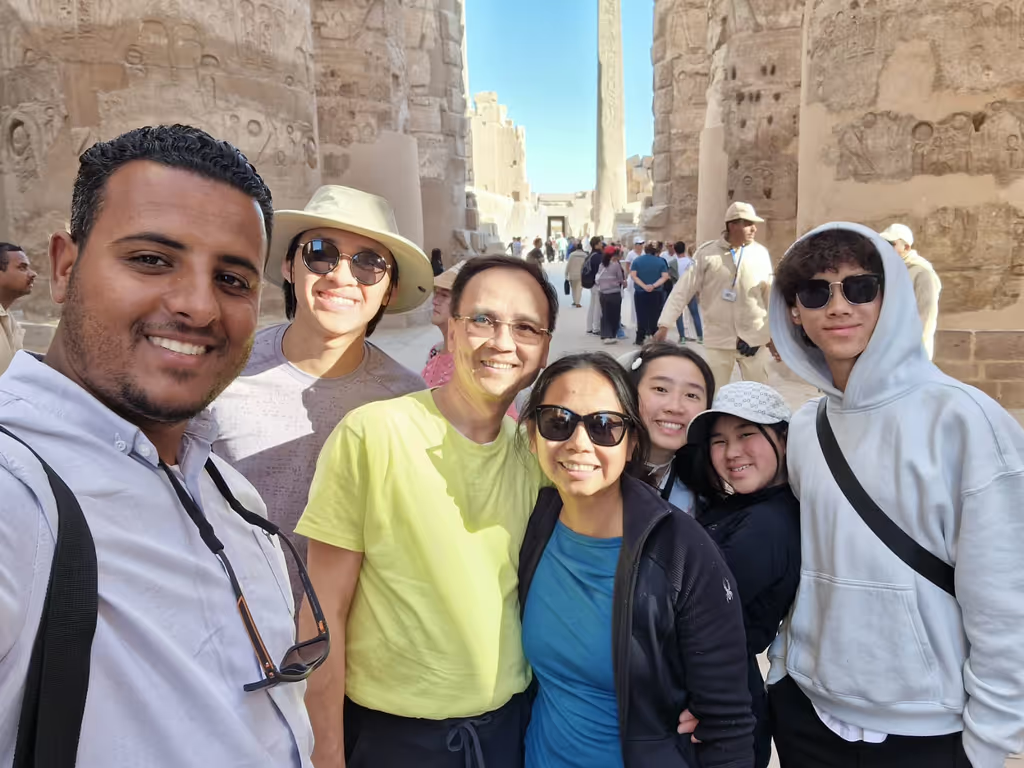
Best for first-time visitors seeking an in-depth, expert-led introduction to both East Bank temples:
- Duration & Pricing: 4 hours 30 mins | From $100 per 2 adults ($50 per person) | Free cancellation up to 8 days prior.
- Guide & Languages: Ali S. | 5.00/5 Rating | English, Arabic.
- Capacity: Up to 15 guests.
- Key Stops: Karnak Temple Great Hypostyle Hall, Luxor Temple, Avenue of Sphinxes.
- Inclusions & Exclusions: Includes private air-conditioned vehicle, licensed guide, mineral water, and hotel pickup/drop-off; excludes entry tickets and gratuities.
Booking the Private Karnak & Luxor Temples Tour with Ali S. ensures an unhurried morning backed by deep historical commentary. Check current availability to lock in your preferred start time today.
If you are looking for an itinerary focused specifically on efficient timing and local expertise, consider the next tailored alternative.
Private Karnak Temple & Luxor Temple Tour with Hamada S.
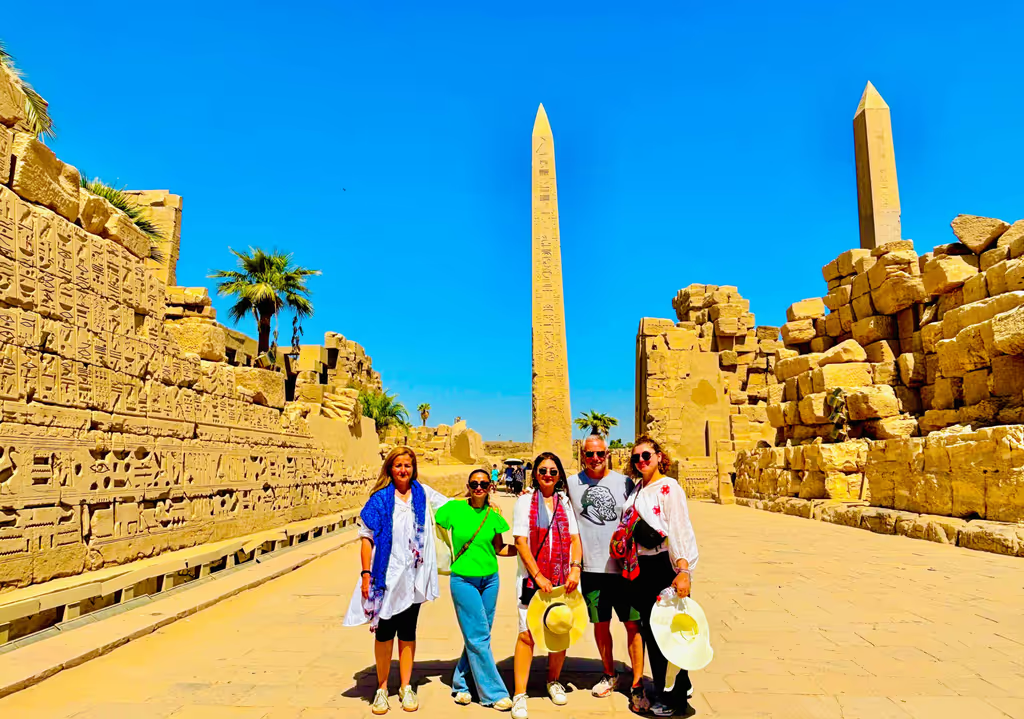
Best for travelers wanting a well-paced circuit that maximizes historical narrative while avoiding peak midday heat:
- Duration & Pricing: 4 hours | From $100 per 2 adults ($50 per person) | Free cancellation up to 8 days prior.
- Guide & Languages: Hamada S. | 5.00/5 Rating | English.
- Capacity: Up to 15 guests.
- Key Stops: Karnak Temples (Amun-Re precinct), Luxor Temple, Avenue of Sphinxes.
- Inclusions & Exclusions: Includes private luxury SUV/van transport, local guide, parking/fuel fees, and bottled drinks; excludes temple entrance tickets and tips.
Reserve your spot for the Private Karnak Temple & Luxor Temple Tour to secure dedicated private transport with a local Egyptologist, guaranteeing personalized insights and a smooth walking pace across both complexes.
For visitors interested in incorporating traditional artisan stops along their East Bank route, another specialized option offers a broader look at regional crafts.
Half-day East Bank visits in Luxor with Ayman A.
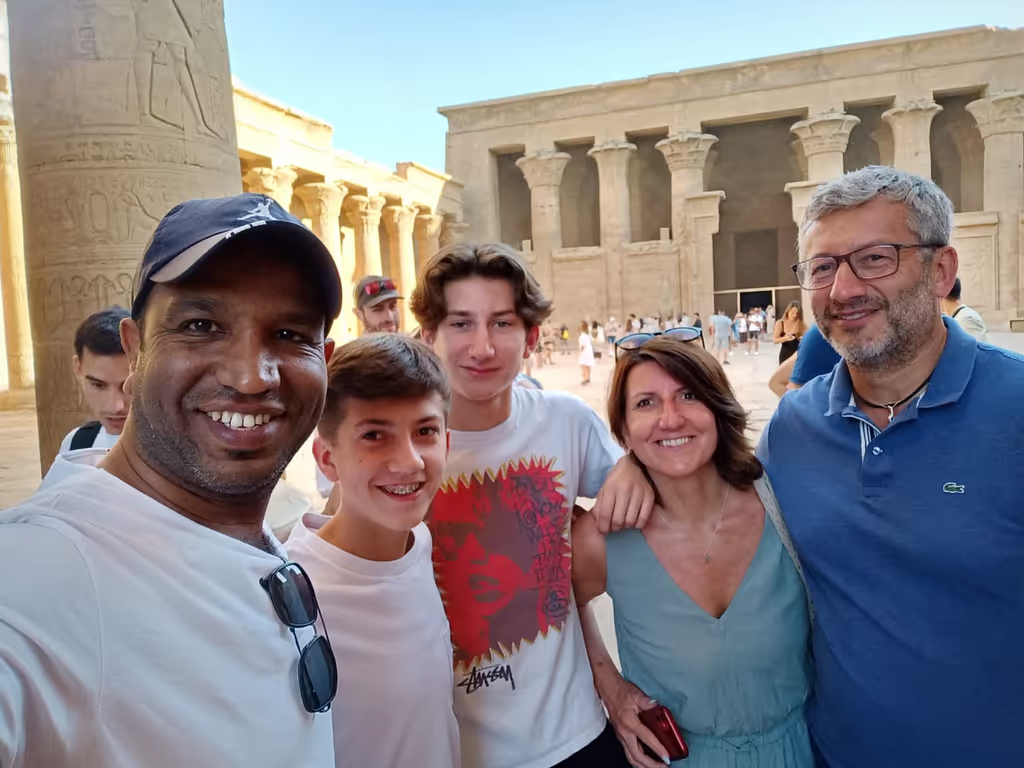
Best for multi-generational families exploring pharaonic history alongside traditional Egyptian craft demonstrations:
- Duration & Pricing: 4 hours 30 mins | From $100 per 2 adults ($50 per person) | Free cancellation up to 8 days prior.
- Guide & Languages: Ayman A. | 4.88/5 Rating | English, German, Italian, Arabic.
- Capacity: Up to 15 guests.
- Key Stops: Karnak Temple, Papyrus Fabrika artisan workshop, Luxor Temple.
- Inclusions & Exclusions: Includes private air-conditioned vehicle, licensed Egyptologist guide, and bottled water; excludes entrance fees and tips.
Combining iconic temple ruins with a relaxing papyrus-making demonstration, this tour creates an engaging, multifaceted morning for all ages. Connect with Ayman to customize the Half-day East Bank visit in Luxor itinerary for your group.
Travelers operating under tighter schedule constraints or visiting on a shore excursion can look to a focused express option below.
Karnak & Luxor Temple - Half Day Tour with George H.
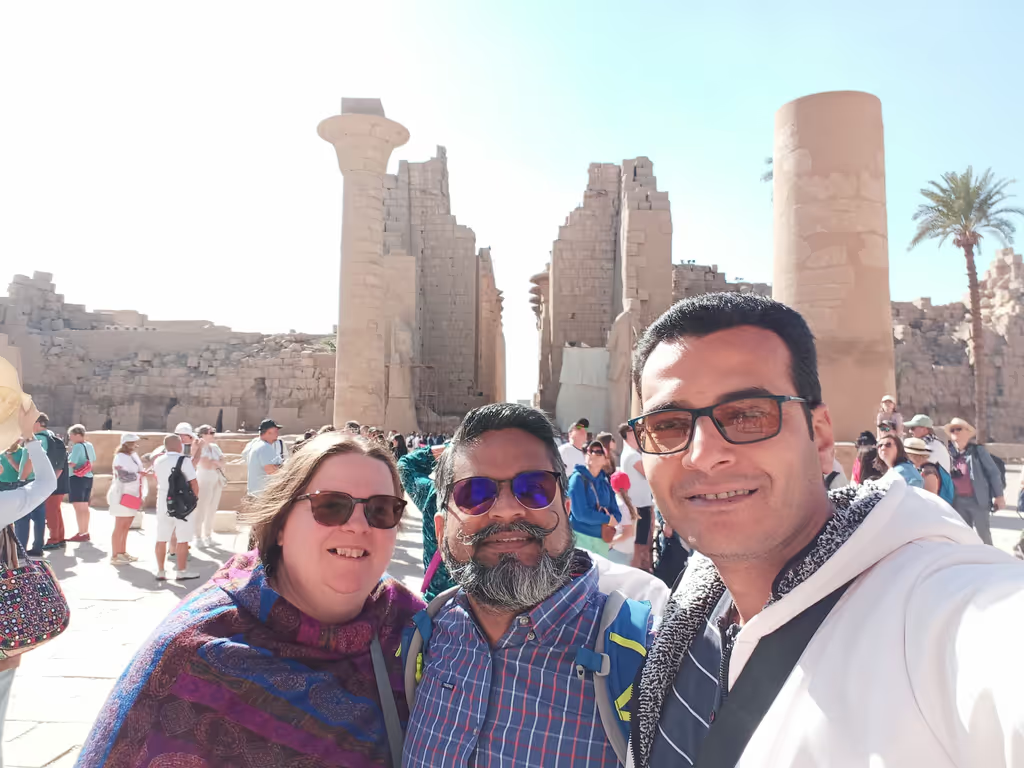
Best for cruise passengers, shore excursion travelers, or visitors managing tight afternoon schedules:
- Duration & Pricing: 3 hours | From $150 per group | Free cancellation up to 8 days prior.
- Guide & Languages: George H. | 5.00/5 Rating | English, Arabic.
- Capacity: Up to 10 guests.
- Key Stops: Karnak Temple (Ipet-isut precinct), Luxor Temple, East Bank processional routes.
- Inclusions & Exclusions: Includes private driver and transport, professional guiding services; excludes site admission tickets (card payment at gate) and gratuities.
Message George to align your pickup schedule and confirm your booking of the Karnak & Luxor Temple - Half Day Tour.
Opting for a private excursion delivers maximum sightseeing value without sacrificing narrative depth, personal flexibility, or timely return transfers. Whether you require tailored pickup windows to align with Nile cruise arrivals, specific physical pacing for family members, or a specialized historical focus, every featured private guide can fully customize these East Bank itineraries to match your exact preferences.
While choosing the right private tour solves your routing and narrative needs, an effortless morning also means handling the practical on-the-ground challenges of visiting Egypt's largest sanctuary.
Overcoming Dominant Worries on the Day: Tickets, Photography, and Ground Logistics
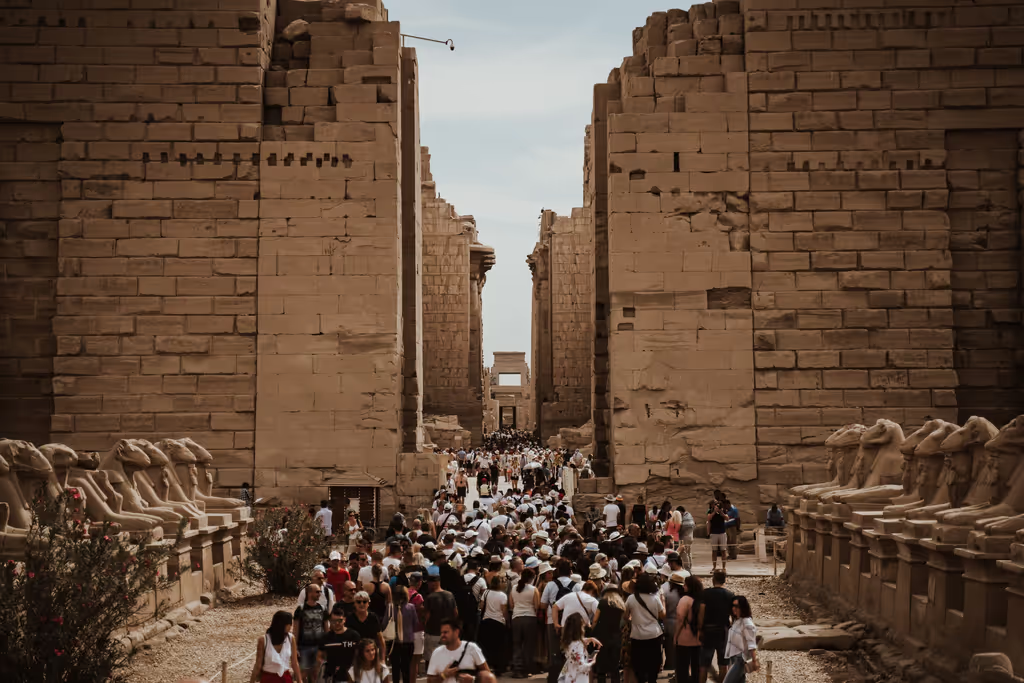
Visiting Egypt's monumental complexes involves managing various operational hurdles beyond the stone monuments themselves. From navigating the shift toward cashless electronic ticketing terminals and dealing with aggressive souvenir vendors in exterior parking plazas to negotiating sprawling dust-covered terrain under high desert temperatures, anticipating these practical variables prevents morning stress. Understanding each operational administrative rule before arriving ensures your excursion flows smoothly from start to finish.
To navigate these ground logistics effectively, review this detailed breakdown of key site policies and physical realities:
- Payment Rules & Ticket Desk Realities: The Egyptian Ministry of Tourism and Antiquities mandates electronic card payments (Visa or Mastercard) at official ticket counters, rejecting paper currency entirely at the physical gates. Occasional digital network outages can disrupt terminal processing, making advance online booking through official channels or coordinating ticket coverage with your guide an effective safeguard.
- Student Discounts & Verification: Travelers holding a valid International Student Identity Card (ISIC) under age 24 receive a 50% discount on standard entry permits. Physical card presentation is mandatory at the ticket desk window; smartphone photos or digital copies are systematically rejected by site staff.
- Photography Regulations: Standard entry permits non-commercial smartphone photography across all open courtyards and hypostyle halls. Commercial video equipment, professional telephoto lenses, and heavy tripods require separate expensive permits acquired in advance. Using flash photography inside shadowed chambers remains strictly prohibited to safeguard ancient wall pigments.
- Terrain & Physical Accessibility: Karnak covers over 60 acres of uneven stone pavement, exposed foundation thresholds, and packed dirt paths. While primary processional axes feature wide clearances, shaded rest areas are sparse across outer plazas. Sturdy footwear, wide-brimmed sun protection, and personal water supplies remain indispensable.
Navigating ticket counters, security lines, and sprawling terrain requires patience, but travelers do not have to manage these administrative hurdles alone. Partnering with a licensed local guide eliminates gate delays and vendor friction entirely, allowing you to focus purely on the monumental architecture.
Pre-arranging these details ahead of time sets the stage to ensure a flawless excursion, bringing the planning process to its ultimate execution.
Finalizing Your Karnak Temple Tour in Luxor
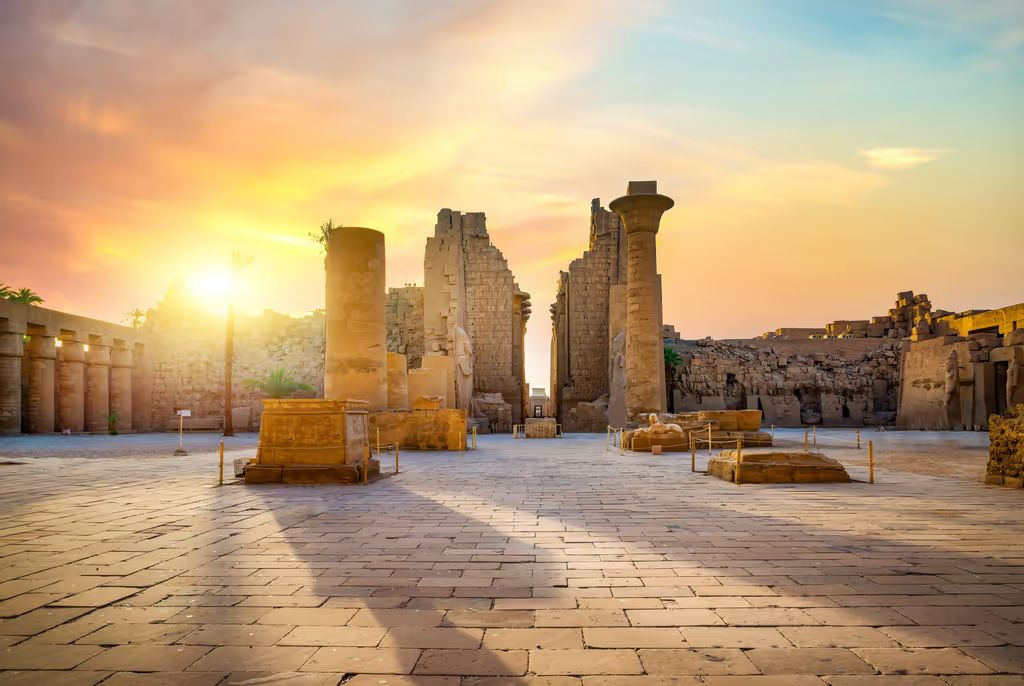
Translating a sprawling archaeological complex into a seamless travel experience demands deliberate pre-trip coordination. Because Karnak combines monumental scale, shifting desert micro-climates, and complex ticketing mechanics, achieving an unhurried morning depends entirely on establishing core parameters prior to leaving your hotel lobby or cruise gangway.
Reviewing these foundational operational pillars ensures every aspect of the morning stays fully aligned:
- Timing & Heat: Scheduling an early start secures exploration of open plazas prior to tour bus arrivals and peak midday solar intensity.
- Route Selection: Focusing the core 2-hour walk on the primary East-West axis (Hypostyle Hall, obelisks, Sacred Lake) avoids unnecessary fatigue before auxiliary shrines.
- Transport: Securing dedicated, climate-controlled transfers eliminates street negotiation stress and guarantees dependable return logistics.
- Expert Commentary: Engaging a licensed Egyptologist translates complex hieroglyphic cartouches, chronological pharaonic phases, and gate mechanics.
Approaching Karnak with a well-structured plan transforms an overwhelming stone maze into an immersive historical journey. Mastering morning temperature windows, sequencing primary axes correctly, and relying on expert Egyptological interpretation unlock the true grandeur of Amun-Re's sanctuary.
Secure a customized itinerary by messaging a local private guide with your travel dates and group preferences for a relaxed and detailed orientation of the Karnak Temple.
The monumental columns, soaring obelisks, and sacred lakes preserve over fifteen centuries of royal ambition, offering an unforgettable window into ancient Thebes. Giving this massive complex the unhurried, thoughtful exploration it demands ensures your Luxor experience remains timeless.
Karnak Temple Frequently Asked Questions
How long do you need at Karnak Temple with a guide?
A standard guided tour covering Karnak’s core highlights takes 2 to 2.5 hours. If you are an Egyptology enthusiast or wish to explore auxiliary structures like the Mut Precinct or the Open Air Museum, plan for 4 to 5 hours.
Is Karnak Temple accessible for travelers with limited mobility?
The main central axis from the First Pylon through the Hypostyle Hall is relatively flat with packed dirt and stone pathways. However, ramps are limited, ground surfaces can be uneven, and stone thresholds require short steps. Private guides can tailor an accessible walking route with frequent rest stops in shaded areas.
Can you walk from Karnak Temple to Luxor Temple along the Avenue of Sphinxes?
Yes, the 3-kilometer (1.8-mile) historic Avenue of Sphinxes is fully excavated and open for pedestrians. However, because the path offers virtually no shade against the desert sun, walking the full length is only recommended during cool winter mornings or late afternoons. Most travelers prefer a short 5-minute vehicle transfer between the two sites.
What should I wear when visiting Karnak Temple in the heat?
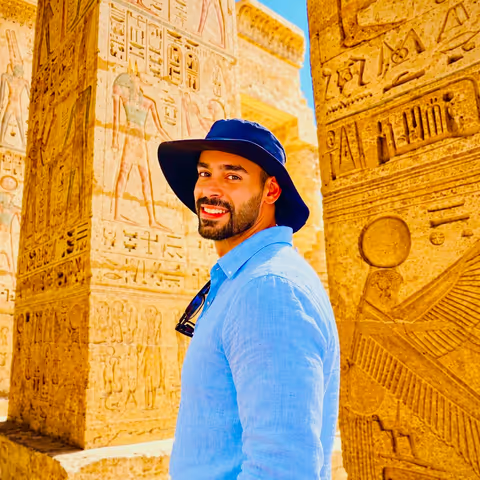
Wear lightweight, breathable clothing made of natural fabrics (cotton or linen), comfortable closed-toe walking shoes for uneven stone, a wide-brimmed hat, and UV-blocking sunglasses. While there is no strict religious dress code at outdoor ancient pharaonic sites, modest lightweight attire helps protect your skin from sun exposure.
What happens if my Nile cruise ship docks late for my scheduled tour?
Booking a private tour rather than a group coach provides complete departure flexibility. If your cruise ship experiences lock delays along the Nile, your private guide will adjust your East Bank pickup time and re-sequence your tour without leaving you behind.