Luxor is an unrivaled open-air sanctuary of ancient Egyptian civilization, but venturing north toward Dendera and Abydos brings real operational trade-offs. Imagine trading the bustling local crowds of Karnak for the serene, sunlit courtyards of Upper Egypt, only to find yourself calculating highway miles, watching the afternoon heat rise, and wondering if an eight-to-ten-hour journey leaves enough actual time to absorb the temples. Without clear planning, navigating regional security checkpoints, driver timing, and site access can easily transform a day of discovery into an exhausting race against the clock.
Choosing a private tour to Dendera and Abydos turns a complex road trip into a predictable, well-paced experience by putting route control, personal comfort, and expert interpretation firmly in your hands. Before locking in your travel dates or organizing transfers, connecting with a local verified guide will help you determine how this northern day trip fits into your broader Egyptian itinerary.
Is a Private Tour to Dendera and Abydos Right for You? Key Decision Framework
Combining Dendera and Abydos into a single day trip is a deeply rewarding archaeological excursion, but it requires significant travel time across rural Upper Egypt.
Use this quick framework to evaluate whether this day trip fits your trip goals:
- What It Is: An 8-to-10-hour private excursion from Luxor covering the Hathor Temple at Dendera and Seti I Temple at Abydos with dedicated vehicle transport and an expert guide.
- Who It’s Best For: History enthusiasts, photographers, and travelers who want deep archaeological context without being rushed by fixed group schedules.
- Who Should Skip: Visitors with fewer than two full days in Luxor or those who find long highway drives in a vehicle exhausting.
- What to Watch For: Vague itineraries that understate driving hours or hide extra costs like site entry fees and lunch.
- Best Starting Window: Between 6:00 AM and 6:30 AM to beat midday heat, highway traffic, and large tour buses.
Review your available days in Luxor, outline your timing preferences, and prepare your operational questions before booking. Matching your available days in Luxor against these travel realities prevents schedule friction later.
Once you know the journey fits your overall timeline, reach out to a private guide to confirm departure timing and vehicle convenience before evaluating whether combining both sites aligns with your personal travel style.
Is a Private Tour of Dendera and Abydos Right for Your Luxor Itinerary?
Deciding to spend a full day traveling north of Luxor requires weighing the depth of experience against the time spent on the highway. While Luxor's East and West Banks feature world-famous monuments nearby, the northern temples offer an uncrowded atmosphere and artistic styles found nowhere else in Egypt.
The Travelers Who Benefit Most from Combining Both Abydos and Dendera
Travelers who gain the most value from this excursion are those looking for deeper historical context beyond Luxor's standard tourist loop.
Key traveler profiles that benefit from this combined route include:
- Archaeology & Ancient History Enthusiasts: Visitors who want to study New Kingdom relief carving at Abydos and Ptolemaic-Roman astronomical architecture at Dendera in a single day.
- Photographers & Detail-Oriented Sightseers: Travelers seeking intact painted ceilings and quiet temple halls without hundreds of tour group visitors in their shots.
- Couples & Independent Travelers Seeking Comfort: Visitors who value private air-conditioned transit, personalized pacing, and direct communication with a dedicated guide.
- Return Visitors to Egypt: Travelers who have already explored Karnak, Valley of the Kings, and Hatshepsut Temple and want to discover Upper Egypt's lesser-visited masterpieces.
When to Consider a Shorter or Separate Visit
A full-day northern excursion is not suitable for every itinerary format. Recognizing when to adjust or shorten your plans ensures your trip remains enjoyable.
Consider scaling back your trip under these specific conditions:
- Limited Time in Luxor: If you have only 24 to 48 hours in Luxor, committing 10 hours to a highway trip will force you to skip major local monuments.
- Low Tolerance for Long Highway Transfers: Travelers who dislike spending 5 to 6 hours in a vehicle should consider visiting only Dendera (a 1-hour drive from Luxor) rather than extending all the way to Abydos.
- Families with Very Young Children: Long road stretches with minimal entertainment and basic rest facilities can prove challenging for young kids.
Evaluating these trade-offs ensures you allocate your sightseeing days wisely. If you are unsure how this full-day excursion fits alongside your West Bank or Nile cruise schedule, consult a private guide to sanity-check your travel dates and verify route feasibility before locking in your plans.
Once you confirm that combining both temples makes sense for your schedule, understanding the distinct archaeological features at each site helps you set your sightseeing priorities.
What You Will See at Dendera and Abydos
Combining Dendera and Abydos brings you face-to-face with two distinct eras of Egyptian monumentality. While both locations showcase sacred architecture, their visual styles, decorative techniques, and historical contexts are entirely unique. Beyond their dramatic differences in age and artistry, exploring these complexes side by side allows you to trace how religious devotion, royal legitimacy, and monumental craftsmanship evolved over centuries along the Nile.
The following breakdown highlights the architectural masterpieces of the Temple of Hathor at Dendera, explores the ancient artistic mastery inside the Temple of Seti I at Abydos, and outlines the optional stops, route flexibility, and common misconceptions to keep in mind while planning your day.
Dendera Temple: Hathor, Painted Ceilings, and Architectural Highlights
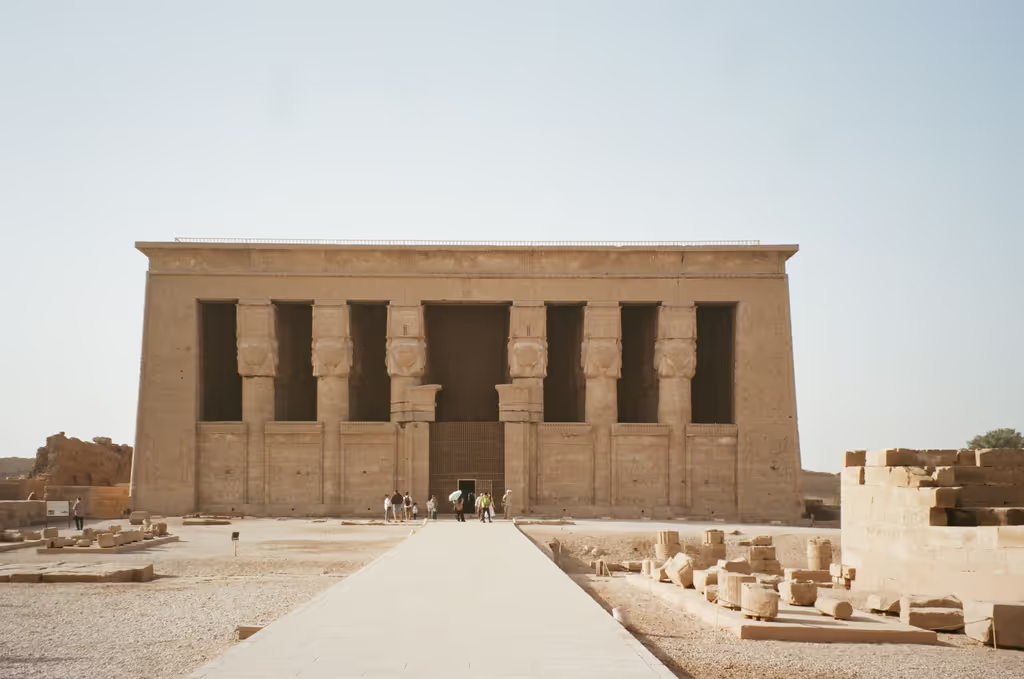
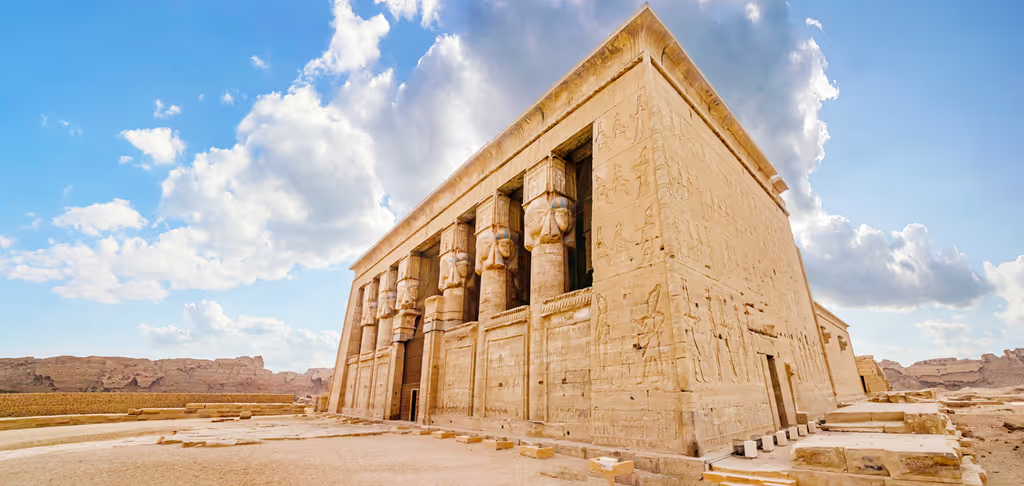
The Temple of Hathor at Dendera stands as one of the best-preserved temple complexes in all of Egypt. Constructed during the late Ptolemaic and Roman periods, the site provides a vivid look into ancient ritual spaces.
- The Great Hypostyle Hall: Features twenty-four massive columns topped with the four-sided head of the cow-eared goddess Hathor.
- Astronomical Ceilings: The ceiling retains original blue and gold paint, depicting astronomical charts, sky goddess Nut, and zodiac signs.
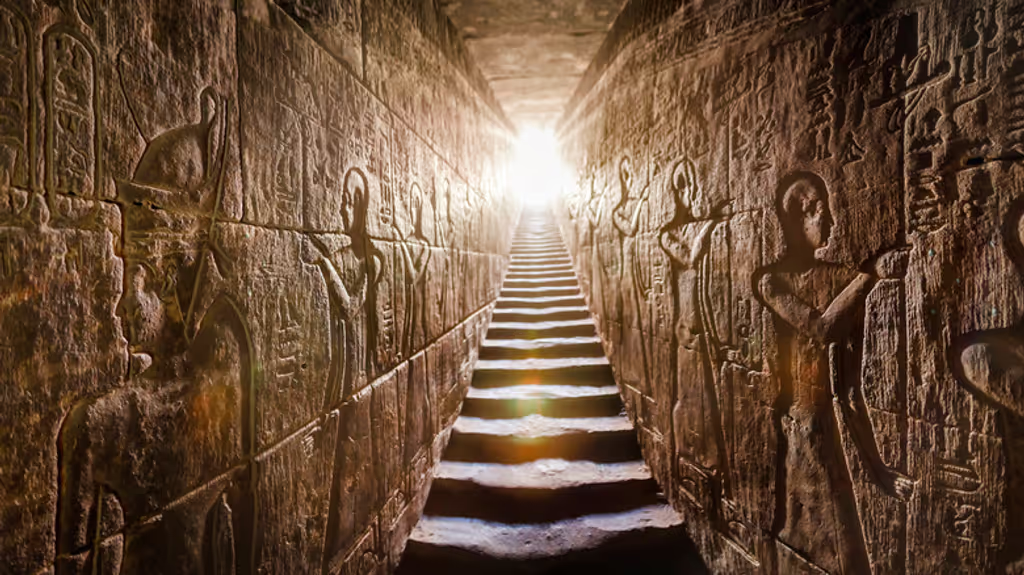
- Dendera Crypts and Rooftop Chapels: Narrow underground crypts feature exquisite wall reliefs, while stone staircases lead to rooftop chapels overlooking the Nile Valley.
Abydos Temple: Seti I, Royal Inscriptions, and Religious History
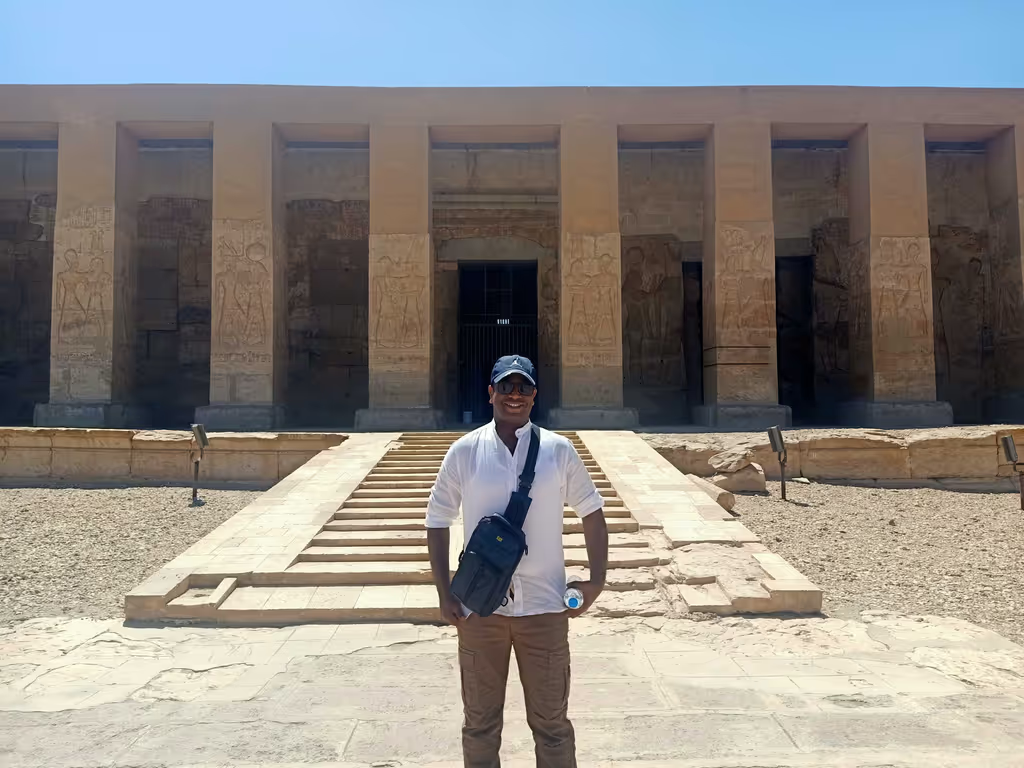
Located further north in Sohag province, the Temple of Seti I at Abydos was the spiritual center of the Osiris cult. Its art represents the pinnacle of New Kingdom relief work.
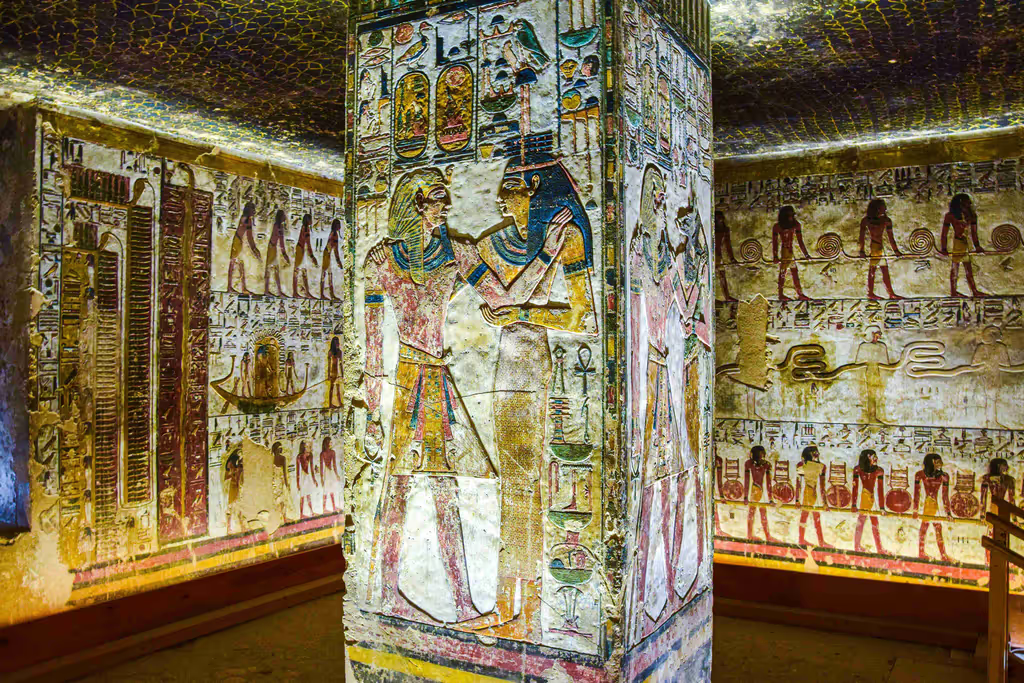
- Raised Limestone Reliefs: Delicate, fine-grained carvings across seven sacred sanctuaries display exceptional artistic elegance and preserved color.
- The Famous Abydos King List: A carved wall gallery listing seventy-six historic pharaohs from Menes to Seti I, forming a vital historical record.
- The Megalithic Osireion: A massive, sunken granite structure built directly behind the main temple, evoking ancient, primordial water symbolism.
Optional Stops, What Can Change, and Misconceptions
Planning a road trip means preparing for minor route adjustments. Knowing how guides manage variables keeps your day smooth.
- Optional Route Stops: Depending on road timing, drivers can pause in Qena for traditional tea or visit rural artisan workshops along the Nile corridor.
- What Can Change & Rerouting: Security checkpoints, midday heat spikes, or maintenance closures can alter the sequence. Experienced guides adjust whether you visit Abydos or Dendera first to optimize light and comfort.
- Correcting a Misconception: Travelers often assume the two temples feel repetitive. In reality, Dendera highlights intact Roman-Ptolemaic architecture, while Abydos showcases New Kingdom relief mastery and royal history.
Combining both sites provides a rich, complementary view of Egyptian religious art across distant historical eras.
To ensure your preferred sightseeing stops, crypt access, and photography priorities align with open hours on the ground, speak with a licensed private guide to map out a personalized tour route tailored to your exact historical interests.
With your sightseeing priorities established, mastering your departure timing is the key to keeping this long day trip comfortable.
Best Time to Start (Crowds, Weekdays vs Weekends, Seasonal Tips)
Selecting the ideal departure timing directly shapes the pacing and physical comfort of your excursion, protecting you from regional heat, traffic bottlenecks, and crowded temple halls. Review these core operational factors and practical guidelines to determine the best start time for your travel dates:
- Tour Bus Patterns: Commercial tour buses generally arrive at the sites by mid-morning, so departing early allows you to explore empty temple halls and sanctuaries before mass groups arrive.
- Highway Rhythms: Regional highway traffic around major hubs like Qena increases significantly on weekdays, whereas Friday mornings offer noticeably quieter roads and fewer driving delays.
- Winter Season (November to February): Brings mild, pleasant walking temperatures, but shorter daylight hours make an early morning start essential to complete both temple visits before sunset.
- Summer Season (May to August): Midday heat regularly exceeds 40°C, making a departure by 6:00 AM necessary to avoid severe afternoon sun exposure during outdoor walkthroughs.
- 6:00 AM – 6:30 AM Window (Highly Recommended): Maximizes daylight hours, bypasses highway security checkpoint queues, and reaches the furthest site (Abydos) early in the day before peak heat and tour buses arrive.
- 7:00 AM – 7:30 AM Window (Moderate Winter Option): Serves as a practical alternative during winter months, allowing time for a sit-down hotel breakfast while still maintaining a realistic sightseeing schedule.
- After 8:30 AM Window (Not Recommended): Severely compresses actual temple exploration time, increases exposure to traffic delays at regional security gates, and forces walking tours into peak afternoon heat.
- Rest Stop Currency: Carrying small Egyptian Pound banknotes is essential for paying facility attendants at rural highway rest stops.
- Climate Protection: Packing a lightweight scarf or shawl provides vital sun protection outdoors and shields against chilly vehicle air conditioning during long driving stretches.
- On-the-Road Refreshments: Keeping cold bottled water and personal snacks accessible inside the vehicle ensures you stay hydrated and energized during transit.
To avoid peak afternoon temperatures and beat large group arrivals at the highway gates, ask your private guide to lock in the most comfortable departure time for your private tour.
Once your departure window is set, analyzing the door-to-door transit schedule helps you integrate this excursion into your trip without fatigue.
How Long Does a Private Dendera and Abydos Tour Take?
Balancing driving hours against temple exploration time is the core logistical challenge of a day trip north from Luxor. A combined excursion to Dendera and Abydos typically lasts between 8 and 10 hours door-to-door, covering roughly 300 kilometers across rural provinces. Operating on a dedicated private itinerary eliminates unnecessary group pickup loops and waiting time, keeping transit efficient and protecting your sightseeing hours.
Understanding this door-to-door timeline helps you set realistic expectations for highway travel and structure your overall Luxor schedule comfortably.
Driving, Sightseeing, and Meal Breaks
A realistic time allocation helps you understand how the day unfolds from morning pickup to afternoon return.
- Luxor to Abydos Drive: Approximately 3 to 3.5 hours driving north along the Nile Valley highway.
- Abydos Temple Exploration: 1.5 to 2 hours covering Seti I Temple, the King List, and Osireion view.
- Transit from Abydos to Dendera: Roughly 1.5 to 2 hours heading south toward Qena.
- Dendera Temple Exploration: 1.5 to 2 hours touring Hathor Temple, crypts, and rooftop chapels.
- Return Drive to Luxor: About 1 to 1.5 hours directly back to your hotel or cruise dock.
How to Recognize a Time-Realistic Itinerary for a private tour to Dendera and Abydos
Building travel buffers prevents unexpected delays from ruining your evening plans.
- Factoring Checkpoint Buffers: Highway security checks can add 20 to 30 minutes to total transit time.
- Avoiding Evening Conflicts: Do not book fixed evening train tickets, flight departures, or early dinner cruises on the same night as this excursion.
- Recognizing Pacing Red Flags: Beware of itineraries promising the full trip in under 7 hours; they invariably sacrifice temple exploration time.
Mapping out these timing blocks in advance ensures you stay in complete control of your day rather than feeling rushed between sites.
To safeguard your evening schedule in Luxor and establish realistic travel buffers, connect with a private guide to review your door-to-door transit plan, vehicle comfort, and private tour meal arrangements before departure.
Understanding these duration and timing logistics brings up practical worries about vehicle climate control, road safety checkpoints, and total tour costs.
Dominant Worries: Navigating Long Drives, Unclear Costs, and Site Access in Upper Egypt

Venturing 150 kilometers north of Luxor into Qena and Sohag provinces moves your itinerary off the core urban tourist track and into rural Upper Egypt. It is entirely natural for planners to experience operational anxiety over a full-day road excursion: long stretches of desert highway, regional security checkpoints, unannounced site maintenance, and opaque tour inclusions can easily derail a trip if unmanaged.
Addressing these core logistics, pricing structures, and physical access demands upfront eliminates operational friction and transforms potential travel anxiety into complete booking confidence. A private guide can help you clarify these timing constraints, vehicle options, and accessibility concerns before locking in your travel dates.
Long Drives and Insufficient Temple Time
The 300-kilometer round-trip journey requires proper vehicle planning to ensure you do not spend the entire day trapped in transit.
- What's True: The drive covers extended rural highway stretches across two provinces.
- What Can Go Wrong: Substandard vehicles without functioning air conditioning make the long transit exhausting.
- How to Plan: Book a modern sedan or van with verified climate control and a dedicated driver.
- What a Guide Improves: A local host coordinates direct security clearance, minimizing unnecessary roadside waiting.
Unclear Costs, Guide Qualifications, and Transport Arrangements
Hidden fees and unqualified hosts are common sources of traveler disappointment.
- What's True: Tour packages vary widely in what they include or exclude, and entrance ticket rates are set independently by the Ministry of Tourism. Standard foreign adult tickets cost approximately 300 EGP for Dendera Temple and 260 EGP for Abydos Temple (~560 EGP total per person), plus optional add-ons for specific crypt or rooftop chapel access.
- What Can Go Wrong: Arriving at temple gates expecting a fully inclusive tour, only to discover entry tickets, driver gratuities, or lunch stops are billed as out-of-pocket extras.
- How to Plan: Demand a written confirmation detailing whether site tickets (minimum 560 EGP base per adult), driver highway fees, fuel, and lunch are bundled into your package before paying a deposit.
- What a Guide Improves: A licensed Egyptologist handles ticketing logistics at security gates directly while providing deep historical context rather than acting as a simple vehicle driver.
Access Restrictions, Walking Demands, and Individual Needs
Physical demands at ancient archaeological sites require advance preparation.
- What's True: Ancient temples feature uneven stone floors, open courtyards, and steep stairways.
- What Can Go Wrong: Visitors with mobility limits may struggle in narrow subterranean crypts.
- How to Plan: Communicate physical limits and shade requirements to your host before booking.
- What a Guide Improves: Experienced hosts adapt the walking route to avoid steep steps while preserving highlight access.
Special Notes to Consider
Beyond core vehicle and ticket arrangements, navigating regional regulations and local site conditions requires keeping a few operational details in mind before setting off:
- Security Permits: Tour operators must submit tourist passport details to local authorities prior to departure day.
- Restoration Closures: Specific crypts or chapels can undergo sudden restoration without advance notice.
- Nile Cruise Docking: Cruise passengers must confirm exact ship mooring spots, as vessel locations shift daily.
Taking time to outline these parameters early ensures your journey north remains comfortable, secure, and fully aligned with your preferences.
Before you commit to an itinerary, reach out to a private guide to confirm your vehicle specs, verify ticket inclusions, and safeguard your sightseeing time against roadside delays.
Resolving these practical worries highlights the clear operational differences between private tours and large group excursions, bringing you to the final step of selecting the ideal charter format for your trip.
Private Tour vs Group Tour: Comparing Formats and Your Selection Checklist
Choosing between a private tour and a commercial group bus impacts every operational aspect of your journey across Upper Egypt. While group tours offer a lower entry price, they impose rigid schedules, fixed rest stops, multi-hotel pickup delays, and compressed temple time.
Private tours invert these trade-offs, delivering personalized pacing, direct access to a dedicated Egyptologist, flexible photo pauses, and private vehicle comfort that becomes highly cost-effective for couples, families, and small groups.
Key Differences in Practice
Comparing standard bus charters against a private driver and guide highlights several operational advantages that directly impact your overall comfort and sightseeing depth:
- Pacing & Control: Spend extra time studying the Abydos King List or photographing Dendera’s ceilings without being rushed by group headcounts.
- Dedicated Interpretation: Engage directly with a university-trained guide who answers your specific questions rather than delivering a generic, broadcast script.
- Transit & Comfort: Eliminate cross-city hotel pickups and pause for clean highway rest stops, coffee, or snacks on your own schedule.
The Private Tour Selection Checklist
Use this practical screening checklist to evaluate private tour proposals and guarantee complete transparency before paying a deposit:
- Verify Route & Sightseeing Time: Confirm driving order, total travel hours, and guaranteed temple time (at least 90 minutes per site).
- Confirm Guide Credentials: Ensure your host is a university-trained, licensed Egyptologist.
- Check Ticket Inclusions: Verify whether entry tickets for Dendera, Abydos, crypts, and special chapels are bundled.
- Inspect Vehicle Specifications: Confirm the tour uses a modern, climate-controlled vehicle with a dedicated driver.
- Review Meal & Refreshment Provisions: Ask if lunch, highway snack stops, and cold bottled water are included.
- Confirm Pickup Logistics: Ensure door-to-door transfers directly from your hotel lobby or cruise ship berth.
The ideal private excursion strikes a careful balance between vehicle comfort, expert archaeological guidance, and completely transparent inclusions, ensuring that no unexpected expenses or logistical delays disrupt your time in Upper Egypt. Taking time to verify these operational details in advance turns a demanding highway trip into a personalized highlight of your Egyptian itinerary.
Before committing to a deposit, message a private guide to confirm your vehicle specs, clarify ticket inclusions, and verify how your group size affects overall pricing so your day trip remains smooth and stress-free from start to finish.
Equipped with these criteria, reviewing top-rated private tour options helps you select the exact charter style for your trip.
Recommended Private Tours of Dendera and Abydos
Selecting the right excursion comes down to matching your personal travel style with the right operational focus. While every recommended option provides dedicated, door-to-door air-conditioned transport and door-to-door hotel or cruise ship transfers, the actual experience on the ground varies depending on how the day is structured.
Some itineraries prioritize deep academic interpretation and detailed hieroglyphic commentary led by licensed Egyptologists. Others focus on photography-friendly scheduling, adjusting start times to capture optimal sunlight on Dendera's ceiling paintings or Abydos's raised reliefs. Additional options are streamlined specifically around highway efficiency, optimizing route sequences between security gates to maximize total time spent inside the temples.
Reviewing these vetted private tours allows you to select an experience that balances physical comfort, historical depth, and schedule convenience before contacting your host.
Luxor Private Day Tour to Dendera & Abydos Temples by Licensed Egyptologist Guide
Best for: History enthusiasts seeking deep architectural interpretation and comprehensive coverage.
This comprehensive itinerary focuses on detailed historical storytelling across both ancient complexes. Departing around 6:30 AM from your Luxor accommodation, your licensed Egyptologist guides you through Seti I Temple before heading to Dendera's Hathor Temple. The trip features steady pacing, dedicated air-conditioned transport, and ample opportunity for detailed questions.
For travelers who want to prioritize customized photo stops and flexible morning departure times over a strict academic schedule, a photography-focused archaeological charter provides an appealing alternative.
Luxor, Dendera and Abydos: The Great Journey in Luxor by Private Archaeological Specialist
Best for: Photography lovers and comfort-conscious travelers wanting flexible timing.
Designed for visitors who want optimal lighting conditions and custom pacing, this option offers flexible morning start times. Your guide highlights key artistic features like Dendera's ceiling art and Abydos's raised reliefs, leaving plenty of room for extended photo pauses. Transport is provided in a clean, spacious vehicle with complimentary cold water throughout.
If your primary goal is maximizing road efficiency and streamlining transfers between highway security gates, a transit-focused regional day tour offers an efficient solution.
Qina Day Trip to Dendera and Abydos Temples by Regional Day Tour Expert
Best for: Travelers prioritizing streamlined transit logistics and full-day efficiency.
This itinerary optimizes road transit by driving to distant Abydos first, then visiting Dendera on the return leg toward Luxor. Starting at 6:00 AM, the tour emphasizes smooth navigation through highway checkpoints and structured site time. It features door-to-door transfers directly from hotel lobbies or Nile cruise ships.
Weighing these recommendations brings you to the final decision stage of your planning process.
Conclusion: Choose the Right Private Tour for Your Priorities
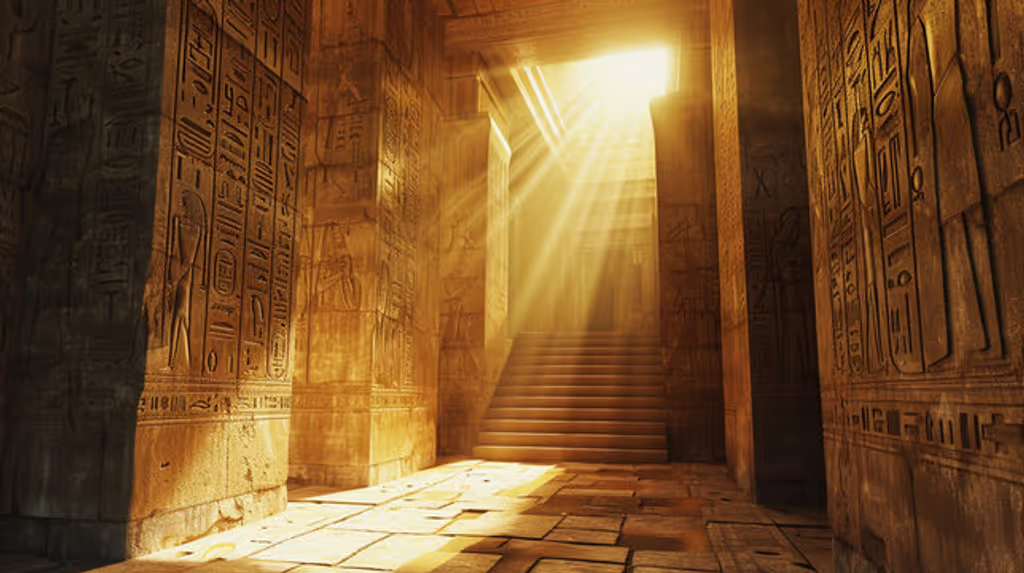
Returning to the choice you face in Luxor, stepping away from the familiar sights of the East and West Banks to venture into Upper Egypt does not have to feel like an unpredictable gamble. While the prospect of calculating highway miles, navigating security gates, and managing long transit hours can initially cause planning hesitation, the reality on the ground changes completely when you take control of your logistics.
Taking a day trip north to Dendera and Abydos is a substantial commitment of travel time, but a private tour turns potential transit stress into a smooth, deeply rewarding highlight. Dedicated air-conditioned transport removes driving fatigue, while an expert Egyptologist brings ancient reliefs and architectural wonders to life. Instead of feeling rushed by rigid group schedules, you retain total control over your sightseeing pace, photo stops, and rest breaks.
Final Itinerary Checks and Core Planning Principles
Keep these key takeaways in mind before confirming your excursion:
- Balance Scope with Stamina: Ensure your itinerary allows at least 90 to 120 minutes of unhurried time at each temple site.
- Prioritize Expert Interpretation: Choose a licensed Egyptologist who can translate complex mythological reliefs into engaging history.
- Lock In Transport Comfort: Require a spacious, climate-controlled vehicle with a dedicated driver for the 300-kilometer drive.
- Demand Pricing Transparency: Confirm whether site tickets, highway fees, and lunch are included before paying.
Before you finalize your dates, message a private guide to customize your private tour itinerary, confirm vehicle convenience, and ensure your time at both temples is fully protected.
Stepping off the beaten path into the sunlit, vividly painted halls of Dendera and the masterfully carved sanctuaries of Abydos ultimately rewards you with one of the richest, most unforgettable historical experiences in all of Egypt.
10 Frequently Asked Questions About Private Dendera and Abydos Tours
Is a licensed Egyptologist necessary for Dendera and Abydos, or can you hire a driver only?
While you can technically hire a private vehicle and driver to navigate the highway between Luxor, Dendera, and Abydos, exploring without a guide often results in a surface-level experience. Neither site features extensive English signage to explain complex astronomical ceilings or royal relief art. Hiring a licensed Egyptologist guide adds immense value by translating ancient hieroglyphs, managing site tickets, coordinating security checkpoints, and answering your specific historical questions.
Can both temples be visited comfortably in one day from Luxor?
Yes, combining both temples into a single day trip is standard practice from Luxor. The entire excursion takes between 8 and 10 hours depending on traffic and your preferred sightseeing pace.
What vehicle types are used for a private transfer to Dendera and Abydos?
Tours typically use modern, air-conditioned sedans for 1–2 passengers or spacious minivans for families and small groups. Vehicle options depend on the group size and tour provider.
How much does the tour cost, and what is included?
Pricing depends on party size, vehicle type, and whether admissions or lunch are bundled. Always request a clear written breakdown from your operator to confirm exact inclusions.
Which temple should you visit first on the route?
Most private tours visit Abydos first because it is located furthest from Luxor (about 3 to 3.5 hours away). Visiting Abydos early breaks up the long drive and lets you visit Dendera on the return trip south.
Can the excursion accommodate older travelers or mobility limits?
Yes, private tours allow you to set a gentle walking pace with regular shaded seating breaks. However, visitors should note that temple floors are uneven and entering crypts requires managing steep stone steps.
What should Nile cruise passengers confirm before booking?
Nile cruise guests must provide their specific ship name and docking spot in Luxor. Confirming an early departure guarantees returning well before your vessel's scheduled departure time.
Are meals and drinking water provided during the excursion?
Inclusions vary by operator, though high-quality private tours usually provide bottled water and arrange a local lunch stop. It is best to confirm dining details with your host beforehand.
Is road travel from Luxor to Dendera and Abydos safe and routine?
Highway travel along the main Nile Valley corridor is routine for international travelers in Egypt. Private vehicles pass through standard tourist police checkpoints that coordinate regional safety.
How much do site entry tickets cost for Dendera and Abydos?
Standard adult foreign entry tickets cost approximately 300 EGP for Dendera Temple (Hathor Complex) and 260 EGP for Abydos Temple (Seti I Complex), totaling roughly 560 EGP (~$11–12 USD) per person for basic admission. Optional access to specific crypts or rooftop chapels may require supplementary tickets on-site. When booking your excursion, reach out to a private tour host to clarify whether your quoted price includes these entrance fees or if they will be billed separately.