
Let's get the uncomfortable part out of the way. If you've looked up Gwangjang Market lately, you've probably seen the headlines: a tiny plate of pancakes for 15,000 won (about $11), a sundae that cost more at the register than on the board, foreigners charged 2,000 won (about $1.40) for a bottle of water. Korean news outlets have been reporting stories like these since late 2023. So the real question isn't what to eat, but whether you can eat well here without paying the tourist tax.
You can, and I'd even say it's easy once you know how the place works. The best thing at Gwangjang is bindaetteok, a crispy mung bean pancake that costs about 5,000 won (about $3.60), comes off a griddle in a puddle of oil, and has been feeding Seoul for generations. The market opened in 1905, by most accounts, as a fabric and hanbok market, and the food has long since stolen the show. The trick is ordering like you've done it before.
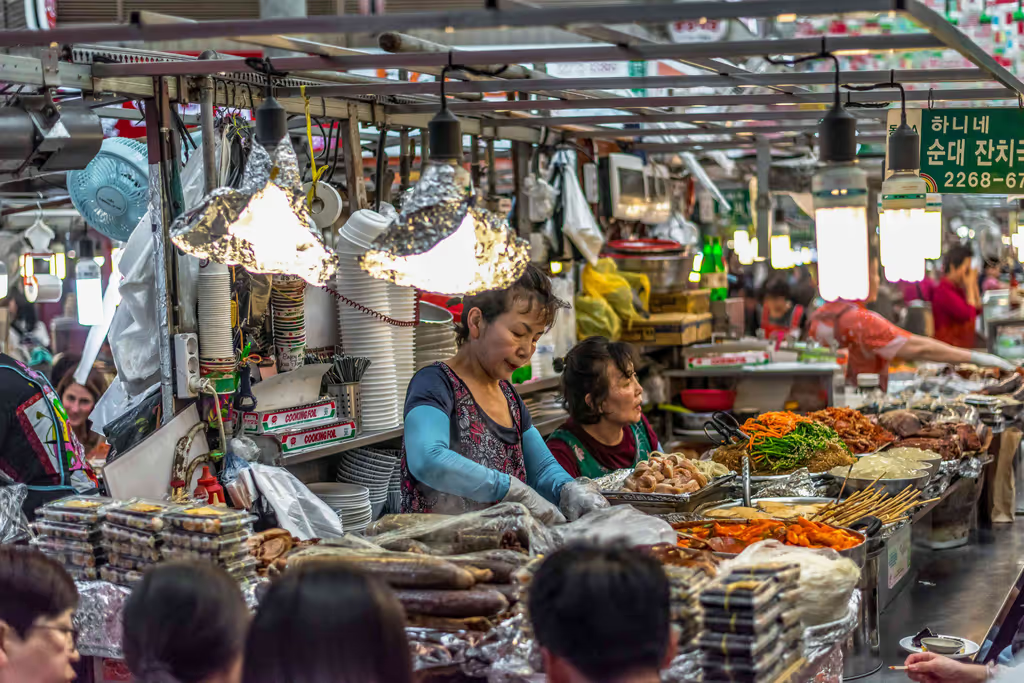
Gwangjang ranks among Seoul's oldest traditional markets, and finding the food takes zero effort. Follow the steam to the covered aisles in the middle, where cooks flip pancakes over open griddles and diners squeeze shoulder to shoulder onto shared benches. Netflix's Street Food: Asia made one noodle stall famous, and the crowds haven't thinned since. That's good news for the vendors, and it's also how a tourist tax got started.
Quick answer: yes, you can eat well at Gwangjang Market without getting ripped off, and it's cheap if you check the board. Here's what a fair lunch for two looks like on the receipt, using recently published prices:
- One bindaetteok (mung bean pancake): about 5,000 won (about $3.60).
- One bowl of kalguksu (knife-cut noodles): about 8,000 to 10,000 won (about $5.70 to $7.10).
- One plate of mayak gimbap to share, plus a second pancake if you're hungry.
- The total: roughly 20,000 to 25,000 won (about $14 to $18) for two.
Four habits keep the receipt looking like that: point at the posted board instead of the food, confirm the total before anything lands, pay in small bills (some stalls don't take foreign cards), and skip off-menu "mix" or "set" plates you can't price-check.
Planning your first Gwangjang lunch? Explore Seoul's verified local guides, and pick one who'll steer you toward fair-priced counters rather than whichever one yells loudest.
With or without a host on board, the headlines still deserve a fair hearing. Below, each overcharging story gets taken apart, along with the one habit it teaches.
15,000 Won (About $11) for a Plate of Jeon: Reading the Gwangjang Market Price Headlines
None of this is rumor, and none of it is ancient history. Korean news outlets have tracked the complaints for three years, and almost every story turns on the same weak spot: a price nobody checked.
Here's the timeline they've reported:
- November 2023: a travel YouTuber posted a video of a 15,000-won (about $11) plate of assorted jeon (pancakes) that looked small, and it spread widely. The merchants' association suspended the vendor for 10 days.
- Early 2024: Seoul City, Jongno District, and the market announced a system to post the quantity of food alongside the price, and the city talked about mystery shoppers.
- 2024 and 2025: reports kept coming, including a 2025 dispute over a sundae plate priced at 8,000 won (about $5.70) and charged at 10,000 won (about $7.10), and The Korea Times reported visitor numbers falling.
- April 2026: a stall charging foreign visitors 2,000 won (about $1.40) for bottled water drew outrage, and the stall was suspended for three days. Seoul stepped up undercover patrols on price displays.
- August 2026: Korean media reported vendors using different price lists for the same items, along with hygiene complaints.
- Reporting tools: tourists can report overcharging through a "Price Gouging Report" QR code service, according to Korean media.
Here's the practical takeaway. Most vendors are fine, and most meals here still cost less than a sit-down restaurant. But order from the posted board, confirm the price before the food arrives, and pay attention to "mix" or "set" plates that aren't on the menu.
When the Bill Shows Up: Four Traps, Plus the Cash Question
Every reported case follows a pattern you can spot from the bench. None of them takes Korean to avoid, just a little attention before the food hits the counter.
Here's how each trap has played out, and the counter-move for each:
- The plate that shrinks: the 2023 jeon story was about a 15,000-won (about $11) assortment that looked small for the price. Counter-move: Seoul announced in early 2024 that quantities would be posted next to prices, so read both before you nod.
- The off-menu combo: an April 2024 report described an unlisted "mix mandu" plate. Counter-move: when it isn't on the board, ask for something that is.
The number that changes at the register: the 2025 sundae dispute involved a plate posted at 8,000 won (about $5.70) and charged at 10,000 won (about $7.10). Counter-move: ask "eolma-yeyo?" (how much is it?) and point at the board before you eat. - The foreigner surcharge: in April 2026, a stall charged foreign visitors 2,000 won (about $1.40) for bottled water. Counter-move: check posted drink prices too, and use the QR reporting service when a total doesn't match.
Paying is its own small puzzle. A March 2026 Financial News visit found some stalls posting bank account numbers to steer shoppers toward transfers and others covering their card signs, partly because street vendors without business registration can't get card merchant accounts. Travel guides point foreign visitors to prepaid travel cards such as WOWPASS, which one guide says costs 5,000 won (about $3.60) to issue and can be loaded with cash. The safe play is a mix: small bills for the stalls that want cash, a prepaid card for the ones that don't, and one person paying for the whole counter so the line keeps moving.
Frankly, refereeing a price list is no way to spend a vacation. Send a custom request with your spending limit, and you'll hear back which stalls a resident actually trusts.
Those habits matter most at a crowded counter, though. The hour you arrive is your first line of defense, and the section ahead maps the market's two schedules, the Sunday split, and the quiet windows.
Weekday at 10:30 or Saturday at Noon? Picking Your Hour at Gwangjang Market in Seoul
Gwangjang Market runs on two schedules, and that trips people up. The food section keeps long hours, while the fabric and hanbok shops that gave the market its name close much earlier.
Here's what the listings and guides say:
- Food stalls and restaurants: about 8:30 AM to 11:00 PM, according to one long-running Seoul food guide.
- Shops: about 8:30 AM to 6:00 PM, according to the same guide.
- Sundays: the food stalls and the vintage clothing section open every day, while fabric and hanbok vendors close on Sundays. One other source says some food stalls also close on Sundays or Mondays, so expect a few gaps.
- Sell-outs: the most famous stalls simply close when they run out.
The crowds follow a pattern. Lunch and weekends are packed, and one guide notes the market is busy all day Monday to Saturday, a little quieter on weekdays. Another suggests weekday mornings for lower prices, which is one more reason to go before the lunch crush.
So the plain advice is a weekday, before 11:30 AM or between 2:00 and 4:30 PM. Evenings are lively and fun, but you'll share the benches.
Days already crammed with palaces and shopping? Check private food tours that start in those quiet windows, and the benches are basically yours.
Beyond timing, only the walk in remains. Two subway exits put you closest to the griddles, and the directions that follow keep you out of the fabric aisles.
Exit 7, Then Follow the Smell of Frying Oil
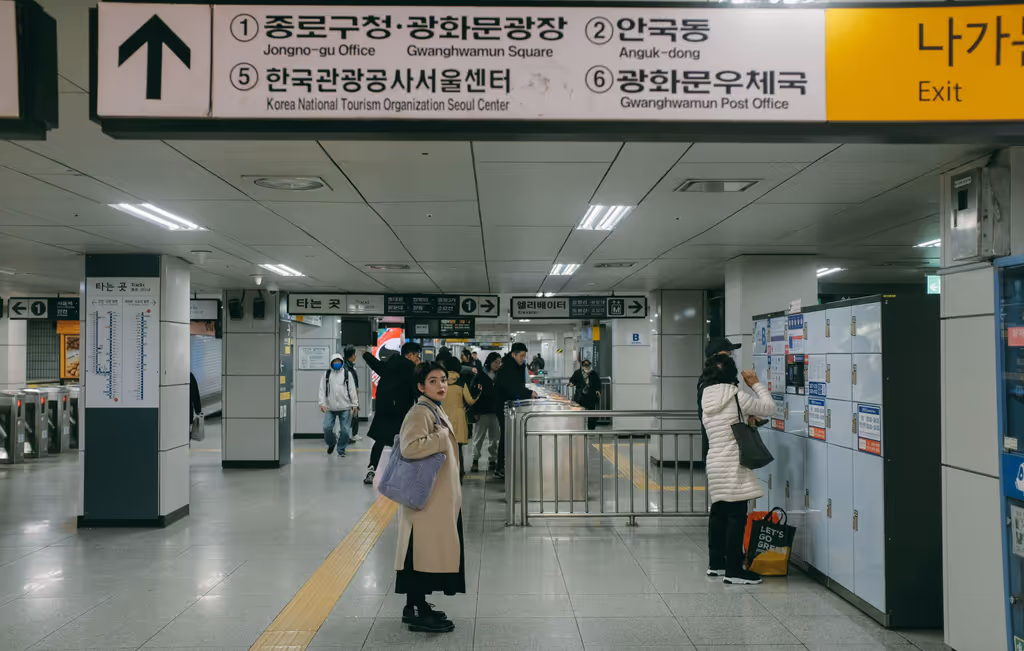
Gwangjang is big, and most of it isn't food. Gwangjang Market's food scene is concentrated in the covered lanes near the middle, where the aisles cross. If the subway itself is the bit you're dreading, it pays to know how Seoul's lines and transfer cards actually work before you set off, so the only thing you're hunting for underground is Exit 7.
Here's how to arrive, based on one detailed Seoul guide:
- From Jongno 5-ga Station (Line 1): take Exit 7, walk straight, and an entrance opens on your right. Several private tours meet at nearby Exit 8.
- From Euljiro 4-ga Station (Lines 2 and 5): take Exit 4, walk straight, cross the Cheonggyecheon Stream, and an entrance opens on your right.
- Once inside: follow the noise and the smell of frying. The bindaetteok griddles sit at the central crossing, and the noodle and gimbap stalls spread out from there.
Before or After: Pairing the Market With the Neighborhood
Gwangjang sits in one of the most walkable corners of old Seoul, so the market rarely has to be the whole day. A couple of nearby stops turn lunch into an afternoon without adding a taxi.
Here are the easiest pairings, all within walking distance:
- Cheonggyecheon Stream: a short walk south. The landscaped stream path is a calm way in from Euljiro 4-ga, and Charlie C.'s walk follows it toward the market.
- Jongmyo Shrine: the royal ancestral shrine sits west of the market, and Jeeseon C.'s evening walk passes its old stone wall after the tastings.
- Changgyeonggung Palace: just north of Jongmyo and linked to it by a restored walkway that reopened in 2022, so the two make one easy loop.
Arriving from a palace morning? The stream walk makes a pleasant approach, and you'll show up with a real appetite.
Traveling with grandparents, a stroller, or knees that complain on stairs? Compare chauffeured car options that drop everyone near the gate and skip the creekside approach entirely.
From the central crossing, the eating finally starts. What comes after is the stall-by-stall menu, listing a fair price for each plate so a padded bill stands out.
The Gwangjang Market Food Worth Your Won, Stall by Stall
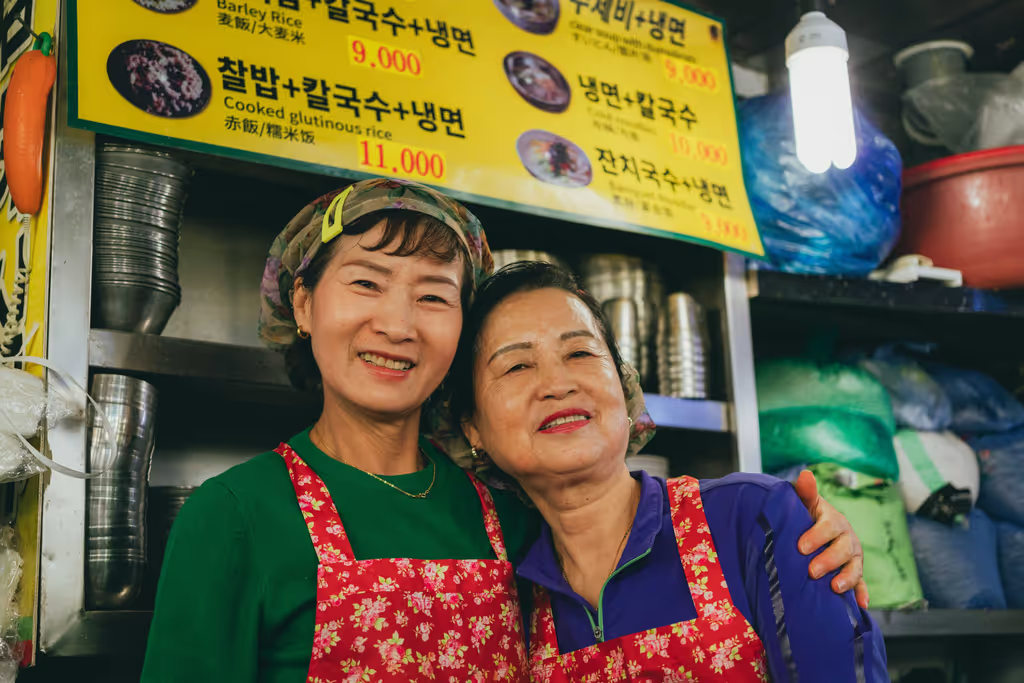
Gwangjang Market food is cheap by Seoul standards, filling, and mostly made right in front of you. The trick is not ordering everything at once. Portions are bigger than they look, and seating is simple: shared benches at stainless steel counters, so expect to squeeze in beside strangers.
Here's the core menu with the prices recent guides report. Use them as your fair-price yardstick, since they vary by stall and change often:
- Bindaetteok (mung bean pancake): the market's signature, fried crisp at the central griddles. One 2026 guide lists it at about 5,000 won (about $3.60). Worth any reasonable line.
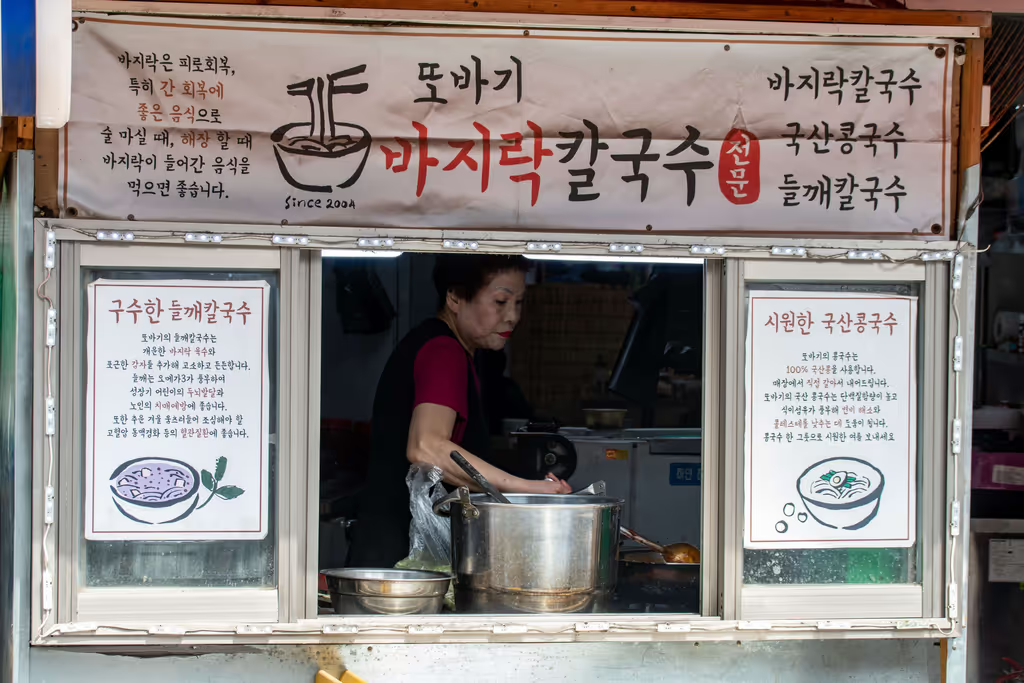
- Kalguksu (knife-cut noodles): noodles in a hot, clear broth. One stall became famous after Netflix's Street Food: Asia, and its line is long. One guide notes the broth is vegetable-based, which makes it a vegetarian-friendly pick. A recent Seoul food tour price breakdown puts it at about 8,000 to 10,000 won (about $5.70 to $7.10).
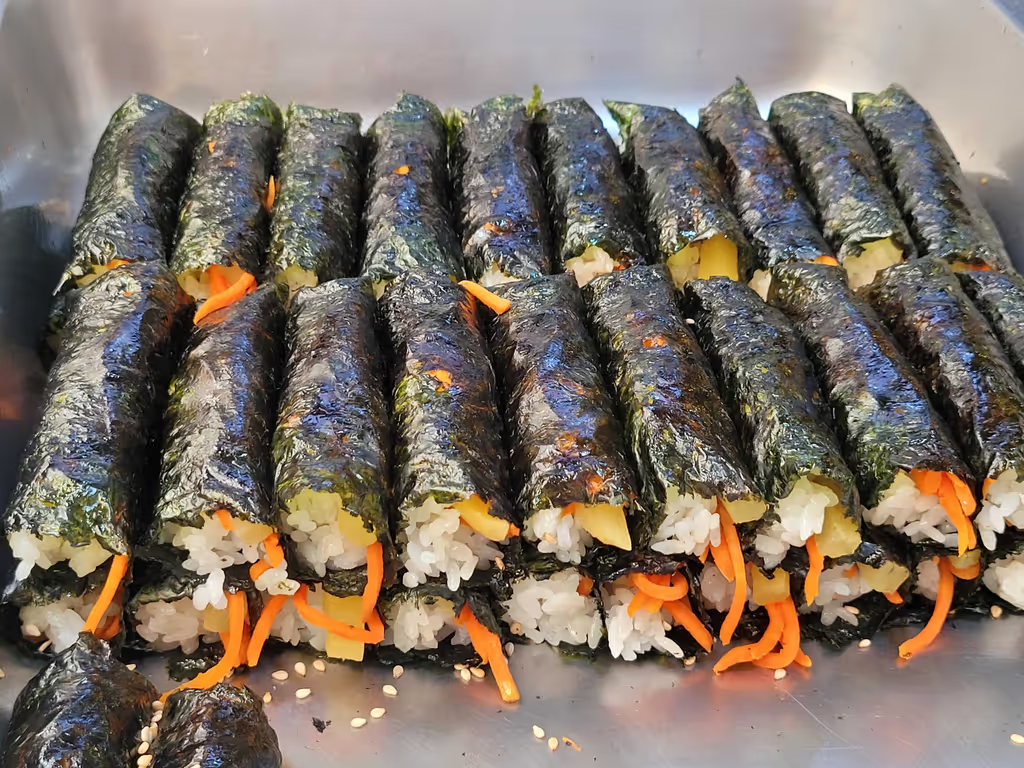
- Mayak gimbap: small rice rolls with a mustard and soy dipping sauce. The name means "addictive," and the rice fills you up fast, so share a plate.
Yukhoe (seasoned raw beef): a sit-down dish from the specialist shops on the yukhoe alley. One guide puts it at about 12,000 to 25,000 won (about $8.60 to $18) depending on portion and shop. - Mandu (dumplings): kimchi or pork and tofu, often eaten alongside kalguksu.
- Bibimbap and tteokbokki: bean sprout bibimbap runs about 8,000 to 9,000 won (about $5.70 to $6.40) by one 2026 list, and spicy rice cakes are everywhere.
- For the bold: sundae (blood sausage), jokbal (braised pig's trotters), and, in summer, mul-naengmyeon, cold buckwheat noodles with ice in the broth.
- Something sweet: hotteok, a sweet-filled pancake sold at market stalls, makes a good last bite.
Is the Netflix line worth it? Only if it's short. One longtime Seoul food writer says the neighboring stalls are just as good, so a 40-minute wait buys you a story, not a better bowl.
What's Going On at the Griddle, Dish by Dish
Knowing a dish's name gets you to the counter. Knowing how it's made tells you why the good stuff is worth a line, and the tired stuff isn't.
Here's what you're actually eating:
- Bindaetteok: mung beans are soaked and ground between millstones into a frothy batter, according to several food writers, then mixed with things like bean sprouts, kimchi, scallions, and sometimes pork before they hit the oil. It comes with a dipping sauce of soy, vinegar, and pickled onion. The best-known stall, Sunhui's (often spelled Soonhee), grinds its beans on the spot and has been at it for over 40 years by one guide's count.
- Kalguksu: the name means "knife noodles," because the dough is cut by hand rather than pressed through a machine. Expect thick, soft, slightly uneven strands in a mild broth that welcomes a spoonful of kimchi.
- Mayak gimbap: short, skinny rolls of rice, seaweed, and a few vegetables, dunked in a mustard and soy dip. The "addictive" name sounds like marketing, but it's earned.
- Yukhoe: seasoned raw beef, usually topped with an egg yolk and served with slivers of Korean pear.
The rule of thumb is simple: watch for the millstone and the fresh batter. A stall frying to order from beans it just ground is the one worth the wait.
Pace Yourself: Three Rounds, One Stomach
The easiest way to eat here is in rounds, so you don't fill up on round one:
- Round one, standing: grab a bindaetteok to go from the central griddles.
- Round two, sitting: take a bench at a noodle stall, order one kalguksu and a plate of mandu to share, and eat the pancake with it. One local writer calls this the classic combination.
- Round three, if there's room: mayak gimbap or yukhoe, or a sweet hotteok from a nearby stall.
Spice tolerance lower than you'd admit out loud? Message a Korean-speaking host the two dishes you're dying to try, and they'll pace three rounds around your tongue.
Of course, knowing the right price is only half the job. Getting it when the board is in Korean, and the cook is three orders deep, takes pointing and nodding, which is where the ordering basics come in.
Point, Nod, Pay Small: How Gwangjang Market Food Stalls Take Your Order
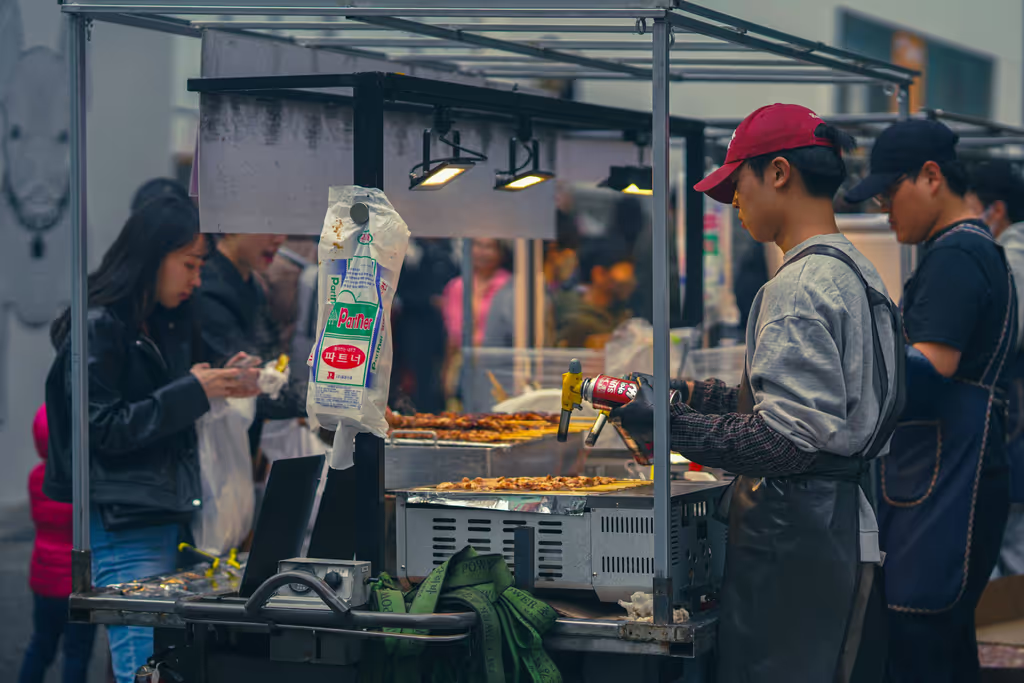
Many Gwangjang stalls are small family operations, and English menus are hit or miss. Pointing works fine, as long as you point at the right thing.
Here's how to order well:
- Point at the menu board, not the food: that way the price you agreed to is the price on the board, which is the single best defense against a surprise total.
- Hold up fingers for portions: one plate, two bowls. Simple and clear.
- Ask about spice before you order: tteokbokki and kimchi mandu can be hot. Bindaetteok, kalguksu, and plain mandu are mild.
- Vegetarians, be specific: one guide confirms the kalguksu broth is vegetable-based, but warns some dishes that look vegetarian may contain fish broth or fish cake. A written note in Korean helps.
- Allergies: if it's serious, have it translated before you go. Stalls cook fast and share griddles.
This is where a local earns their fee fastest. Ordering, spice levels, and dietary questions take seconds in Korean and minutes without it.
Vegetarian, or carrying an allergy card? Ask a bilingual insider to translate your no-go ingredients ahead of the trip, so nothing gets lost at the griddle.
Even with ordering handled, one question nags anyone holding a 25,000-won (about $18) lunch budget. The comparison coming up weighs the solo route against the hosted one, plus four checks to settle it.
Pointing Works Fine. So Why Would Anyone Pay a Local to Eat Here?
You don't need anyone to eat here. Plenty of people do it solo, and if you're confident, curious, and fine with a bit of chaos, you'll eat well on your own.
Here's how the two ways compare:
- On your own: costs only the food, roughly 20,000 to 30,000 won (about $14 to $21) for two people to eat well at published prices. You'll probably pick the busiest stalls, wait in the longest lines, and order by pointing, which works fine if you follow the four habits above.
- With a private guide: private Seoul food tours that include Gwangjang run from about $130 to $380 per group on the listings below, or $150 per person on one. You get stall selection, ordering, spice and dietary help, the story behind each dish, and a local who knows which vendors post fair prices.
Weighing $130 to $380 against a 25,000-won (about $18) lunch feels lopsided until you see what that fee covers, and the city-wide math gets laid out plainly in this look at what you're really paying for on a Seoul food tour.
So how do you choose? Ask yourself four things:
- Can you handle the language? If menus in Korean stress you out, a guide pays off.
- Do you have dietary limits? Vegetarian, allergies, or no spice tolerance tip it toward a guide.
- Are you short on time? A guide gets you through three rounds in 90 minutes.
- Do you want more than the market? Most tours pair Gwangjang with a palace, a stream walk, or K-BBQ.
Still undecided? Choose from the city's escorted strolls in one place, sorted by kickoff time, and let your stomach's schedule decide.
Whichever way you lean, start times matter most for the hosted option. Five private tours are set out here in clock order, starting before lunch and ending after dark.
First Visit and Want the Big Three Handled? Alice K.'s 11:00 AM Palace-to-Pancake Stroll
This is the one for first-timers and couples who want the classics plus a little history. Alice K. meets you at 11:00 AM at Anguk Station (Line 3), Gate 3, walks you through the old royal quarter, and finishes at the market with the same three dishes a first-timer should try anyway.
Duration & Format: 3 hours | From $250 per group | Up to 5 people | Private walking tour
- Key stops: a walk through Seoul's royal quarter and Seosulla-gil, then Gwangjang Market for tastings.
- Included: the guide fee and food (mayak gimbap, tteokbokki, and bindaetteok).
- Not included: extra food, alcohol, and taxis if you choose to use one.
- Supplier and terms: Alice K., joined in 2024, 5.00 from 29 reviews.
With 29 reviews at a 5.00 rating, she has the strongest review record here. The listing shows a starting price per group, so confirm the total for your group before you reserve.
First-timers who'd rather not guess at the classics can see Alice K.'s open mornings and the total for their party.
That covers the tidy, prepaid late-morning version. Jae ha L.'s day, in contrast, turns the market into one of four stops on a six-hour eating route.
Six Hours, Four Stops, One Appetite With Jae ha L.
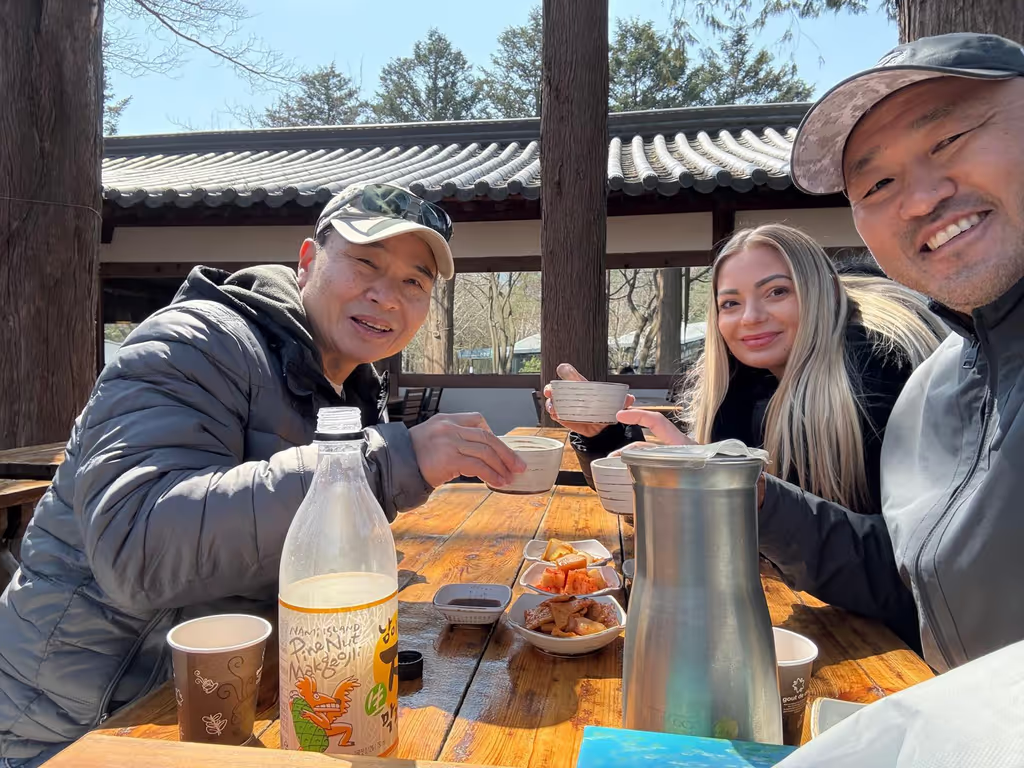
Food lovers with a free afternoon and room for several meals, this one's yours. Jae ha L. builds the day around Seoul's food scenes, with Gwangjang in the middle for tteokbokki, fish cake, hotteok, and mung bean pancakes.
Duration & Format: 6 hours | From $150 per person | Up to 6 people | Private walking tour
- Key stops: Ikseon-dong's cafés, a Gwangjang Market food stop around 1:30 PM, Cheonggyecheon, and a Korean fried chicken and barbecue finish in Myeongdong.
- Included: the guide fee.
- Not included: food, drinks, and public transportation.
- Supplier and terms: Jae ha L., joined 2025, 5.00 from 4 reviews.
Pricing is per person, and food isn't included, so the total climbs with group size and appetite. The listing asks for food allergies in advance.
Skipped breakfast on purpose? Find out whether Jae Ha L. is free on your date and what six hours costs per head.
Then again, six hours plus food adds up. Charlie C.'s shorter, cheaper afternoon walk keeps a local beside you at the stalls.
$130 Covers the Whole Group on Charlie C.'s 3:30 PM Pimat-gol Walk
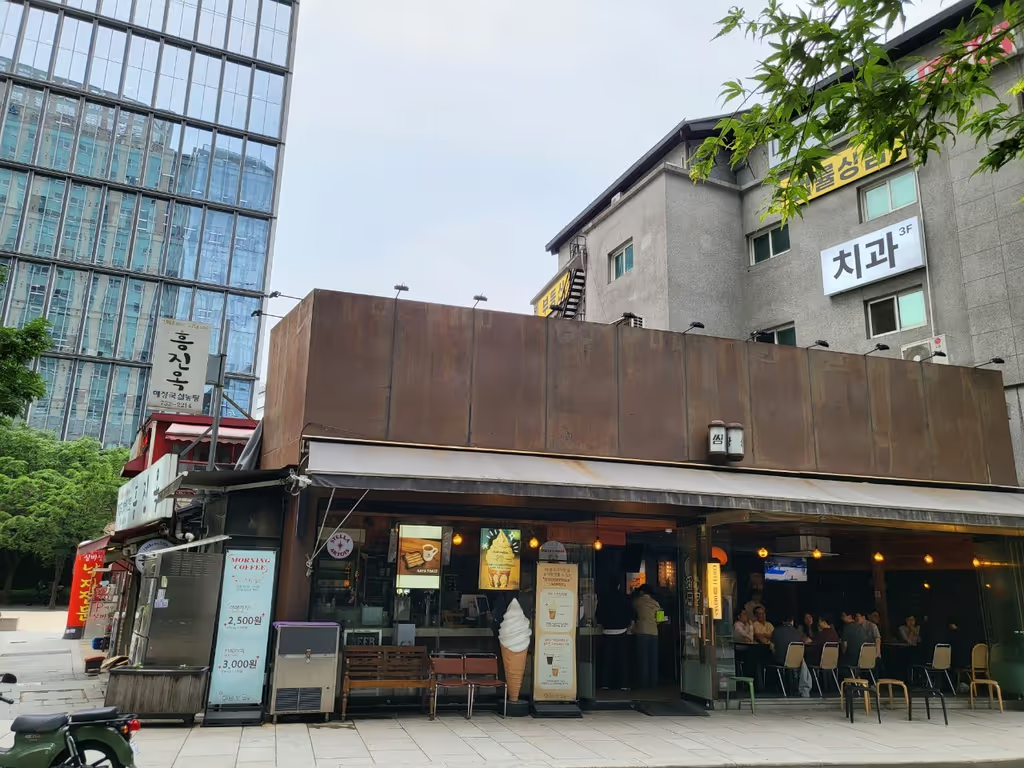
Budget-minded travelers who want some history on the way in should look here first. Charlie C. meets you at 3:30 PM at Gwanghwamun Station, Exit 5, and follows the Cheonggyecheon Stream through the narrow old Pimat-gol alleys, reaching Gwangjang after the lunch crowd has thinned.
Duration & Format: 3 hours | From $130 per group | Up to 6 people | Private walking tour
- Key stops: Cheonggye Plaza and the stream, the old Pimat-gol alleys, and Gwangjang Market.
- Included: the guide fee and a photo service.
- Not included: food, drinks, and personal expenses.
- Supplier and terms: Charlie C., joined in 2024, 5.00 from 9 reviews.
Food isn't included, so budget for what you order at the market. The listing notes a fair amount of walking.
Watching every won? Pencil in Charlie C.'s late-afternoon slot at the flat per-group fee shown on his page.
By the time his walk wraps, the market lights are flickering on. Jeeseon C. picks up right at dusk, tastings first, a lit palace last.
Pancakes at Dusk and a Palace After Dark, Hosted by Jeeseon C.
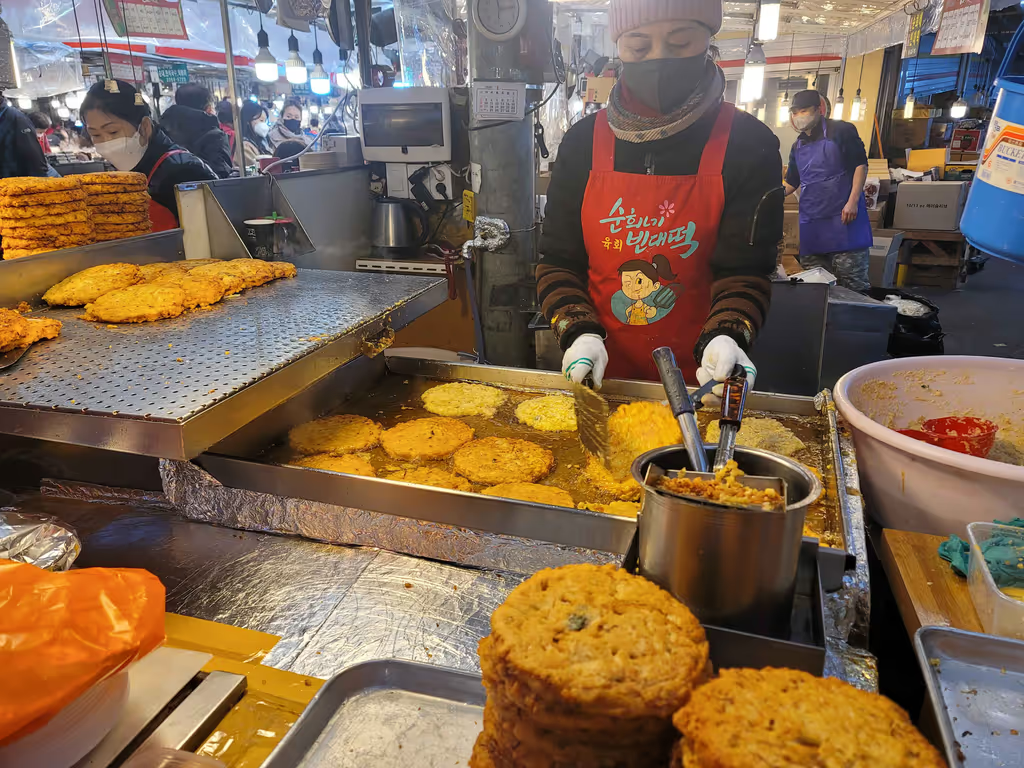
Couples and first-timers who want the market's energy and a calm finish will like this one. Jeeseon C. meets you at 6:00 PM right outside Jongno 5-ga Station, Exit 8, steps from the market, so you're eating within minutes before the walk winds down at a palace after dark.
Duration & Format: 3 hours | From $279 per group | Up to 4 people | Private walking tour
- Key stops: street food at Gwangjang Market, the old stone wall of Jongmyo Shrine, and a royal palace lit up at night.
- Included: the guide fee, three Gwangjang tastings (mung bean pancake, tteokbokki, and dumplings), and palace admission.
- Not included: food beyond the tastings and insurance.
- Supplier and terms: Jeeseon C., joined 2025, 4.90 from 21 reviews.
With 21 reviews and three tastings plus palace entry included, it's a strong value for small groups. The group cap is four.
Pancakes at dusk, royal grounds by lamplight: hold an evening with Jeeseon C. for four or fewer.
Fittingly, her night ends quietly under palace eaves. For groups who'd rather wrap up at a smoking grill, Andy P. treats Gwangjang as the starter and barbecue as dinner.
Andy P. Treats the Market as the Starter and Barbecue as Dinner
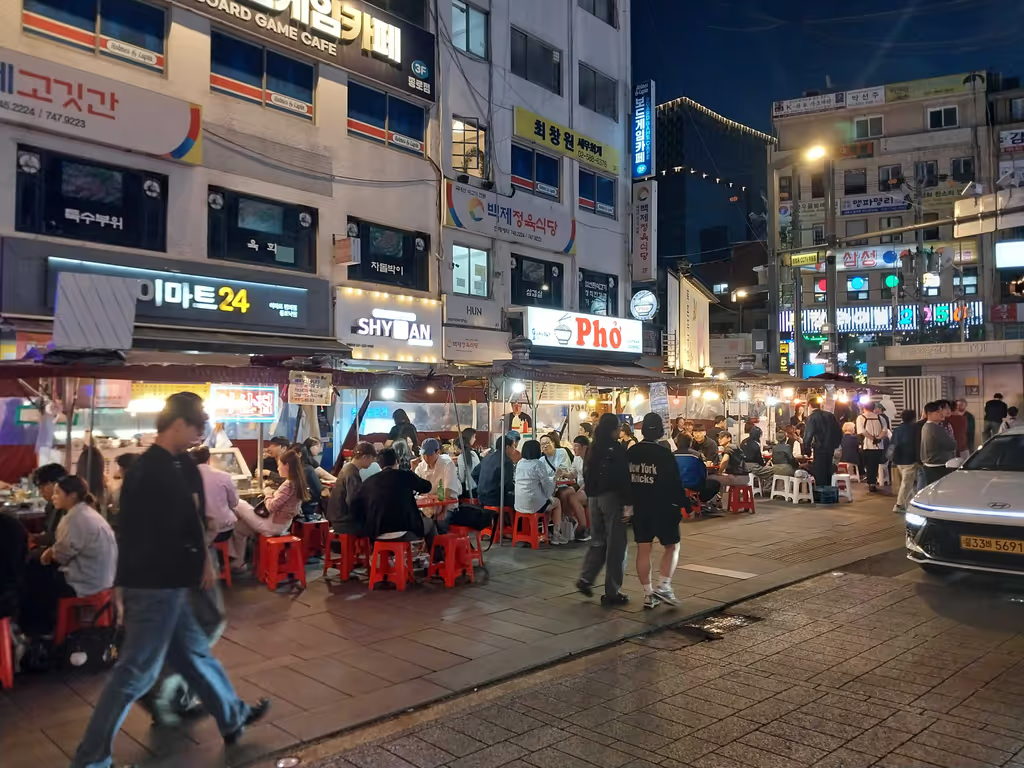
This one's built for groups who want a full night out with someone else handling the ordering and grilling. Andy P. meets you at your hotel at 6:00 PM, walks you through Gwangjang around 6:30 PM as a living market rather than a tasting checklist, then heads to Korean barbecue.
Duration & Format: 3.5 hours | From $380 per group | Up to 5 people | Private walking tour
- Key stops: hotel pickup, Gwangjang Market as an optional appetizer, then a Korean barbecue dinner and local nightlife.
- Included: the guide fee.
- Not included: meals and drinks (the listing estimates about 20,000 won, or about $14, per person for pork, or 40,000 won, about $29, for beef), public transportation, and insurance.
- Supplier and terms: Andy P., joined 2025, 5.00 from 11 reviews.
Meals are extra, and the barbecue estimate is per person. He guides in English, Indonesian, Japanese, and Korean.
Want somebody else working the tongs? Line up Andy P. for a barbecue night and get a rate for your crew.
And that's the whole lineup, a lone pancake at one end and a grill-side dinner at the other. What's left is the short list worth carrying to the griddles.
The Cheapest Great Meal in Seoul Still Comes With a Price Check
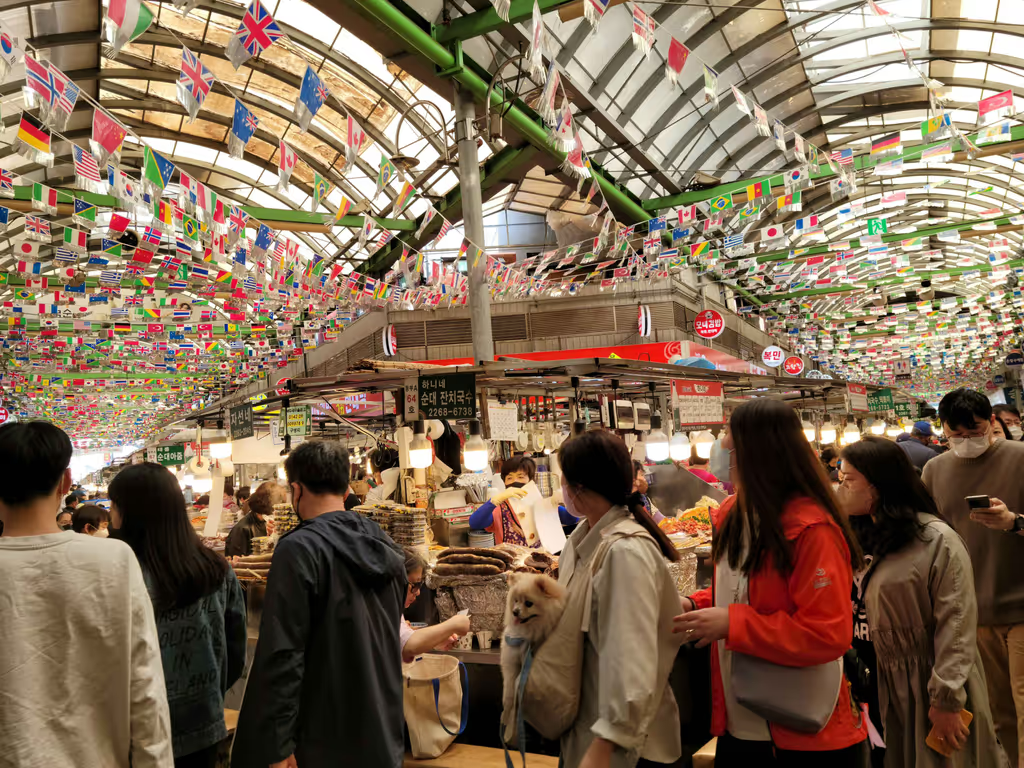
Yes, you can eat well at Gwangjang without getting ripped off, and most people do. The headlines are real, but they come down to a few avoidable moves: ordering off the board, skipping the price check, and paying for plates nobody wrote down. Avoid those, and the 5,000-won (about $3.60) pancake is still one of the best cheap meals in Seoul. Go hungry, go early, and point at the board.
Keep three things in mind to eat well at Gwangjang Market:
- Protect your wallet: point at the posted board, confirm the total, and pay in small bills.
- Order the classics: bindaetteok, kalguksu, and mayak gimbap, shared and in rounds.
- Time it right: a weekday morning or mid-afternoon, and skip any line over 20 minutes.
A private tour here bends around your appetite, your spice tolerance, and the rest of your day. That flexibility is the whole point of bringing a local along.
My last bit of advice: pass your arrival week, headcount, and must-have plate to a licensed specialist, and they'll sketch the market to fit.
Either way, Gwangjang Market has been feeding Seoul since 1905, and with the board in view and small bills in your pocket, a fairly priced pancake, still crackling off the griddle, is waiting there with your name on it.
Gwangjang Market FAQs
How do I avoid being overcharged at Gwangjang Market?
Order from the posted menu board and confirm the price before the food arrives. Tourists can report overcharging through Seoul's price-gouging QR code service.
What are Gwangjang Market's opening hours?
Food stalls generally run from about 8:30 AM to 11:00 PM, and shops close around 6:00 PM. Famous stalls may close early when they sell out.
Is Gwangjang Market open on Sundays?
Yes, the food stalls and vintage section open every day, while fabric and hanbok shops close on Sundays. A few food stalls may also take Sundays or Mondays off.
What should I eat at Gwangjang Market?
Start with bindaetteok, kalguksu, and mayak gimbap. If you're adventurous, add yukhoe or sundae.
Do Gwangjang Market stalls take credit cards?
Some do, but reports found stalls steering shoppers toward cash or bank transfers. Carry small bills plus a prepaid travel card such as WOWPASS.
How do I get to Gwangjang Market?
Take Exit 7 at Jongno 5-ga Station on Line 1, or Exit 4 at Euljiro 4-ga Station and cross the Cheonggyecheon Stream. The food lanes sit near the market's central crossing.