





Nara: Where Japan's Story Began

Joined 2026
A Journey Through Ancient Japan
Step back into Japan's ancient past on a relaxed private walking tour of Nara, the country's first permanent capital. Discover magnificent Buddhist temples, sacred Shinto shrines, peaceful forests, and the famous deer that roam freely among them. Along the way, uncover the fascinating stories of emperors, monks, powerful clans, and the beliefs that shaped Japanese civilization. More than sightseeing, this is a journey into the origins of Japan.
Itinerary
This itinerary can be customized to meet your needs and preferences. Send me a message with your requests!
Meeting Point
Nara Station
- We can meet in Osaka and take the train together, if you prefer.
Kofukuji
Our journey begins at Kofukuji, one of Nara's most historically significant Buddhist temples and a wonderful introduction to Japan's ancient capital.
Founded in the early 8th century, Kofukuji was closely associated with the powerful Fujiwara clan, whose influence shaped Japanese politics and culture for centuries. Here, we'll discover how Buddhism, aristocratic families, and imperial power became deeply intertwined during Japan's formative years.
As we explore the temple grounds, we'll admire its elegant architecture and learn about its remarkable history of destruction, reconstruction, and survival. Its famous five-story pagoda, one of Nara's most recognizable landmarks, is a striking symbol of the city's Buddhist heritage.
We'll also discuss why Nara became Japan's first permanent capital and how its establishment marked a turning point in the country's development.
Kofukuji is the perfect starting point for understanding the fascinating relationship between religion, politics, and culture that we'll continue exploring throughout our visit.
Nara Park
Our next stop takes us through the beautiful landscapes of Nara Park, where hundreds of free-roaming deer wander among ancient temples, wooded paths, and open lawns.
These graceful animals have become the symbol of Nara, but their significance goes far beyond their charming appearance. According to legend, a Shinto deity arrived in Nara riding a white deer, establishing a sacred connection between these animals and nearby Kasuga Taisha Shrine.
As we stroll through the park, we'll explore the fascinating relationship between nature, religion, and everyday life in Japan, and discover how the deer have been protected and revered for centuries.
There will be plenty of opportunities to observe the deer, take photographs, and, if you wish, feed them special deer crackers (shika senbei). I'll also share a few tips for interacting with them safely and respectfully.
More than just a picturesque park, Nara Park offers a wonderful glimpse into the way history, spirituality, and nature come together in Japanese culture.
Todaiji
Our next destination is Todaiji, one of Japan's most magnificent Buddhist temples and a powerful symbol of the country's ancient history.
Founded in the 8th century under Emperor Shomu, Todaiji was built at a time when Japan was struggling with epidemics, political unrest, and natural disasters. The emperor hoped that Buddhism would help bring peace, stability, and protection to the nation.
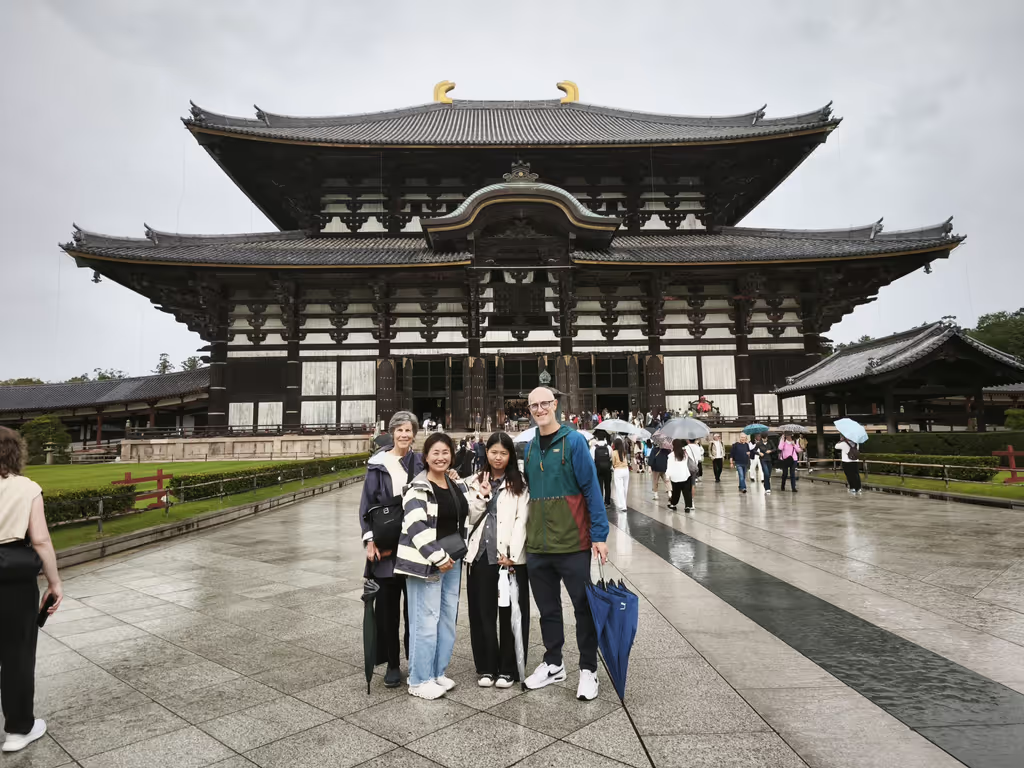
As we approach the temple, we'll pass through the imposing Nandaimon Gate, guarded by two enormous and remarkably expressive wooden statues. Beyond it stands the Great Buddha Hall (Daibutsuden), one of the largest wooden buildings in the world.
Inside, we'll encounter the breathtaking Great Buddha, a monumental bronze representation of Vairocana Buddha. We'll discover how and why this extraordinary statue was created, and what it reveals about the ambitions and beliefs of early Japanese rulers.
Todaiji is much more than an architectural wonder. It's a fascinating place to explore the relationship between Buddhism, imperial authority, and the development of Japan as a unified nation.
Nigatsudo
Leaving the grandeur of Todaiji's Great Buddha Hall behind, we'll climb a gentle hillside to Nigatsudo, one of the most atmospheric and beautiful corners of Nara.
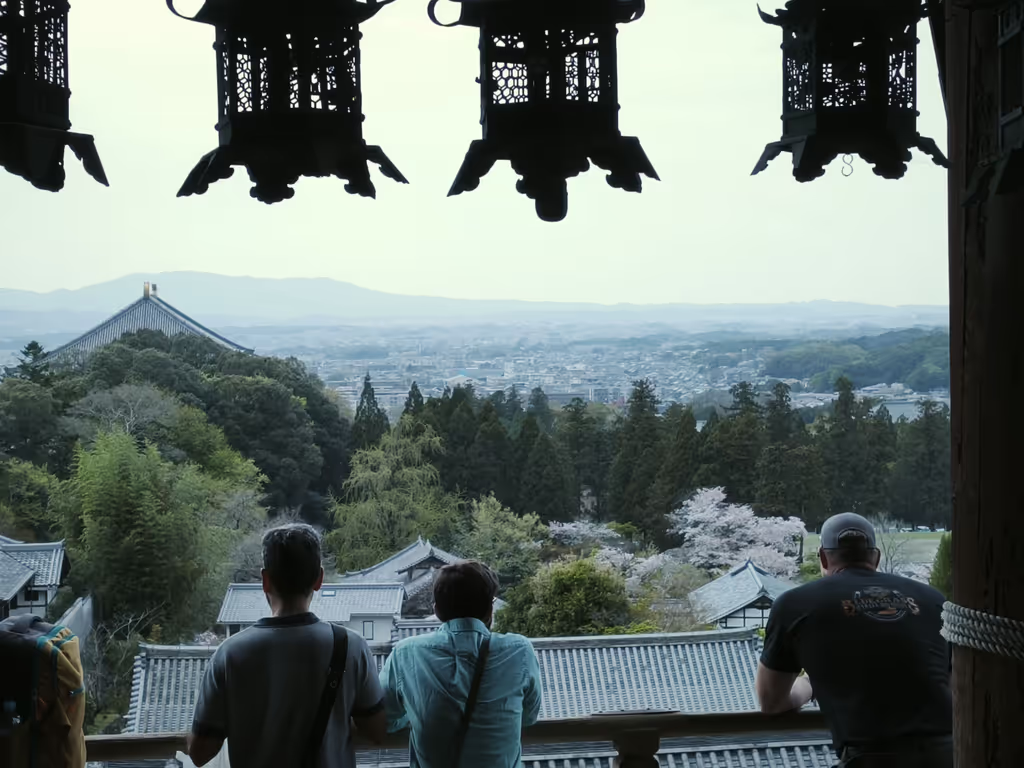
Part of the Todaiji temple complex, Nigatsudo offers a quieter, more intimate experience of Japanese Buddhism. Its magnificent wooden veranda provides sweeping views over the ancient city, making it a wonderful place to pause, admire the scenery, and reflect on Nara's remarkable history.
Nigatsudo is especially famous for Shuni-e, a Buddhist ceremony that has been performed every year since the 8th century. Best known for its spectacular Omizutori rituals, the ceremony features enormous flaming torches and prayers for the well-being of society.
As we explore the temple, we'll discover the meaning behind these centuries-old traditions and the remarkable continuity of religious life in Japan.
With its beautiful architecture, peaceful surroundings, and panoramic views, Nigatsudo is one of Nara's hidden treasures — and often one of the most memorable stops of the day.
Kasuga Taisha
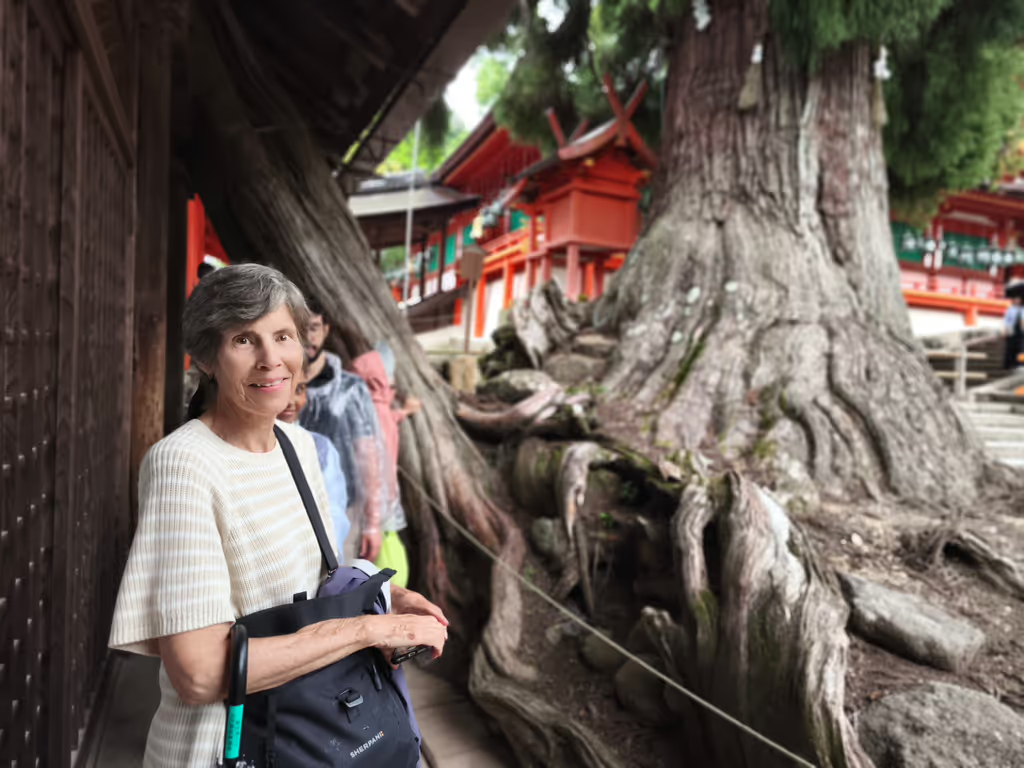
Our final monument is Kasuga Taisha, one of Japan's most beautiful and historically significant Shinto shrines, nestled among the ancient trees of a sacred forest.
Founded in 768, Kasuga Taisha was closely associated with the powerful Fujiwara clan, whose influence we first encountered at Kofukuji. Here, we'll discover how Shinto beliefs, political power, and the natural world became intertwined in ancient Japan.
According to legend, one of the shrine's deities arrived from eastern Japan riding a white deer, giving rise to the special relationship between Nara's famous deer and the sacred grounds of Kasuga Taisha.
As we approach the shrine along atmospheric forest paths, we'll encounter hundreds of stone lanterns, while beautiful bronze lanterns hang from the shrine's vermilion corridors. We'll explore their symbolism and learn about the traditions that continue to shape Shinto worship today.
Surrounded by towering trees and centuries of history, Kasuga Taisha offers a peaceful and memorable conclusion to our exploration of Nara, bringing together the themes of nature, spirituality, and Japan's ancient heritage.
Naramachi
As we make our way back toward the station, we'll leave Nara's grand temples and shrines behind and wander through the charming streets of Naramachi, the city's historic merchant district.
Here, narrow lanes, traditional wooden townhouses (machiya), small family businesses, and inviting cafés reveal a different side of Nara, one shaped by centuries of everyday life rather than imperial grandeur.
We'll discover how traditional Japanese homes were designed, explore the character of the old neighborhood, and see how historic buildings continue to find new uses in modern Japan.
Depending on our pace and interests, there may be time to browse a local shop, pick up a souvenir, or simply enjoy the atmosphere of these peaceful streets.
It's a lovely way to conclude our journey: from the emperors, monks, and powerful clans of ancient Japan to the homes and streets of ordinary people, before saying goodbye near the station.
Ending Point
Nara Station
Want to personalize this tour?
This tour can be customized to meet your needs and preferences. Click below to send me a message with your requests.
Inclusions & Exclusions
- Private guided walking tour of Nara (approximately 6 hours)
- Professional cultural guidance in English or Spanish
- Admission to Todaiji's Great Buddha Hall
- Special admission to the inner sanctuary of Kasuga Taisha
- Flexible pace and personalized cultural explanations
- Public transportation to Nara if needed
- Food and drinks
Tour Important Information
- This tour involves a lot of walking, so make sure to wear comfortable shoes.
- There are many food stands and some small restaurants along the way.
- You will see many deer, and they may be somewhat aggressive in demanding food.
Important message from the supplier
I am available between the months of October and April.
I can guide you in Tokushima or Kanazawa if you pay my transportation costs.
Cancellation Policy
- Free cancellation - 8 days prior to meeting time
- 50% Refund - 3 to 7 days prior to meeting time
- No Refund - Within 2 day(s) prior to meeting time
Joined 2026
About Tour Guide Matthew M.
I'm Matthew, an American-Spanish cultural guide, and I've lived in Japan for nearly 30 years.
After a long career teaching at Japanese universities, I now enjoy sharing my passion for Japan's history, traditions, and everyday life with curious travelers.
I speak English, Spanish, and fluent Japanese (JLPT N1), allowing me to bridge cultures and offer insights that go beyond the usual sightseeing experience.
Whether exploring Kyoto's temples, Nara's ancient heritage, or Osaka's lively neighborhoods, my approach is relaxed, personal, and flexible.
Let's discover Japan together — beyond the guidebooks!
Soy Matthew, guía y acompañante cultural de raíces estadounidenses y españolas, y llevo casi 30 años viviendo en Japón.
Después de una larga trayectoria como profesor universitario, ahora disfruto compartiendo mi pasión por la historia, las tradiciones y la vida cotidiana japonesa con viajeros curiosos.
Hablo inglés, español y japonés con fluidez (JLPT N1), lo que me permite tender puentes entre culturas y ofrecer una perspectiva que va más allá del turismo convencional.
Ya sea recorriendo los templos de Kioto, descubriendo la historia de Nara o explorando los barrios de Osaka, mi estilo es cercano, tranquilo y flexible.
¡Descubramos juntos Japón más allá de las guías turísticas!
$219/ per group
More tours by Matthew M.

Other Popular Art, Culture, & Historical Tours in Nara

Nara Sightseeing & the World of Buddhist Statuary
Through this tour you will be intrigued with the charm of Buddhist statuary, which represents people's wishes and prayers. Figures of statues vary according to the development of eras from Asuka period to Muromachi period. At the same time you can visit Nara Park, where you can feed deer. Also you can visit a nice sake tasting place after the tour if you like.
Nara Sightseeing & the World of Buddhist Statuary


Let's enjoy walking around the ancient city called Heijyokyo or Nara established in 710.
Nara is the most ancient city in Japan. You can see one of the most biggest images of Buddha in Japan called"Daibutu-san", and You also see many deer roaming freely around in Nara park. We visit Kasuga-Taisya Shrine ,founded to protect the Heijyokyo, which is also the deity of Fujiwara family is enshrined.
Let's enjoy walking around the ancient city called Heijyokyo or Nara established in 710.


Early Bird Deer Nara Tour
Nara is one of Japan's most-visited destinations, which means it gets crowded during the day. Dodge the biggest crowds and enjoy a more intimate experience of the ancient Japanese capital on this early-morning, private tour. Admire landmarks such as Toudaiji Temple and Nara Park, and Naramachi, home to free-roaming deer, while learning about the rich history of this sacred place.
Early Bird Deer Nara Tour


NARA - Journey into Shinto and Buddhism
The ancient city of Nara hosts 6 UNESCO World Heritage Sites with breathtaking architectural examples of the 8th century. This tour covers the historical sites in the journey of better understanding Buddhism and Shinto, interacting with some of the hundreds of deer in Nara Park, and enjoying walks in old forests.
NARA - Journey into Shinto and Buddhism
